AI Pushes China’s Factory Robots Into New Corners of Industry
China’s factory robots are moving beyond the car plants and electronics lines where they first became fixtures, as advances in artificial intelligence make automation cheaper, more flexible and easier to deploy across labor-intensive industries.
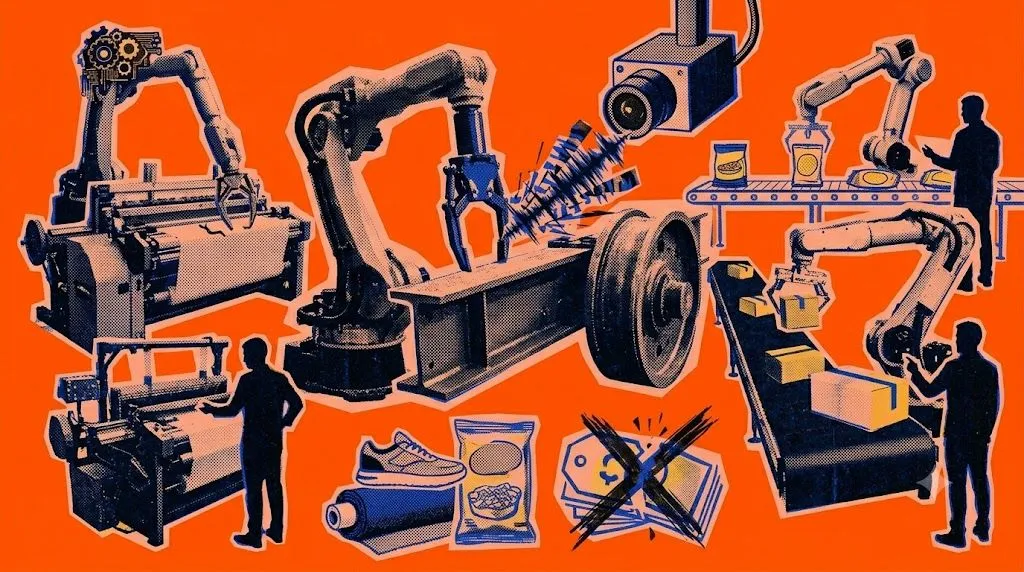
The shift is beginning to reshape sectors such as textiles, footwear, construction machinery, logistics, food processing and consumer services. Manufacturers say AI-enabled vision systems, easier programming tools and real-time data analysis are allowing robots to handle more varied tasks, from inspecting fabric and sorting parts to guiding welding arms and managing warehouse flows.
At Sany’s No. 18 factory in Changsha, one of China’s best-known smart manufacturing sites, robots and automated systems are used to produce heavy machinery with limited human intervention. Cameras, sensors and AI software help identify components, monitor quality and direct machines through complex production steps. The model is increasingly seen by Chinese manufacturers as a template for other industries seeking to raise productivity while reducing dependence on manual labor.
China is already the world’s largest market for industrial robots. The International Federation of Robotics has said the country accounts for more than half of annual global robot installations and has an operational stock of about 2 million industrial robots, far ahead of other major manufacturing economies. Beijing has made robotics and “embodied intelligence” — AI systems that can act in the physical world — a priority in its industrial strategy, linking the technology to economic upgrading and supply-chain resilience.
AI makes robots useful outside traditional factories
Traditional industrial robots have long been strongest in predictable environments, especially automotive and electronics production, where tasks are repetitive and high volumes justify the cost of automation. AI is changing that calculation by allowing machines to perceive their surroundings, adjust to variation and work with less manual programming.
That matters for industries such as apparel and footwear, where products vary by size, shape and material, making full automation difficult. AI-powered vision can help robots identify defects, align soft materials and adapt to changing production runs. In food processing, similar tools can support sorting, packaging and quality inspection. In logistics, mobile robots and robotic arms are being used to move parcels, handle warehouse totes and improve order fulfillment.
The trend is also being pushed by demographics. China’s workforce is aging, and factories in many regions face rising labor costs and difficulty recruiting younger workers for repetitive or physically demanding jobs. Automation is being sold not only as a way to cut costs, but also as a response to labor shortages and as a means of improving consistency and safety.
Chinese robot makers are gaining ground in newer fields where foreign suppliers have less entrenched dominance. Domestic companies have become particularly competitive in lower-cost industrial robots, mobile robots and emerging humanoid systems. At the same time, global manufacturers such as ABB and Fanuc are integrating more AI into their own systems to defend market share as Chinese customers demand more flexible automation.
Humanoid robots draw attention, but factories remain the focus
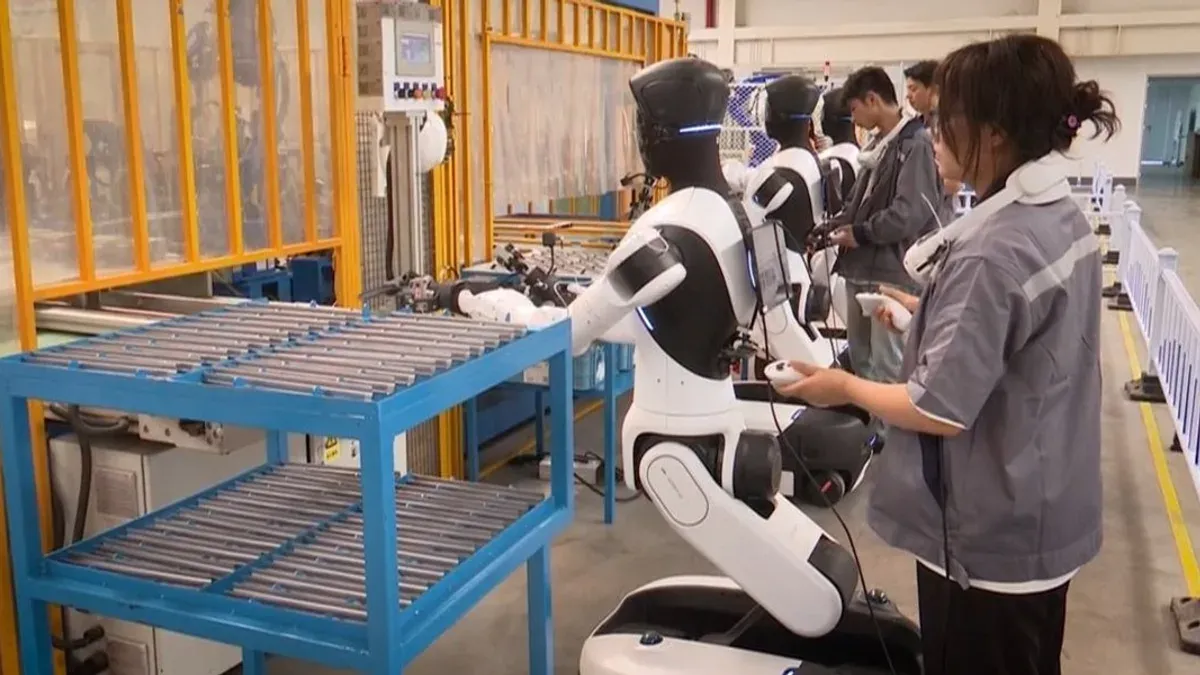
Humanoid robots have become the most visible symbol of China’s robotics ambitions. Companies including Unitree, UBTech and others have shown machines designed to walk, carry objects and eventually work in factories, warehouses, shops and homes. Automakers are also experimenting with the technology. BYD executive Stella Li has said the company wants to use humanoid robots in showrooms and is investing in more automated factories.
For now, however, most commercial demand remains in industrial settings where tasks can be defined clearly and returns measured. Analysts say the near-term opportunity is less about replacing human workers entirely than about automating specific steps: inspection, transport, loading, welding, assembly support and machine monitoring.
There are still constraints. Robots remain expensive for smaller manufacturers, integration can be difficult, and AI systems must prove reliable in environments where errors can stop production or create safety risks. Many factories also need workers who can manage, maintain and troubleshoot automated systems, creating demand for new technical skills rather than eliminating labor needs altogether.
Even so, China’s industrial base gives it an advantage. A dense network of manufacturers, suppliers, software developers and component makers allows robotics companies to test products quickly and scale production at lower cost. Government support, venture capital funding and intense competition are accelerating the rollout.
The result is a broader phase of industrial automation. Robots that once belonged mainly to car plants are increasingly entering workshops that make shoes, clothing, machinery, appliances and packaged goods. If the technology continues to improve, China’s next manufacturing leap may be defined not only by how many robots it installs, but by how many new sectors learn to use them.