🎙 Listen to a summary of this story
Artificial intelligence is rapidly augmenting the diagnostic capabilities of rural Chinese village doctors, bridging critical gaps in specialized medical access.
The integration of AI tools into primary healthcare settings across China represents a significant strategic shift in addressing vast disparities in medical expertise between urban centers and remote villages. These technological deployments are moving beyond pilot programs, becoming embedded components of routine clinical workflows, directly impacting patient outcomes in underserved populations.
According to recent analyses, AI algorithms are proving highly effective in analyzing complex medical imagery, such as X-rays and dermatological scans, often achieving accuracy levels comparable to, or exceeding, that of general practitioners lacking advanced training. This capability allows village health workers, who serve as the first line of defense in rural health systems, to receive near-specialist-level support instantly.
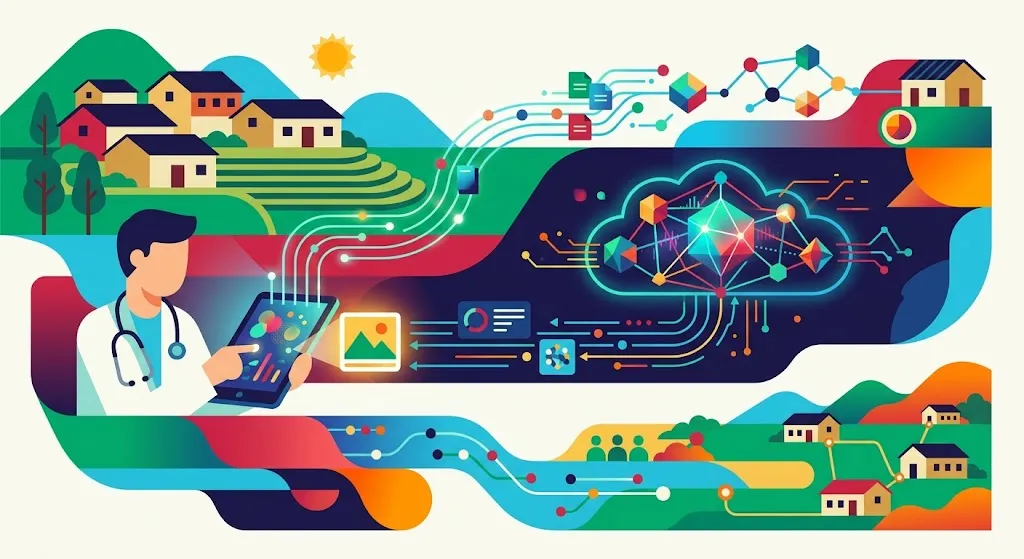
The underlying mechanism involves cloud-based platforms that process data captured at the local clinic level. When a physician uploads a patient record or image, the AI system cross-references it against massive datasets of validated medical cases. It then returns differential diagnoses, highlighting areas of high probability for specific conditions, such as tuberculosis or early-stage diabetic retinopathy.
This immediate feedback loop circumvents the logistical nightmare of patient referral—a process that often requires lengthy travel to regional hospitals, incurring substantial costs and delaying critical interventions. The reliance on these digital assistants allows the existing, often overworked, local medical staff to operate at a higher level of diagnostic precision.
The implementation is not purely technological; it is deeply intertwined with policy. Government initiatives prioritizing rural healthcare modernization have provided the necessary infrastructure and regulatory framework for these advanced tools to scale efficiently. This strategic push recognizes that technology is not merely an enhancement but a necessary substitute for immediate specialist density.
The Operational Impact and Implementation Challenges
While the clinical benefits are clear, the successful scaling of AI in village clinics faces persistent operational hurdles. Data standardization remains a primary concern; the effectiveness of any AI model is entirely dependent on the quality and uniformity of the input data. Variations in equipment quality across different rural clinics can introduce noise and bias into the datasets being analyzed by the algorithms.
Furthermore, the digital literacy of the end-users—the village doctors themselves—requires continuous investment. Training programs must evolve beyond simple interface instruction to ensure providers understand the limitations of the AI, recognizing when the technology is suggesting a strong probability versus when human clinical judgment must supersede the machine’s output. This critical interplay between human expertise and algorithmic suggestion defines the current operational model.
Economically, while the long-term cost savings from reduced unnecessary referrals are substantial, the initial capital outlay for hardware upgrades and subscription-based AI services presents a barrier for smaller, less funded community health centers. Policymakers are actively working to establish subsidized deployment models to democratize access to these high-level diagnostic aids.
The future trajectory points toward more personalized medicine delivered at the grassroots level. As AI models become more sophisticated, they are expected to move from simple diagnostic assistance to proactive health management, predicting disease outbreaks or identifying high-risk individuals before symptoms become severe. This evolution transforms the village doctor from a reactive caregiver into a proactive community health manager.