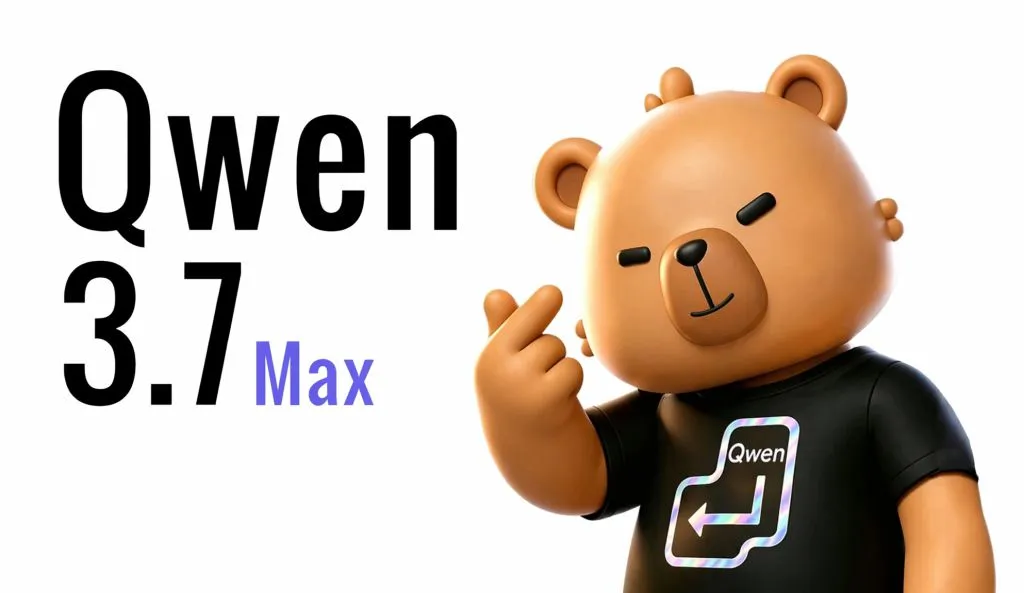
Alibaba’s latest artificial intelligence model, Qwen 3.7-Max, has outperformed both OpenAI and Google in rigorous coding benchmarks, signaling a significant competitive shift within the global AI landscape.
The new Chinese-developed large language model demonstrated superior performance across several complex programming tasks when compared directly against industry leaders like GPT models from OpenAI and various offerings from Google. This advancement places Alibaba at the forefront of the generative AI race, challenging the established dominance of Western tech giants in critical software development applications.
The testing methodology employed to evaluate these systems focused heavily on coding proficiency, a benchmark that speaks directly to an AI's practical utility in enterprise and research environments. High performance in coding implies not only strong linguistic understanding but also sophisticated logical reasoning capabilities essential for generating functional, complex code snippets.
Performance Metrics and Technical Implications
According to the assessment detailed by The China Technology Review, Alibaba's model secured higher rankings than its chief rivals on these specialized coding tests. While specific percentage gains were noted in the source material, the overall implication is a substantial leap in capability for the Chinese AI sector.
This success suggests that Alibaba has made considerable strides in training data curation or architectural innovation specifically tailored to mastering complex algorithmic problems and syntax across multiple programming languages. The ability of an LLM to reliably generate correct, efficient code moves it from being a mere text predictor to a functional engineering assistant.
The development marks a critical milestone for domestic technological sovereignty within China. As reliance on foreign AI tools increases across industries—from finance to hardware design—the emergence of a demonstrably superior local alternative reduces geopolitical dependencies and accelerates localized innovation cycles.
Industry analysts view this as more than just a benchmark win; it represents the maturation of Chinese deep learning infrastructure. The investment poured into these large-scale models is beginning to yield concrete, measurable returns in areas where performance parity was once considered distant.
Strategic Positioning in the Global AI Arena
The competitive dynamic between major tech players—including Microsoft (via OpenAI), Google, and now Alibaba—is intensifying rapidly. This recent coding ranking puts pressure on incumbents to accelerate their own research trajectories or risk losing ground in high-value commercial applications.
For developers and corporations globally, this means a diversification of powerful AI choices is becoming a practical reality. Companies can now evaluate solutions based not solely on brand recognition but also on demonstrable, verifiable performance metrics in specific use cases like coding assistance.
The broader strategic significance lies in the validation of large-scale Chinese technological ecosystems. The ability to build and deploy models that rival global standards validates the immense investment made into data centers, specialized hardware (such as advanced GPUs), and top-tier AI talent within the region.
Alibaba’s achievement underscores a trend: while foundational research remains globally competitive, application-specific performance benchmarks are increasingly revealing regional strengths.