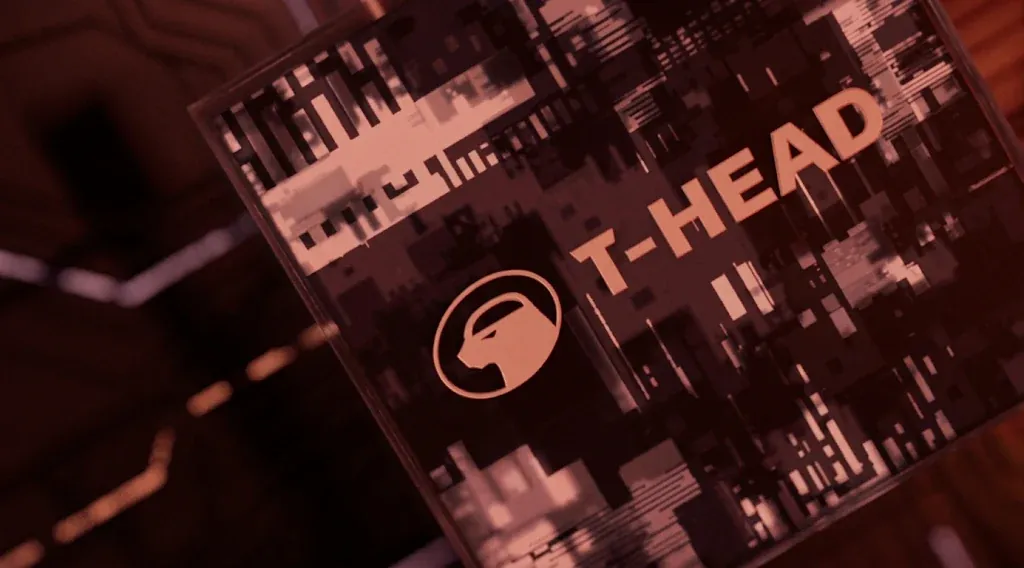
Alibaba’s chip unit, T-Head, has filed plans for a Hong Kong Initial Public Offering, signaling a major corporate push aligned directly with China’s intensifying mandate for domestic AI self-sufficiency.
The planned listing places T-Head at a critical intersection of massive domestic tech investment and escalating global technological fragmentation. By seeking public capital in Hong Kong, the company aims to bolster its ability to scale production and accelerate the development of bespoke silicon designed to circumvent reliance on restricted Western hardware ecosystems.
This move is not merely a financial transaction; it represents a strategic pillar in Alibaba’s broader effort to secure its technological moat within the mainland Chinese market while navigating the increasingly stringent export controls imposed by the United States on advanced semiconductor technologies.
Technical Focus and Commercial Trajectory
T-Head focuses heavily on developing specialized AI accelerators and custom silicon solutions tailored for large-scale data processing within Chinese enterprises. Its product portfolio addresses the intensive computational needs of large language models and advanced machine learning applications, areas where indigenous capability is deemed strategically paramount by Beijing.
The company's commercial strategy appears focused on serving the vast domestic cloud infrastructure and enterprise AI deployment market. Unlike general-purpose chip manufacturers, T-Head is positioned to deliver high-performance, optimized chips that integrate seamlessly into existing Alibaba cloud environments, creating a closed, resilient technological loop.
The IPO proceeds are anticipated to fund further research and development cycles, specifically targeting next-generation architectures capable of handling the exponential growth in data demands characteristic of modern generative AI workloads. This technological depth differentiates T-Head from more generalized domestic chipmakers.
Geopolitical Ramifications and Market Positioning
The filing underscores the deepening bifurcation of the global tech supply chain. As Western firms tighten restrictions on high-end chip exports—particularly advanced GPUs necessary for cutting-edge AI training—Chinese entities like T-Head are forced to aggressively commercialize indigenous alternatives.
This indigenous drive shifts the competitive landscape away from purely globalized sourcing toward localized, state-supported technological sovereignty. The success of T-Head’s IPO will serve as a barometer for the viability of this self-sufficiency model within China’s semiconductor sector.
Should the listing prove successful, T-Head will gain the necessary capital to compete more effectively against established international players in the domestic market, cementing its role as a key enabler of China's strategic technological independence. Investors will be scrutinizing whether this hardware capability can translate into sustainable, scalable market dominance.