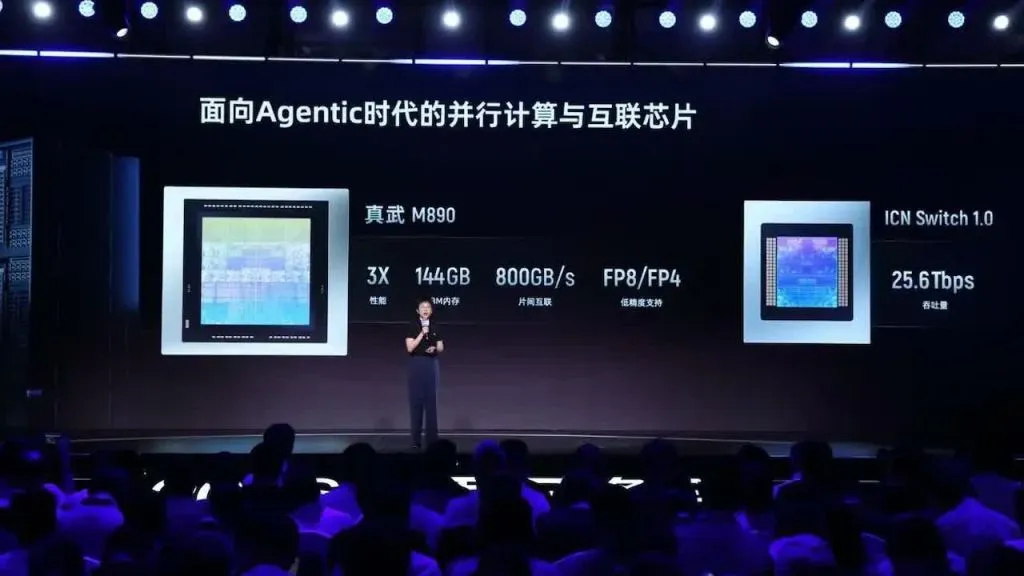
Alibaba unveiled the Zhenwu M890 AI chip, signaling a significant escalation in China's domestic semiconductor ambitions and intensifying competition against international silicon leaders.
The new processor is engineered to support advanced artificial intelligence workloads, positioning Alibaba as a major player in the crucial hardware backbone supporting its vast cloud computing infrastructure and consumer-facing services.
Technical Specs and Significance
The Zhenwu M890 chip represents a dedicated effort by Alibaba's internal technology divisions to reduce dependence on external semiconductor suppliers, a strategic imperative highlighted by recent global geopolitical tensions surrounding advanced microchip access.
This specific chip architecture is designed with high efficiency in mind, critical for the energy demands of large-scale data centers where Alibaba operates globally. While precise benchmark figures are proprietary, the introduction itself signals a maturation in China's capability to design and fabricate complex AI accelerators internally.
The strategic significance extends beyond mere processing power; it represents intellectual property control. By developing its own silicon for core AI functions, Alibaba gains granular control over performance optimization tailored precisely to its unique operational algorithms, something off-the-shelf chips often cannot achieve optimally.
Analysts suggest that the rollout of chips like Zhenwu M890 is part of a broader national push in China toward technological self-sufficiency. Successes by tech giants like Alibaba validate state investment and policy focus on building resilient domestic supply chains, moving away from reliance on Taiwanese or American fabrication plants for mission-critical components.
The chip's integration into cloud services means that as Alibaba expands its AI offerings—from recommendation engines to sophisticated enterprise solutions—the underlying hardware is becoming a proprietary advantage rather than an outsourced dependency. This shift fundamentally alters the competitive landscape within the Asian tech sector.
Market Implications
The announcement places direct pressure on competitors, both domestic Chinese firms vying for cloud dominance and international hyperscalers operating within the Chinese market who rely heavily on foreign-sourced AI hardware.
For investors tracking the technology sector, Zhenwu M890 provides a tangible metric of Alibaba's R&D reinvestment strategy. It suggests that the company views semiconductor design not merely as an operational necessity but as a core competitive differentiator capable of commanding higher margins and securing market share in AI-driven services.
The chip’s development trajectory indicates a focus on high-performance computing (HPC) applications, which are central to modern generative AI models. The ability to efficiently run large language models locally or within Alibaba's private cloud architecture is paramount for maintaining data sovereignty and low latency, key requirements in the Chinese regulatory environment.
Furthermore, this move potentially accelerates the ecosystem surrounding domestic hardware design. Successful validation of the M890 can spur increased investment into China’s foundry services and chip design houses outside of Alibaba, fostering a more robust national semiconductor industrial base.
Ultimately, the Zhenwu M890 is less an isolated product launch and more a demonstration of strategic technological maturation. It underscores Alibaba's commitment to owning its entire technology stack from software layer down to the silicon beneath it.