🎙 Listen to a summary of this story
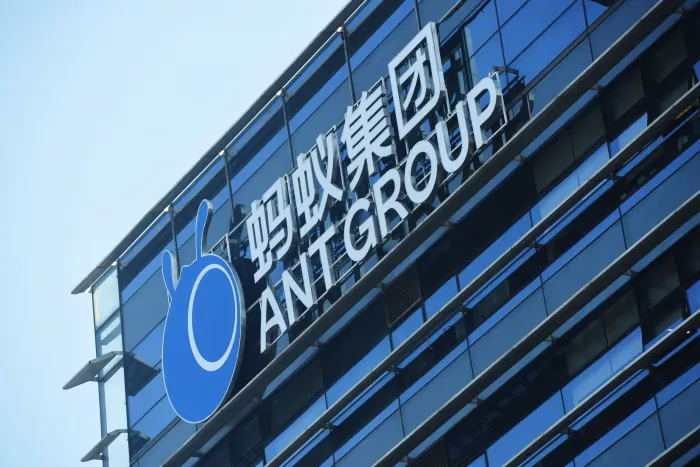
Ant Group has advanced its AI capabilities by launching LingGuang 2.0 in limited beta as a sophisticated personal agent featuring long-term memory.
This deployment signals a significant operational shift for Ant Group, moving beyond reactive conversational models toward persistent, context-aware digital assistants capable of retaining and leveraging user history across interactions. The introduction of this enhanced memory architecture directly addresses one of the primary limitations in earlier generative AI applications: maintaining coherent, personalized dialogue over extended periods.
The beta release positions LingGuang 2.0 to compete directly within the rapidly maturing ecosystem of personal AI assistants, leveraging Ant Group’s vast data resources derived from its financial technology operations to provide a level of personalization previously reserved for highly customized enterprise solutions.
Technical Architecture and Agent Capabilities
LingGuang 2.0 is architected not merely as a chatbot but as an autonomous agent designed for proactive assistance. The core innovation resides in its long-term memory module, which allows the system to recall specific user preferences, past decisions, and contextual details from months prior. This contrasts sharply with short-context windows that plague many current LLM implementations.
Technically, the system integrates advanced reasoning capabilities atop a large language model foundation. While specific hardware configurations remain proprietary, the emphasis is on creating an operational loop where memory feeds back into prompt engineering, enabling more nuanced and less repetitive responses. This architecture supports complex task chaining—where one interaction informs the scope of the next.
The limited beta phase serves as a crucial stress test for scalability and robustness under real-world user load. Ant Group is currently refining how this persistent memory interacts with external tools and APIs, ensuring that the agent's knowledge base remains current and actionable within diverse digital environments.
Market Implications and Strategic Positioning
The rollout of LingGuang 2.0 underscores a strategic pivot by major Chinese tech conglomerates: transitioning from mastering vertical applications (like payment processing) to mastering horizontal, deeply integrated intelligence layers. Personal AI agents represent the next frontier in customer retention and service monetization.
Geopolitically, this move accelerates China’s domestic push toward creating truly sovereign, highly intelligent foundational models that can handle complex, localized data sets without reliance on Western infrastructure. Success here bolsters Ant Group's position as a leader not just in fintech, but in foundational AI services.
For the broader industry, LingGuang 2.0 establishes a new benchmark for what consumers expect from digital assistants. The market is shifting its focus from 'what can it say?' to 'what does it remember and how does it act on that memory?' Companies failing to integrate robust long-term context risk being relegated to mere informational tools rather than indispensable partners.