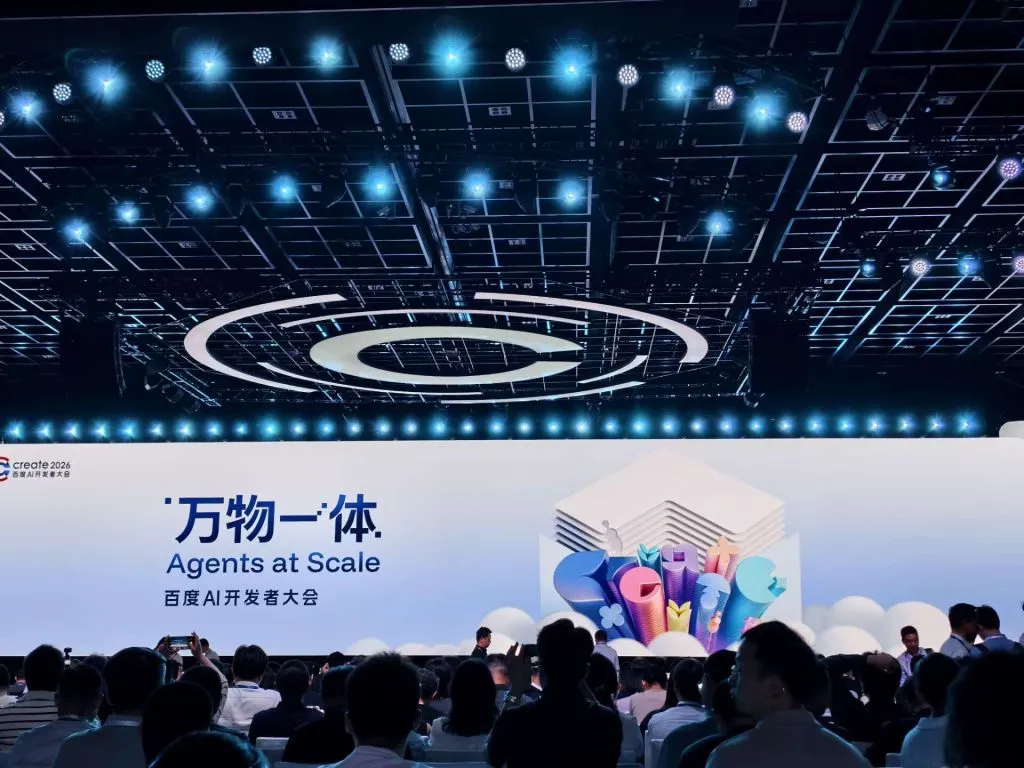
Baidu unveiled its full-stack AI agent capabilities at the Create 2026 conference, signaling a significant acceleration in China's enterprise adoption of integrated artificial intelligence solutions.
The presentation highlighted Baidu’s commitment to providing end-to-end AI platforms capable of handling complex business processes without reliance on numerous disparate tools. This strategic move positions the company to capture a larger share of the rapidly evolving Chinese enterprise software market, where integration complexity remains a primary bottleneck for AI deployment.
During the event, Baidu demonstrated how its unified architecture allows AI agents to function across various layers of an organization’s technology stack, from foundational data processing up through complex decision-making workflows. The demonstration emphasized that the agent is not merely a chatbot interface but a deeply embedded operational layer capable of executing multi-step tasks autonomously.
A key focus of the reveal was the robustness and adaptability of this full-stack design. Unlike modular systems where integrating new functions often requires extensive custom coding, Baidu’s approach aims for native interoperability between its various AI modules—including natural language understanding, reasoning engines, and knowledge retrieval systems.
The specific details shared at the Create 2026 conference indicated that the platform is engineered to address common pain points in large-scale enterprise migration toward AI, particularly concerning data silos and workflow fragmentation.
Strategic Implications for Enterprise AI Adoption
This unveiling underscores a broader trend within the Chinese tech sector: a shift from deploying isolated, point solutions to implementing comprehensive, cohesive AI ecosystems. Enterprises are increasingly demanding platforms that offer not just intelligence, but operational completeness.
Baidu’s full-stack agent directly addresses this demand by embedding sophisticated reasoning capabilities directly into the infrastructure layer of its cloud services. This architecture minimizes latency and maximizes context retention across operations, a critical factor for high-stakes business applications such as supply chain management or financial risk assessment.
Furthermore, the presentation touched upon advancements in the agent’s ability to interact with legacy systems. The platform reportedly incorporates sophisticated middleware that allows modern AI agents to interface seamlessly with older, established enterprise resource planning (ERP) or customer relationship management (CRM) software without requiring complete overhauls of existing IT infrastructure.
This compatibility feature is strategically vital for attracting conservative, large-scale enterprises hesitant to undertake massive digital transformation projects. By offering a path to AI integration that respects current operational investments, Baidu lowers the barrier to entry for adopting advanced automation.
Technological Depth and Market Positioning
The underlying technology driving these agents involves significant advancements in proprietary Large Language Models (LLMs) optimized specifically for commercial workflows rather than generalized public-facing queries. The emphasis is placed on 'grounded' AI, where the agent’s responses are demonstrably tied to verified internal organizational data.
Competitor analysis suggests that while many players focus on improving model size or general conversational fluency, Baidu appears to be prioritizing functional depth and enterprise governance within its AI offerings. The full-stack nature implies built-in security protocols and fine-grained access controls necessary for regulated industries.
The success of this platform hinges on the quality of the training data provided by deploying enterprises. By creating a feedback loop where operational execution refines the model's understanding, Baidu moves beyond static AI implementation toward creating dynamically learning organizational intelligence systems. The Create 2026 showcase serves as a clear declaration of intent to lead in providing the foundational software layer for China’s next wave of intelligent enterprise transformation.