BYD system energizes Hungary’s biggest battery project
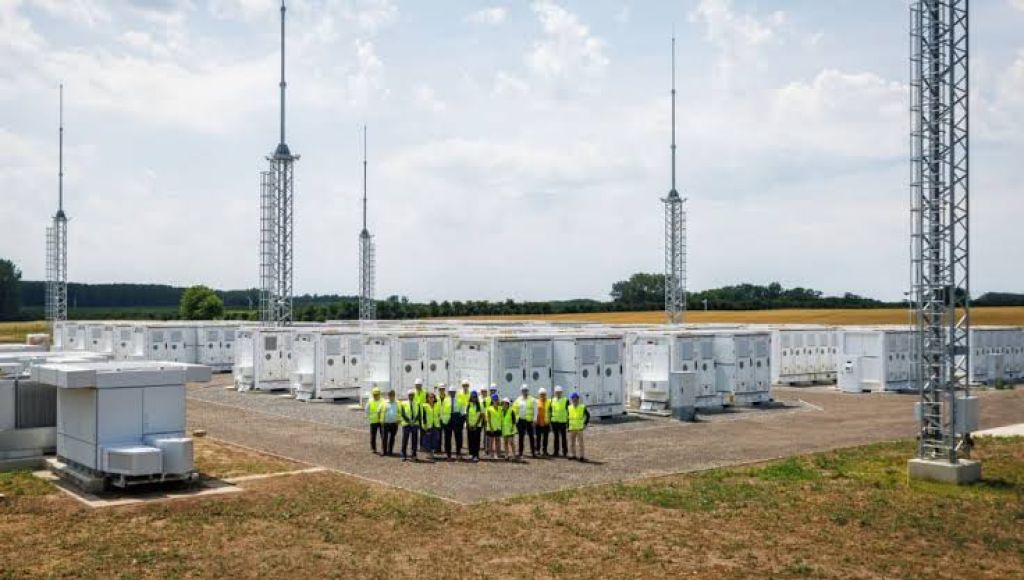
BUJ, Hungary (AP) — Hungary’s largest operating battery energy storage project has gone online, powered by technology from China’s BYD, in a sign of how quickly Chinese battery makers are moving deeper into Europe’s power infrastructure.
The project, built by Greenvolt Power in the northeastern town of Buj, has a capacity of 99.8 megawatts and 288.6 megawatt-hours. BYD Energy Storage supplied its MC Cube battery system for the facility, which the company says is designed for grid-level uses such as frequency regulation, peak shaving and rapid response to shifts in electricity demand. :contentReference[oaicite:0]{index=0}
A commissioning ceremony was attended by Hungarian State Secretary for Energy András Tóth, according to BYD. The project is expected to improve grid flexibility and supply reliability as Hungary seeks to bring more renewable power onto its electricity system. :contentReference[oaicite:1]{index=1}
Battery storage is becoming a critical part of Europe’s energy transition. Wind and solar farms can produce electricity unevenly, depending on weather and daylight. Large-scale batteries allow grid operators to store excess power and release it when demand rises or generation falls, reducing pressure on conventional power plants and transmission systems.
Greenvolt’s Buj project is based on lithium iron phosphate battery technology and is backed by a 10-year contract-for-difference awarded through a public auction, giving the project a stable revenue structure before it later participates in the merchant market, according to Renewables Now. :contentReference[oaicite:2]{index=2}
Chinese battery companies expand in Europe
The Hungary project also reflects BYD’s broader push beyond electric vehicles. The Shenzhen-based company began its energy storage business in 2008 and says it has delivered large-scale storage projects in more than 110 countries and regions. :contentReference[oaicite:3]{index=3}
BYD is best known internationally as one of the world’s largest electric vehicle makers, but its battery business increasingly touches cars, buses, ships and grid infrastructure. In May, its energy storage unit signed a strategic cooperation agreement with Norway’s Corvus Energy to develop marine lithium iron phosphate battery systems. :contentReference[oaicite:4]{index=4}
For Hungary, the Buj site arrives as the government and private developers accelerate storage deployment. Hungary’s National Recovery and Resilience Plan targets 440 megawatts and 880 megawatt-hours of new grid storage by mid-2026, supported by a grant program covering up to 45% of eligible project investment costs, according to ESS News. :contentReference[oaicite:5]{index=5}
Greenvolt secured 58.9 million euros in project financing from UniCredit Bank Hungary earlier this year to support construction, operation and maintenance of the Buj battery system. The project is in Szabolcs-Szatmár-Bereg County, near Hungary’s border region with Ukraine and Slovakia. :contentReference[oaicite:6]{index=6}
The opening underscores a wider contest for Europe’s energy storage market, where developers are racing to stabilize grids increasingly supplied by renewables. For BYD, Hungary offers both a showcase for its storage technology and another foothold in Europe at a time when Chinese clean-energy companies face growing political scrutiny but rising demand for their products.