
🎙 Listen to a summary of this story
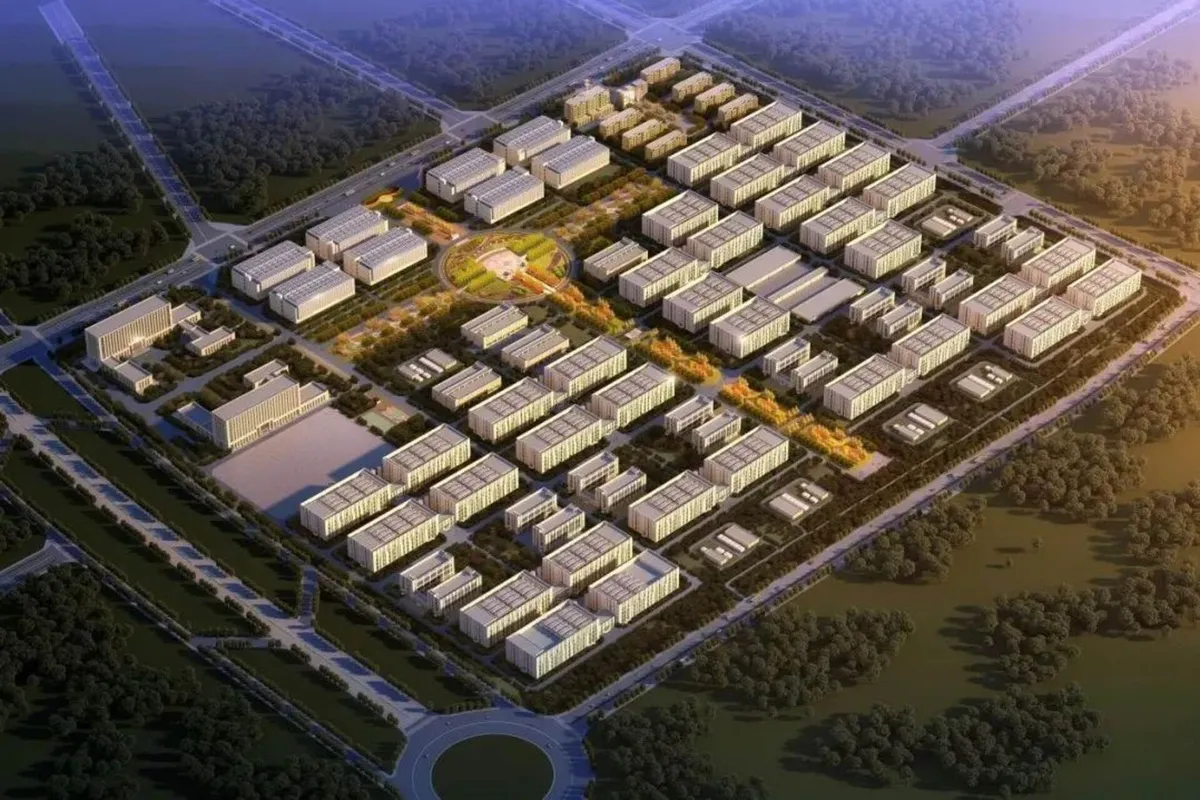
Across the grasslands of Inner Mongolia, warehouses filled with computers are rising beside wind farms, coal-fired power stations and high-voltage transmission lines. They form part of China’s effort to turn abundant electricity, inexpensive land and rapid construction into an advantage in the global artificial intelligence race.
Ulanqab, about two hours from Beijing by high-speed train, has become one of the clearest examples of that strategy. The city has attracted 89 data-centre projects involving companies including Huawei, Alibaba and ByteDance, according to local-government figures. DeepSeek, Z.ai and infrastructure operators including VNET and ZData are also building or using facilities in the region.
The expansion is part of a much larger national buildout. China has about 24 gigawatts of operational data-centre computing capacity and another 50 gigawatts under construction or announced, according to estimates from research company SemiAnalysis reported by the Financial Times. The United States has an estimated 56 gigawatts in operation.
Those figures measure the electrical capacity available to computing equipment rather than the performance of the machines themselves. They nonetheless illustrate the extraordinary physical scale of China’s preparations for an economy in which AI systems are expected to support manufacturing, transport, research, public administration and consumer services.
Following electricity westward
Ulanqab’s emergence reflects China’s “Eastern Data, Western Computing” policy, which directs computing workloads from populous coastal cities toward western regions with more land and energy. China’s latest five-year development plan calls for the programme to be expanded through a nationally integrated computing network.
Inner Mongolia offers conditions that are increasingly difficult to find near Beijing, Shanghai and Shenzhen. Land is cheaper, the climate reduces cooling requirements and electricity can be drawn from large coal, wind and solar installations. Data-centre operators can also build facilities more quickly than in markets where projects face lengthy planning reviews and queues for grid connections.
Local officials said Ulanqab’s computing capacity reached 165,000 petaflops during the first half of 2026, with more than 90% classified as intelligent computing. The city accounted for 8.7% of China’s reported computing power, although such figures can be difficult to compare because operators use different definitions and performance measurements.
The National Data Administration highlighted the region’s importance during a September visit to facilities including Huawei Cloud and the ZData zero-carbon computing base in Ulanqab. Local authorities are also developing a 2026–2028 “AI+” programme that supports gigawatt-scale facilities using domestically produced processors.
The strategy gives China a potential answer to one of the biggest constraints confronting AI developers elsewhere: electricity. In parts of the United States, new data centres face delays because sufficient power generation and grid connections are unavailable. China, by contrast, can direct state-controlled utilities, local governments and construction companies toward nationally selected computing hubs.
More buildings do not guarantee more intelligence
China’s construction advantage does not eliminate its most serious weakness: access to advanced processors. U.S. export controls restrict Chinese companies from buying the most powerful chips made by Nvidia and other suppliers. Domestic companies led by Huawei are developing alternatives, but Chinese manufacturers have struggled to produce advanced AI processors in sufficient quantities.
That creates the possibility that some newly completed facilities could open before operators have acquired the chips needed to fill them. A data centre may have grid connections, cooling systems and rows of server racks without delivering its promised computing output.
The distinction is important when comparing the Chinese and American buildouts. A gigawatt of facilities equipped with less efficient processors may require more electricity to perform the same work as a centre using newer chips. China’s strategy could therefore involve compensating for constrained semiconductor performance by connecting larger clusters of domestic chips and supplying them with comparatively inexpensive power.
Utilisation is another concern. China’s history of state-directed investment includes industries in which local governments supported overlapping projects that later produced excess capacity. Announced data-centre capacity should not be treated as operational capacity, while completed facilities may run below their maximum load if demand or chip supplies fall short.
For now, major technology companies appear to be providing substantial demand. ByteDance has become one of China’s largest users of rented computing infrastructure, while Alibaba and Huawei are building broader systems combining processors, cloud services and AI models.
An AI boom with an energy bill
The expansion will place growing pressure on China’s power and water systems. The International Energy Agency expects global data-centre electricity consumption to more than double by 2030, reaching about 945 terawatt-hours. China is expected to account for the second-largest share of the increase after the United States.
Chinese authorities want renewable energy to provide 80% of data-centre electricity by 2030, up from 11% in 2023. But connecting AI facilities directly to intermittent wind and solar power remains technically difficult because computing workloads can fluctuate sharply and require reliable round-the-clock electricity.
Inner Mongolia’s energy mix also illustrates the tension between China’s green-computing claims and its continuing reliance on coal. The region has enormous renewable resources, but thermal generation still helps guarantee continuous power when wind and solar output fall.
Water may become another constraint. Data centres can consume significant amounts for cooling, particularly when processors are operating intensively. Ulanqab’s cold climate helps reduce that demand, but the surrounding region is arid and must balance industrial development with agricultural and residential needs.
China’s data-centre surge does not establish that it has overtaken the United States in artificial intelligence. Operational capacity estimates remain partly dependent on private research, and the amount of electricity available says little by itself about chip quality, software or commercially useful workloads.
It does, however, reveal the industrial foundation Beijing is assembling. While the most visible AI competition centres on models and processors, China is betting that power stations, transmission lines and quickly constructed computing campuses will prove equally important. In Ulanqab, that bet is already reshaping the landscape.