🎙 Listen to a summary of this story
China plans to add at least 76,000 undergraduate places at its leading universities from 2027 through 2030, expanding access to institutions the government expects to help drive its technological ambitions.
The figure, reported by TMTPost after a Sept. 23 government briefing, is a target for expanding annual admissions capacity, not a count of students to be admitted across the four years. It forms part of a broader goal to increase undergraduate intake at “Double First-Class” universities by more than 100,000 places during China’s 2026–2030 planning period.
For prospective students, the plan promises more opportunities at universities where admission is fiercely competitive. For the universities, it raises a harder question: how to accommodate larger classes while providing the teaching, laboratories and campus facilities that make their places so sought after.
More places at sought-after universities
Guo Peng, director of the Education Ministry’s development planning department, said “Double First-Class” universities added 38,000 undergraduate places in 2024 and 2025, followed by another 24,000 this year. The ministry’s next target calls for at least 76,000 more from 2027 to 2030. Guo described the expansion as a response to families’ demand for high-quality higher education and the country’s need for skilled graduates, according to a transcript of the briefing.
The “Double First-Class” initiative supports universities and academic disciplines selected for development toward world-class standing. Its second round, announced in 2022, included 147 universities. The designation covers institutions with different strengths; it does not mean every department at every university holds the same status.
China’s higher education system is already vast. Its universities and other higher education institutions enrolled 48.73 million students in 2025, and the gross enrollment rate reached 61.3%, according to figures presented at the briefing. The new policy is aimed at widening entry to a particular group of universities within that system.
The announcement leaves important details unresolved for applicants. The ministry has not set out how the additional places will be divided among universities, provinces or degree programmes. Those decisions will determine where students see a meaningful increase in their chances of admission.
Training for emerging industries
Beijing is linking the larger intake to changes in what students study. Guo said universities would adjust programmes to better match national priorities, with particular support for artificial intelligence, integrated circuits, biomedicine, new energy and fields that cross traditional academic boundaries. The aim, he said, is to train more people for areas where China sees an urgent need for expertise.
That approach extends beyond the universities covered by the admissions target. In its 2026 undergraduate subject catalogue, the Education Ministry added fields including embodied intelligence, brain science and technology, agricultural robotics and biomanufacturing. Such changes show how quickly universities are being asked to adapt courses to developments in research and industry.
Expansion alone cannot guarantee that graduates will have the skills employers need. New programmes require qualified teachers, equipment and opportunities for students to put their knowledge to work. At the briefing, officials said admissions plans should be linked more closely to training and graduate employment, and that universities would continue reviewing how well their programmes fit regional and industrial demand.
Nor is the policy confined to science and engineering. The universities involved teach across many disciplines. The government’s priority for strategic technologies will shape part of the expansion, but the distribution of places among subjects has yet to be made public.
The test of quality and access
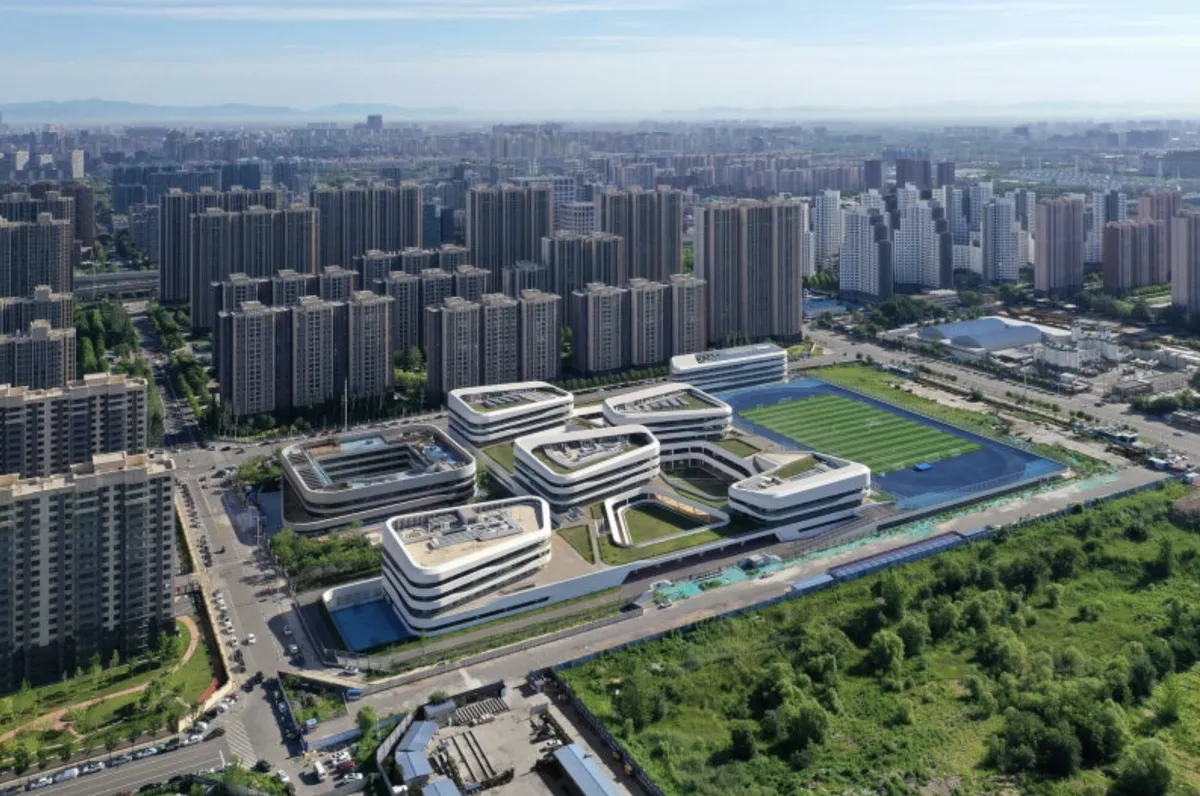
Guo acknowledged that adding places must be accompanied by improvements in capacity. He said the government would use central budget investment and ultra-long special treasury bonds to support new campuses and improve dormitories, dining halls, sports facilities and laboratories. Those facilities will matter to students as soon as a larger intake arrives, even if the benefits of new academic programmes take longer to appear.
Geography is another test. China’s education development plan says new higher education resources should lean toward populous provinces, central and western regions, and ethnic minority areas. It also calls for new campuses at some “Double First-Class” universities. The plan sets a direction, but the ministry has not yet shown how the additional places will be allocated or whether they will narrow existing differences in access.
Officials have framed the increase as part of a longer effort to expand higher education while improving its quality. Its success will become clearer as universities publish admissions plans and students begin filling the new seats. For families weighing where to apply, the immediate promise is straightforward: more places at highly regarded institutions. Whether those places bring broader opportunity and a strong education will depend on the resources behind them.