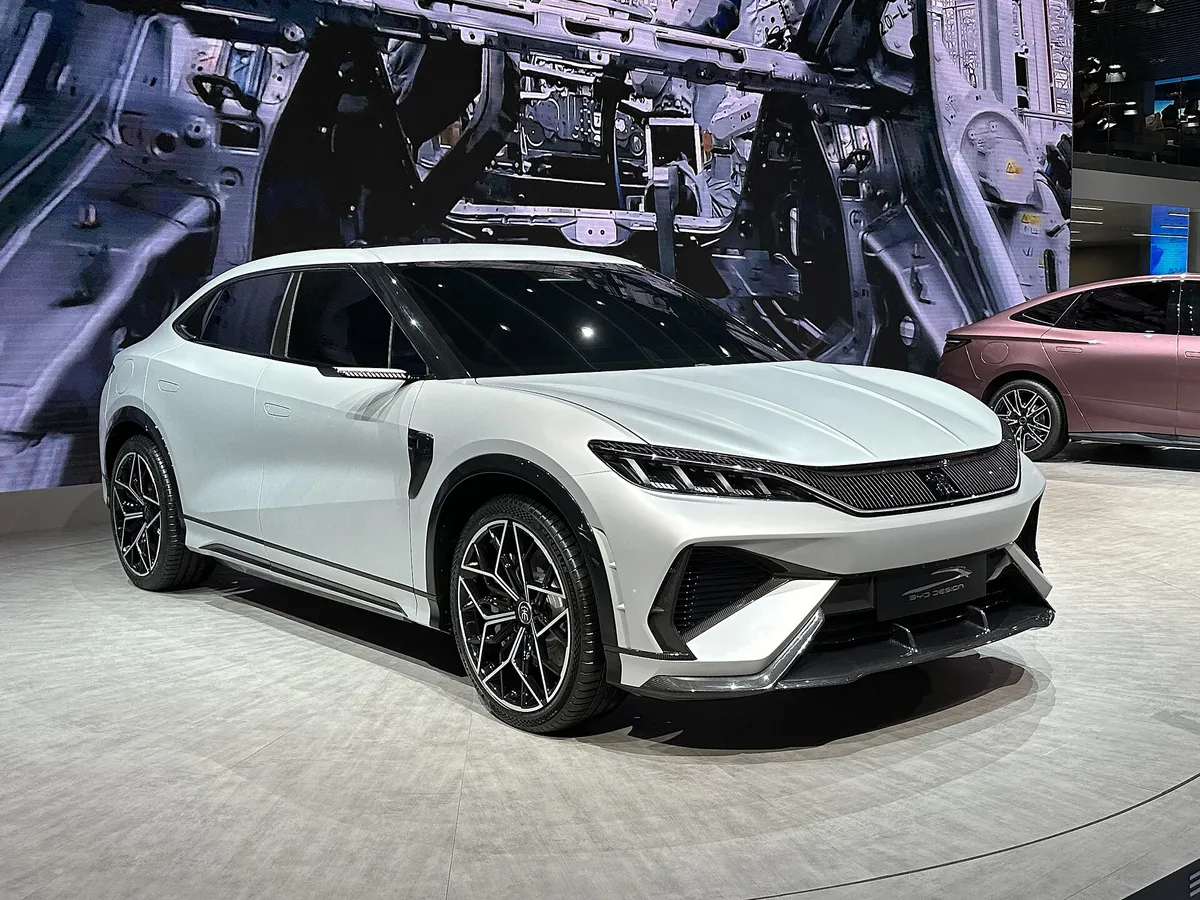
Nearly two-thirds of new passenger cars sold in China are now electric or plug-in hybrid vehicles, marking a new milestone in the world’s largest auto market as rising fuel costs and turmoil in the Middle East add fresh momentum to a transition already reshaping the global automobile industry.
New energy vehicles accounted for a record 65.2% of the 1.54 million passenger cars sold in mainland China in August, according to data from the China Passenger Car Association cited by the South China Morning Post. The figure narrowly surpassed the previous record of 65.1% set in July and represents a striking increase from 2025, when electric cars accounted for almost 55% of Chinese sales.
The milestone comes despite weakness in China's broader car market. August sales of petrol-powered vehicles plunged 40% from a year earlier, while deliveries of electric and plug-in hybrid vehicles fell by a much smaller 10.1%, suggesting that an economic slowdown is accelerating rather than reversing the decline of the internal combustion engine.
China's transformation stands out internationally. More than 20 million electric cars were sold worldwide in 2025, representing about one in four new vehicles, according to the International Energy Agency. China alone sold more than 13 million and accounted for roughly six of every 10 electric cars sold globally. By comparison, electric vehicles represented about 28% of European sales and just under 10% of U.S. sales last year.
China builds an electric-car economy
The rise of electric vehicles in China has been years in the making. Beijing used purchase incentives, tax breaks, industrial policy and infrastructure spending to encourage manufacturers and consumers to move toward what the government calls new energy vehicles, a category encompassing battery-electric cars and plug-in hybrids.
Those incentives are gradually becoming less generous. China moved from a full purchase-tax exemption to a 50% reduction in 2026. But the market increasingly appears capable of sustaining itself without the level of government support that helped establish it. The IEA estimates that nearly 70% of battery-electric cars sold in China in 2025 were cheaper than comparable internal-combustion vehicles even before government incentives were counted.

Chinese consumers also have an unusually broad range of vehicles to choose from. Nearly 700 electric models were available in China by the end of 2025, according to the IEA, around 60% more than the number of conventional models. Competition among manufacturers including BYD, Geely, SAIC, Nio, Li Auto and a growing number of technology companies has increasingly focused on batteries, digital cockpits, driver-assistance systems and software as well as traditional measures such as performance and price.
China has simultaneously built the infrastructure needed to support mass adoption. The country's electric-vehicle charging infrastructure reached about 23.1 million outlets by the end of June 2026, up more than 43% from a year earlier. That vast network has helped reduce one of the principal concerns that once discouraged consumers from abandoning petrol vehicles: whether they would reliably be able to recharge away from home.
China's advantage extends deep into the supply chain. CATL controlled about 39.9% of the global EV battery market during the first half of 2026, while BYD accounted for another 14.4%. Seven Chinese battery companies together supplied more than 72% of batteries installed worldwide during the period, according to data from SNE Research.
Iran conflict adds an energy-security argument
The latest increase in EV penetration has another catalyst: instability in the Middle East and its effect on energy prices. The conflict involving Iran has pushed concerns about oil supplies and fuel costs back to the forefront, giving Chinese motorists an additional economic reason to consider vehicles that can be charged from the electricity grid.
The shift illustrates how electrification is increasingly becoming an energy-security issue as well as an environmental one. Road transport accounts for close to half of global oil demand, according to the IEA. The agency estimates that the world's existing electric-vehicle fleet already avoided roughly 1.7 million barrels a day of oil consumption in 2025.
China is particularly significant because it is the world's largest oil importer while generating electricity from a broad domestic energy system that includes coal, renewables, nuclear power and natural gas. Replacing petrol consumption with electricity therefore has strategic implications beyond reducing carbon emissions: it can reduce the exposure of Chinese motorists and the wider economy to disruptions in international oil markets.
The effect is visible in consumer behaviour. Chinese dealers say higher petrol prices are encouraging some motorists to reconsider the economics of conventional cars at the same time that improvements in battery range, charging speeds and vehicle technology have made electric alternatives increasingly practical.
China's domestic success reshapes the global auto industry
The scale of China's transition is creating pressures far beyond its borders. China produced nearly three-quarters of the world's electric cars in 2025, according to the IEA, while Chinese automakers supplied about 60% of global EV sales. Exports of Chinese electric cars doubled to more than 2.5 million vehicles last year as intense competition and excess manufacturing capacity encouraged producers to seek customers overseas.
That expansion has generated trade tensions. The European Union imposed additional countervailing duties on Chinese-made battery-electric vehicles after concluding that state subsidies gave manufacturers an unfair advantage. The duties include rates of 17% for BYD, 18.8% for Geely and 35.3% for SAIC, on top of the EU's normal automobile tariff.
Yet Chinese manufacturers are increasingly expanding through overseas production as well as exports. Their competitively priced vehicles have helped accelerate EV adoption across Southeast Asia, Latin America and other emerging markets. The IEA says Chinese-made vehicles accounted for 60% of electric-car sales in emerging and developing economies outside China in 2025.
China's 65.2% monthly penetration rate therefore represents more than another record for its domestic automobile industry. It suggests that the transition from petrol to electric vehicles can become self-reinforcing once batteries become cheap enough, manufacturers offer enough models and charging infrastructure becomes sufficiently widespread.
For global automakers, the implications are increasingly difficult to ignore. The world's largest automobile market is rapidly becoming a predominantly electric one, while Chinese companies command much of the battery supply chain needed to power that transition. The latest oil shock may accelerate the process, but the foundations were laid years earlier. China is no longer preparing for an electric-car future. Much of its new-car market has already arrived there.