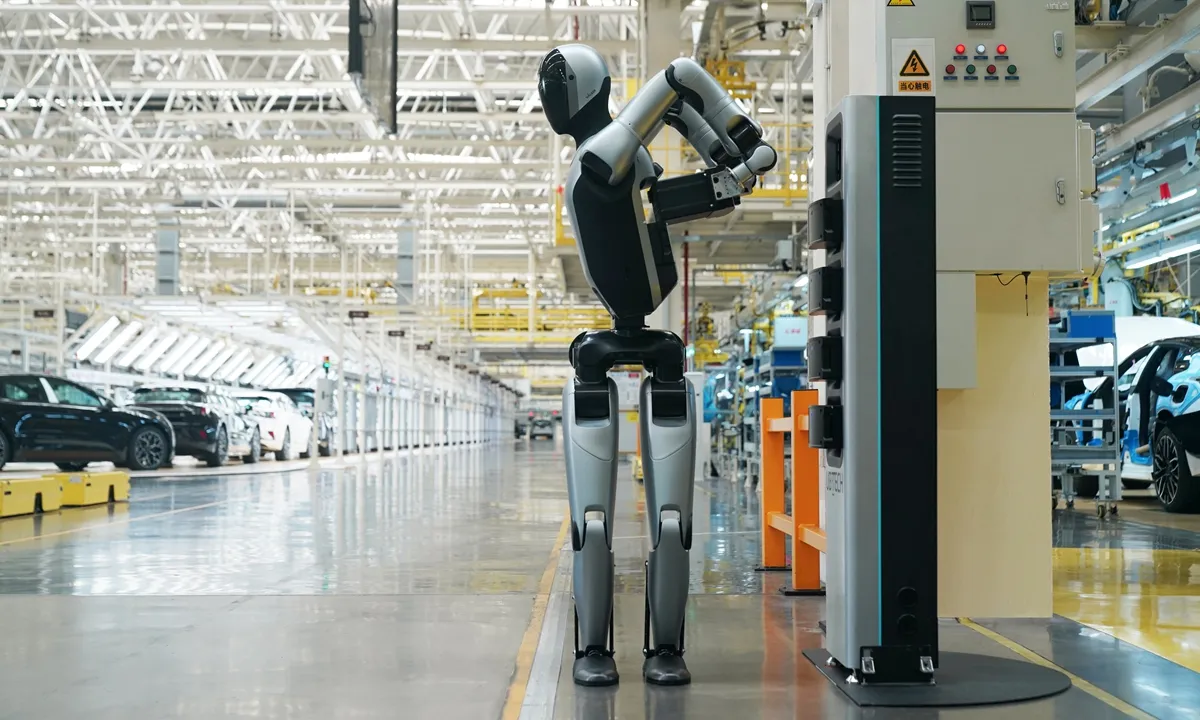
China has unveiled the nation's first humanoid robot lifecycle management platform in Beijing, establishing a critical infrastructure layer for the rapidly scaling domestic robotics industry.
The new system integrates end-to-end oversight for humanoid robots, covering everything from initial design and manufacturing through deployment, operation, maintenance, and eventual decommissioning. This centralized approach addresses key industrial hurdles related to managing large fleets of complex, dynamic robotic assets across diverse applications.
Developed in response to the accelerating adoption curve of advanced robotics within Chinese enterprises, the platform aims to standardize operational protocols and optimize resource allocation for robot owners and service providers alike. Industry analysts suggest this move signals a maturation point where China is shifting from merely prototyping humanoid robots to building the necessary industrial ecology to sustain them.
Platform Architecture and Technical Scope
The lifecycle management system provides comprehensive tracking capabilities, allowing operators to monitor the performance metrics of individual units in real-time. These metrics include operational uptime, energy consumption, maintenance schedules, and component health diagnostics. This granular data collection is vital for predictive maintenance strategies, reducing unexpected downtime which represents a significant operational cost in high-throughput environments.
The platform utilizes advanced IoT connectivity to interface directly with various hardware components within the humanoid robots. It manages software updates centrally, ensuring fleet-wide consistency and security patching across heterogeneous robot models. Furthermore, the system incorporates digital twin capabilities for simulation, enabling engineers to test operational changes or stress scenarios virtually before deploying them onto physical assets.
The strategic significance lies in its ability to manage complexity at scale. As Chinese manufacturers deploy humanoid robots into logistics, elder care, and advanced manufacturing settings, ensuring uniform maintenance standards across thousands of disparate units becomes an insurmountable logistical challenge without a unified management layer. This platform provides that necessary standardization framework.
Implications for the Domestic Robotics Ecosystem
The introduction of this centralized management tool has immediate implications for the domestic supply chain supporting humanoid robotics. It creates a standardized data requirement, which in turn drives demand for interoperable components and standardized service APIs among hardware manufacturers and software developers.
By providing transparent lifecycle visibility, the platform facilitates better investment decisions for businesses adopting these technologies. Companies can more accurately calculate Total Cost of Ownership (TCO) by having verifiable data on maintenance expenditures versus operational output. This de-risking effect is crucial for wider enterprise adoption beyond pilot programs.
Government and industry leaders view this infrastructure as a foundational element for China’s broader ambition in artificial intelligence and advanced manufacturing dominance. The platform moves robotics from being merely an application of AI to becoming a fully managed, industrialized system asset class. This focus on operational longevity and systemic management distinguishes it from earlier efforts focused solely on the robot's immediate physical capabilities.