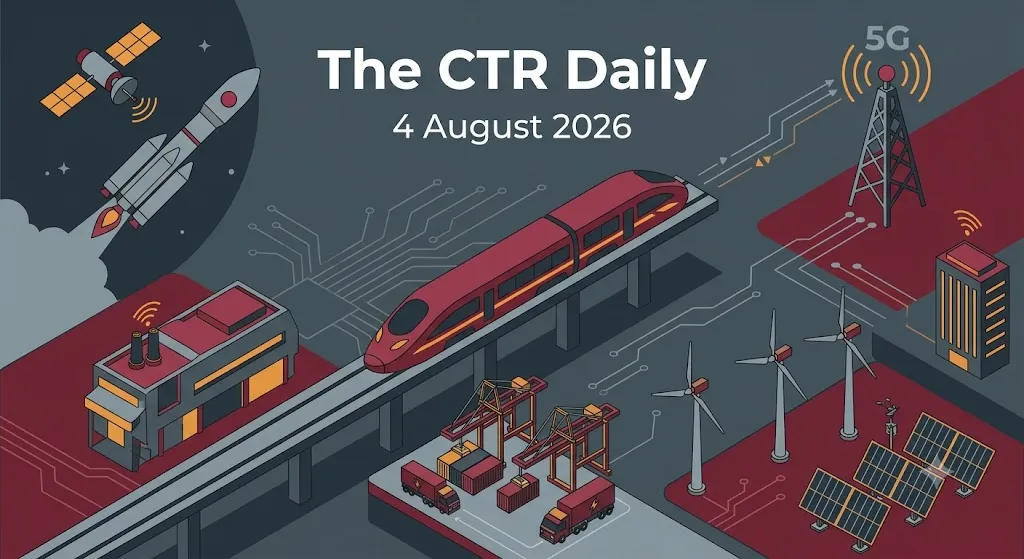

Today's CTR: The Chinese technology landscape is currently defined by a concerted push toward deep systemic integration and domestic self-reliance. From the classroom to the data center, Beijing is signaling that artificial intelligence (AI) and advanced hardware are no longer mere industry trends but fundamental pillars of national infrastructure. We are seeing a strategic pivot away from reliance on foreign silicon and toward a highly regulated, standardized ecosystem. The mood is one of aggressive fortification, as China seeks to secure its digital sovereignty through massive computing clusters, new national standards, and next-generation connectivity.
Alibaba Bolsters Domestic Compute with Massive "Zhenwu" Cluster
Alibaba Cloud, in collaboration with China Telecom, has officially launched a large-scale computing cluster in Shaoguan. The facility is powered by 10,000 "Zhenwu" semiconductors, which are Alibaba’s own proprietary AI [Artificial Intelligence] chips.
This deployment serves as a significant milestone for the "East Data, West Computing" strategy. By scaling its own silicon, Alibaba is positioning itself to bypass existing export restrictions on high-end NVIDIA hardware, ensuring that domestic cloud capacity remains resilient despite geopolitical headwinds.
Ministry of Education Unveils "AI Plus Education" Initiative
China's Ministry of Education announced a sweeping plan on April 10 to integrate AI across all levels of the national schooling system. By 2030, AI will be integrated into university curricula, while primary schools will utilize AI-driven personalized tutoring and automated grading.
This initiative represents a long-term play to future-proof the nation's workforce. By embedding these technologies early, the state is ensuring that the next generation of workers is natively fluent in the tools that will define the global economy.
ByteDance Advances Conversational AI with Seeduplex
ByteDance has unveiled "Seeduplex," a next-generation audio model designed for low-latency and emotionally expressive dialogue. The model supports real-time interruptions and nuanced tone shifts, specifically to bolster its "Doubao" assistant ecosystem.
This move highlights the intense competition in the generative AI space, moving beyond simple text generation toward more human-centric, interactive interfaces. As ByteDance refines these conversational capabilities, it strengthens its hold on the consumer-facing digital assistant market.
MIIT Targets SME Support via "Computing Power Banks"
The Ministry of Industry and Information Technology (MIIT) has launched an action plan to provide subsidized computing power to Small and Medium-sized Enterprises (SMEs). The goal is to create "Computing Power Banks" by 2028, allowing companies to trade or deposit idle computational resources.
This plan aims to democratize access to the high costs of AI development. By creating a liquid market for computing power, the MIIT hopes to prevent a digital divide where only tech giants can afford the hardware necessary for innovation.
China Mobile Expands 5.5G Coverage to 100 Cities
China Mobile has expanded its 5.5G (5G-Advanced) network coverage to include 100 cities, such as Hangzhou and Chongqing. This technology offers downlink speeds of up to 10Gbps and features "low-altitude sensing" capabilities.
The inclusion of low-altitude sensing is particularly strategic, as it allows base stations to manage logistics for the emerging "low-altitude economy" and track unauthorized drones. This positions the telecommunications infrastructure as a critical enabler for both high-speed consumer data and complex urban airspace management.
BYD Reaches Milestone in Solid-State Battery Development
BYD Chief Scientist Lian Yubo confirmed that the company has reached a critical hardware milestone in all-solid-state battery (ASSB) development. While mass-market availability is targeted for after 2027, pilot-scale production is currently underway.
The focus remains on electrolyte stability and integration into premium Electric Vehicles (EV). If successful, this breakthrough could significantly extend range and safety, providing BYD with a decisive technological edge in the global automotive race.
New National Standards Set for BeiDou and Smart Tech
The State Administration for Market Regulation has released new national standards targeting BeiDou navigation chips, brain-computer interfaces, and smart shipping. These updates provide a formal regulatory framework for next-generation domestic mobile hardware and Internet of Things (IoT) connectivity.
By standardizing these emerging sectors, the government is creating a predictable environment for domestic manufacturers to scale. This move effectively builds a "moat" around Chinese hardware ecosystems by ensuring interoperability through state-mandated protocols.