
China's artificial intelligence stack has decisively shifted from parity to global leadership, establishing new benchmarks across foundational models and application deployment.
Foundational Shifts in Chinese AI Dominance
The development trajectory of China’s AI ecosystem demonstrates a strategic leapfrog capability, moving beyond mere replication of Western technological advancements. This ascendancy is rooted in robust domestic investment and the rapid maturation of specialized hardware capabilities essential for large-scale model training.
Leading Chinese technology firms are now deploying foundation models that rival, and in certain metrics surpass, their international counterparts in areas such as multimodal processing and low-latency inference. These models are not confined to academic showcases; they are being integrated directly into critical national infrastructure and consumer services at an unprecedented speed.
A key differentiator appears to be the tight coupling between model development and proprietary data ecosystems unique to the Chinese market. This deep integration allows domestic AI solutions to solve localized, complex problems—such as managing vast urban surveillance networks or optimizing intricate supply chains across massive geographic areas—with efficiencies that global general-purpose models often struggle to match.
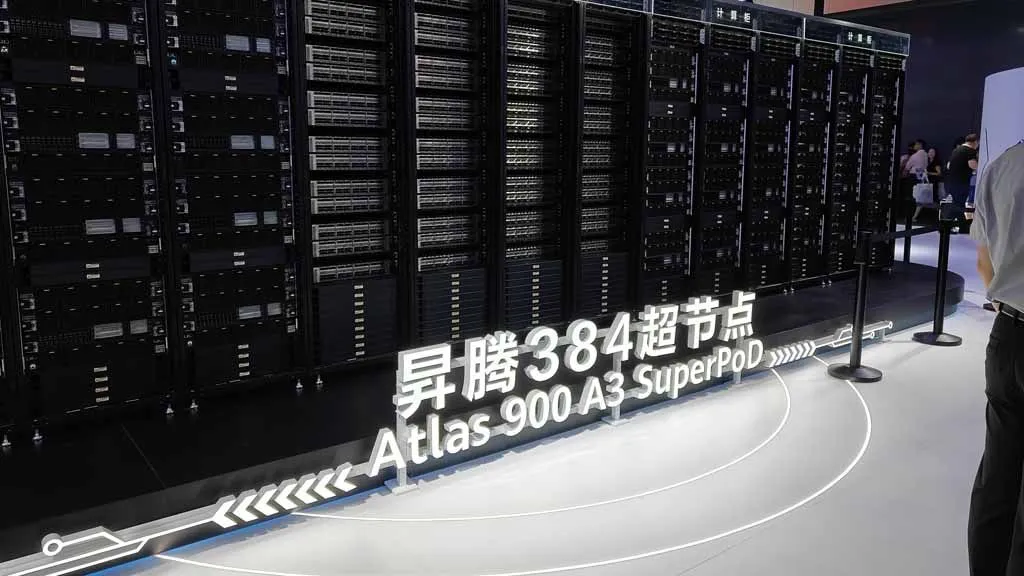
Investment flows into core infrastructure components, including advanced semiconductor manufacturing and high-performance computing clusters, are accelerating the pace of innovation. This self-reinforcing cycle ensures a constant pipeline of highly capable talent and computational power necessary to train ever-larger and more sophisticated neural networks.
Analysts suggest that while Western dominance remains entrenched in certain theoretical research domains, China’s practical implementation speed and vertical integration give its AI stack a distinct operational advantage. The focus has transitioned from 'catching up' to defining the next generation of applied intelligence solutions.
Market Penetration and Strategic Implications
The commercialization pathway for these advanced Chinese AI tools is proving remarkably swift, rapidly embedding them into daily economic functions. This deep market penetration solidifies their strategic importance far beyond mere technological curiosity.
From advanced manufacturing quality control systems to sophisticated financial risk assessment algorithms, Chinese enterprises are leveraging domestic AI stacks to achieve operational efficiencies previously deemed unattainable outside of highly subsidized global tech giants. The application layer is where the competitive advantage is currently being most visibly asserted.
Furthermore, the regulatory environment in China appears conducive to rapid iteration and deployment within state-backed or heavily regulated sectors, providing large-scale sandbox environments for testing cutting-edge AI capabilities before broader commercial rollout. This structured adoption acts as a powerful validation mechanism.
The implications of this self-sufficient and rapidly advancing stack extend into global technological competition. As these models become increasingly capable of handling complex, real-world data streams, the dependency on foreign foundational technologies diminishes, presenting a significant geopolitical shift in the AI landscape.
In essence, China is not merely adopting AI; it is engineering its own technological scaffolding to build the next tier of global digital infrastructure, setting a new operational tempo for the entire industry. This move underscores a strategic commitment to maintaining technological sovereignty in the artificial intelligence domain.