Li seeks to recast China’s tech surge
Chinese Premier Li Qiang sought Wednesday to reframe global anxiety over China’s rapid advance in electric vehicles, artificial intelligence, batteries and robotics, telling business leaders that the country’s industrial rise should be seen not as a new economic shock but as “China Opportunity 2.0.”
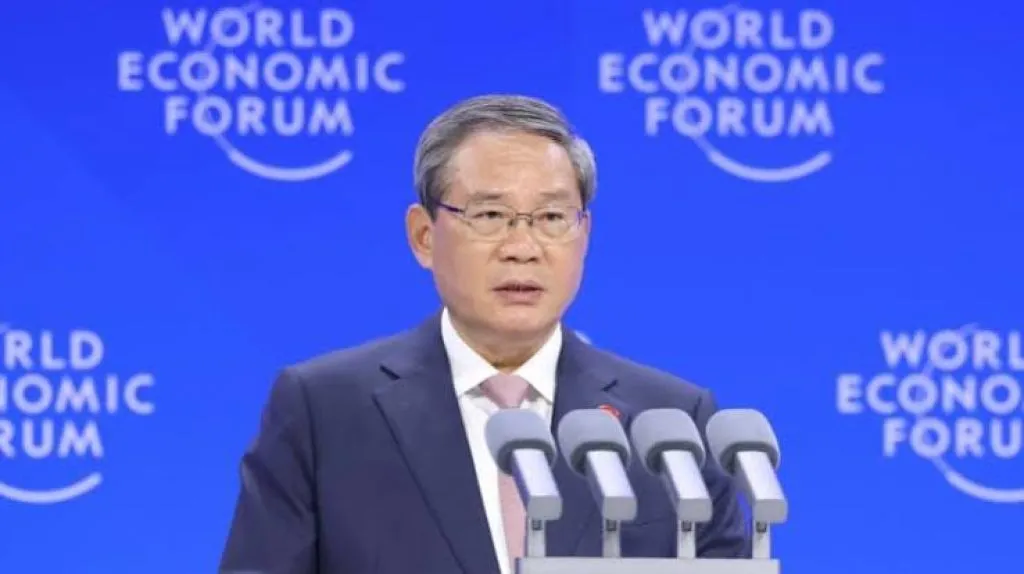
Speaking at the World Economic Forum’s Annual Meeting of the New Champions in Dalian, known as Summer Davos, Li pushed back against warnings in the United States and Europe that China’s export machine is entering a more technologically sophisticated phase that could squeeze foreign manufacturers. He said Chinese companies were bringing cheaper, more advanced products to global markets and widening access to technologies once concentrated in wealthier economies.
“China’s emerging technologies and products are bringing to the world not shocks, but opportunities,” Li said, according to the Associated Press. He cast the country’s innovation drive as a source of “empowerment,” not threat, and urged foreign governments to avoid protectionist responses.
The remarks came as Beijing tries to reassure investors and trading partners that its next stage of growth will create markets abroad, not merely displace jobs and factories. The phrase “China Shock 2.0” evokes the disruption that followed China’s accession to the World Trade Organization in 2001, when low-cost Chinese manufacturing reshaped supply chains and hollowed out some industrial communities in advanced economies.
Subsidies remain central dispute
Li rejected the argument that state subsidies are the main reason Chinese manufacturers have become so competitive, saying China’s vast domestic market and corporate investment were more important. He said the government was not wealthy enough to bankroll the country’s technology boom on its own. That argument is unlikely to settle the dispute. Western governments have increasingly accused Beijing of using cheap credit, tax breaks, land, procurement and direct support to build national champions in industries central to the energy transition and artificial intelligence. The European Commission imposed countervailing duties on Chinese-made battery electric vehicles after concluding that China’s EV value chain benefited from unfair subsidization that threatened European producers.
A recent OECD analysis has also intensified scrutiny of industrial policy, finding that large-scale government support can distort global markets and give favored companies advantages unrelated to productivity. The Financial Times reported that the OECD found Chinese firms received three to eight times more support on average than OECD counterparts in 2024, with subsidies and cheap loans helping drive market share gains in sectors including autos, shipbuilding and solar.
China says such complaints ignore the intensity of domestic competition. Chinese EV makers, battery producers and robotics firms often battle in cutthroat price wars at home before expanding overseas. That domestic scale, Li argued, allows rapid deployment and improvement of new technologies for a population of 1.4 billion.
Li pointed to Huawei and robotics company Unitree as examples of Chinese innovation. Both have faced Western restrictions or scrutiny. The Pentagon this month expanded its list of Chinese military-linked companies to include Unitree and other technology firms, barring them from U.S. defense contracts; Huawei is already on the list. Beijing has objected to such moves.
A wider contest over growth
Li’s message reflected a broader Chinese campaign to present the country as a stabilizing force in an unsettled global economy. The World Economic Forum said Li summarized China’s economy with four words — stability, innovation, dynamism and integration — and cited first-quarter growth of 5%.
Yet China faces pressure at home as well as abroad. The government has set a 2026 growth target of 4.5% to 5%, its lowest since 1991, as leaders try to manage weak domestic consumption, a prolonged property slump and trade tensions while pushing “high-quality development” and technological self-reliance.
The tension is clear: Beijing wants exports and high-tech manufacturing to carry growth, while trading partners fear those same exports could overwhelm their own industries. Solar panels, batteries, EVs and industrial equipment have become symbols of both China’s manufacturing prowess and the global backlash against it.
For companies outside China, “Opportunity 2.0” could mean access to cheaper green technologies, faster AI tools and new supply-chain partnerships. For governments, it raises harder questions about how to compete with Chinese scale without fragmenting global trade. That debate is already shaping tariffs, investment reviews, export controls and industrial policy from Brussels to Washington.
Li’s speech offered no detailed concessions on subsidies or overcapacity. Instead, it asked foreign leaders to accept China’s technological rise as a shared benefit. Whether they do will depend less on the slogan than on prices, factory closures, market access and the degree to which Beijing can persuade others that China’s next wave of growth will expand opportunity rather than export disruption.