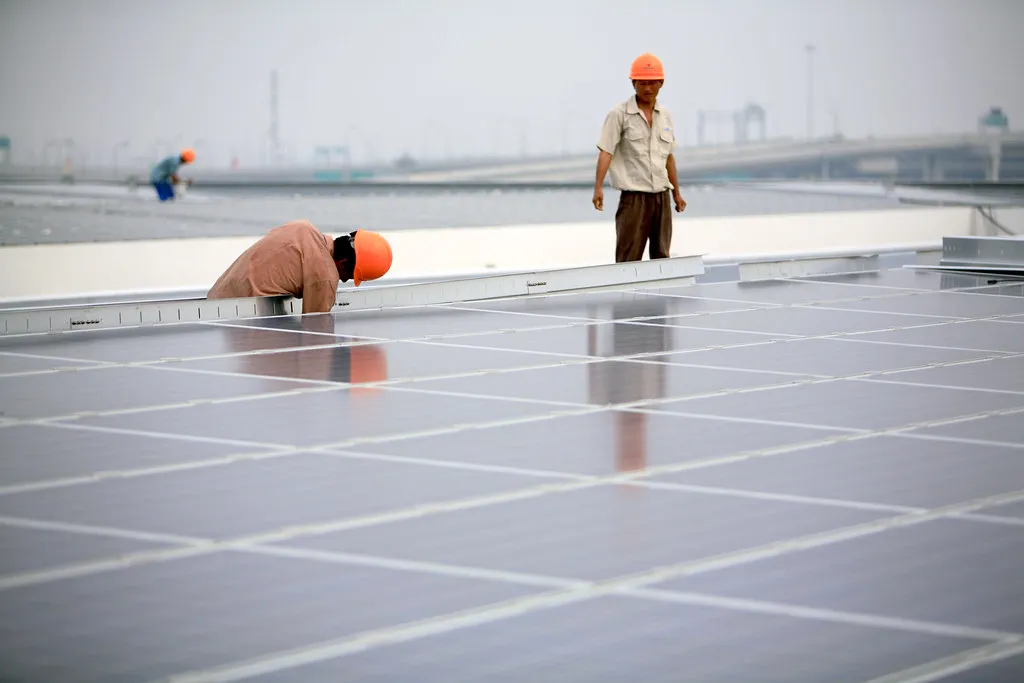
China's renewable energy sources generated over 40% of the nation's total power output in the first half of 2026, marking a significant milestone in its aggressive decarbonization strategy.
The data indicates that capacity additions and operational deployment across hydro, wind, solar, and other clean technologies have fundamentally shifted the composition of China's national energy grid during the six-month period ending June 30, 2026.
This achievement solidifies China’s position as a global leader in transitioning away from coal dominance, though substantial challenges remain regarding grid integration and intermittency management across such a large-scale deployment.
Grid Transformation and Capacity Growth
Renewable generation surpassed the 40% threshold due to sustained investment in utility-scale solar photovoltaic (PV) farms and offshore wind projects commissioned throughout the first half of the year.
Specifically, solar power accounted for a disproportionately large share of this growth, driven by favorable policy incentives and declining hardware costs which made deployment economically viable even in geographically challenging terrains.
Wind energy continued its robust expansion, particularly in western provinces where high-capacity wind corridors were brought online to alleviate pressure on eastern transmission networks. Hydroelectric power provided a crucial baseline stability component throughout the period.
Analysts suggest that this rapid scaling is not merely an output metric but represents a structural overhaul of China's energy infrastructure planning, moving from targeted capacity additions to systemic grid integration mandates.
The government’s commitment, reflected in updated five-year plans, prioritizes the development of high-voltage direct current (HVDC) transmission lines capable of transporting intermittent renewable power from remote generation hubs to dense industrial load centers efficiently.
Furthermore, increased deployment of energy storage solutions, primarily lithium-ion battery systems co-located with solar and wind farms, played an increasingly vital role in smoothing out peak supply fluctuations inherent to variable renewable energy sources.
Strategic Implications for Global Energy Markets
The H1 2026 data carries considerable weight for international energy policy discussions, signaling a tangible shift in the feasibility of national-scale clean power transition outside of traditional developed economies.
This level of renewable penetration challenges established forecasts regarding the timeline for peak coal electricity generation globally. While China remains heavily reliant on coal to meet baseline demand during periods of low wind or solar output, the increasing share of renewables reduces the required marginal dispatch from thermal plants.
The technological advancements underpinning this surge—including sophisticated forecasting models and smart grid management systems—are becoming key exports alongside the physical renewable assets themselves. These domestic innovations are influencing global manufacturing standards for clean power components.
However, experts caution that achieving 100% reliance on zero-carbon sources necessitates further breakthroughs in long-duration energy storage technologies, such as green hydrogen production and pumped hydro improvements, to address seasonal variability.
The trajectory established in H1 2026 suggests that while coal will persist as a critical component for near-term grid security, its relative share of total power generation is demonstrably and structurally declining.