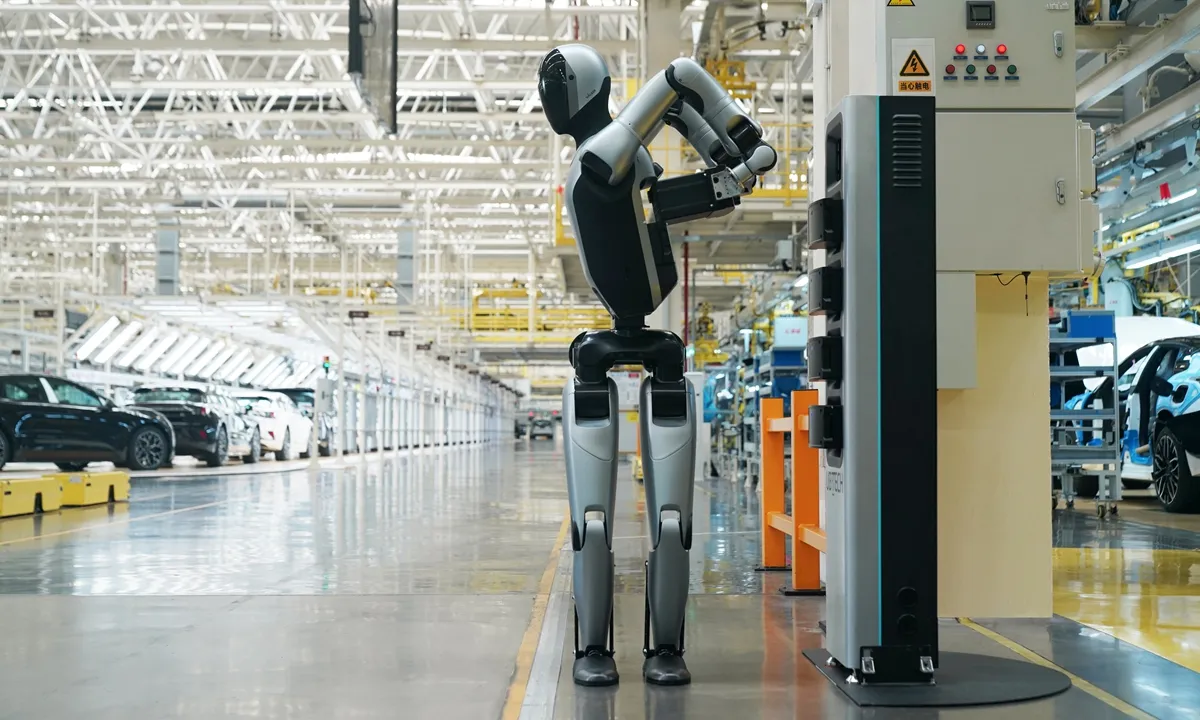
Beijing startup DeepCybo is wagering that first-person human data holds the key to unlocking truly embodied Artificial General Intelligence (AGI).
The company asserts that current AI models lack sufficient understanding of subjective, embodied experience, a gap DeepCybo intends to bridge by prioritizing real-world, first-person sensory input.
This approach contrasts with prevailing paradigms that often rely heavily on large datasets derived from external or curated observations. DeepCybo's methodology centers on capturing the nuanced data generated when an agent experiences the world through a human-like perspective.
According to reports, the company is moving beyond simple pattern recognition toward modeling genuine "understanding," which requires context rooted in personal sensation and interaction.
The Data Demand for Embodiment
DeepCybo's foundational premise suggests that true intelligence necessitates embodiment—the integration of cognition with a physical or simulated body interacting with an environment. Standard LLMs, while powerful, operate largely as sophisticated text predictors; they do not inherently possess the 'feel' of navigating a space or grasping an object.
The startup posits that first-person data provides this crucial experiential layer. This includes sensory streams—visual perception, proprioception (awareness of body position), and tactile feedback—all indexed against internal cognitive states.
This focus on subjective experience is a deliberate pivot in the race for AGI, suggesting that simply scaling up parameter count will reach diminishing returns without incorporating rich experiential data. DeepCybo aims to create models that can not only predict outcomes but also reason from lived experience.
The implications of this work extend across robotics and autonomous systems. An AI trained solely on videos of a robot performing a task might learn the sequence, but an agent trained on its own first-person view during execution learns the necessary micro-adjustments required by physical constraints and immediate feedback loops.
The company is tackling the "grounding problem" in AI—the difficulty machines have in grounding abstract symbols (like the word 'red') to tangible, real-world properties. First-person data offers a direct pathway to this grounding.
Strategic Positioning and Future Trajectory
DeepCybo is strategically positioning itself within China's aggressively expanding AI sector, aiming to differentiate its offering beyond generalized language capabilities. By focusing on embodied intelligence, the startup targets high-value applications in complex robotics, advanced simulation, and human-computer interaction where context matters profoundly.
The technology represents a significant departure from purely digital training sets. The infrastructure required to collect, process, and label such high-fidelity first-person data is substantial, presenting both a technological hurdle and a competitive moat for the company.
If successful in its ambition, DeepCybo’s architecture could inform the next generation of general AI systems globally. It suggests that the bottleneck in advanced AI development may not be computational power alone, but rather the quality and dimensionality of the data used for training.
The commitment to first-person perception signals a maturation in AI research priorities—a shift from achieving linguistic fluency to attaining genuine operational understanding within a physical context. Investors and researchers are closely watching DeepCybo’s ability to translate this theoretical framework into scalable, demonstrable performance gains over existing state-of-the-art models.