🎙 Listen to a summary of this story
A new E Ink Kaleido 4 display promises significantly enhanced color fidelity, contrast, and video capabilities for next-generation e-ink smartphones.
This latest iteration of E Ink technology moves the segment closer to mainstream mobile visual standards, offering consumers a substantial leap in readability and multimedia experience within the low-power E Ink ecosystem. The integration of Kaleido 4 suggests manufacturers are aggressively tackling the historic trade-off between e-ink's power efficiency and its previous limitations in color vibrancy.
The improved specifications indicate a strategic push by display innovators to capture market share from traditional LCD/OLED devices, particularly in niches prioritizing battery life and outdoor visibility. The enhanced performance metrics are critical for the viability of high-end, specialized e-ink mobile form factors.
Technical Advancements and Display Performance
The core innovation resides within the Kaleido 4 panel itself, which reportedly delivers superior color gamut coverage compared to prior generations. This advancement allows for a richer and more nuanced representation of visual data, moving beyond simple monochrome or muted color palettes often associated with earlier e-ink screens.
Crucially, the introduction of 18fps video capability addresses one of the most significant functional gaps in consumer e-ink devices. Smooth motion rendering at this frame rate is essential for making digital consumption—such as short videos or dynamic web content—a truly seamless experience, rather than a series of static snapshots.
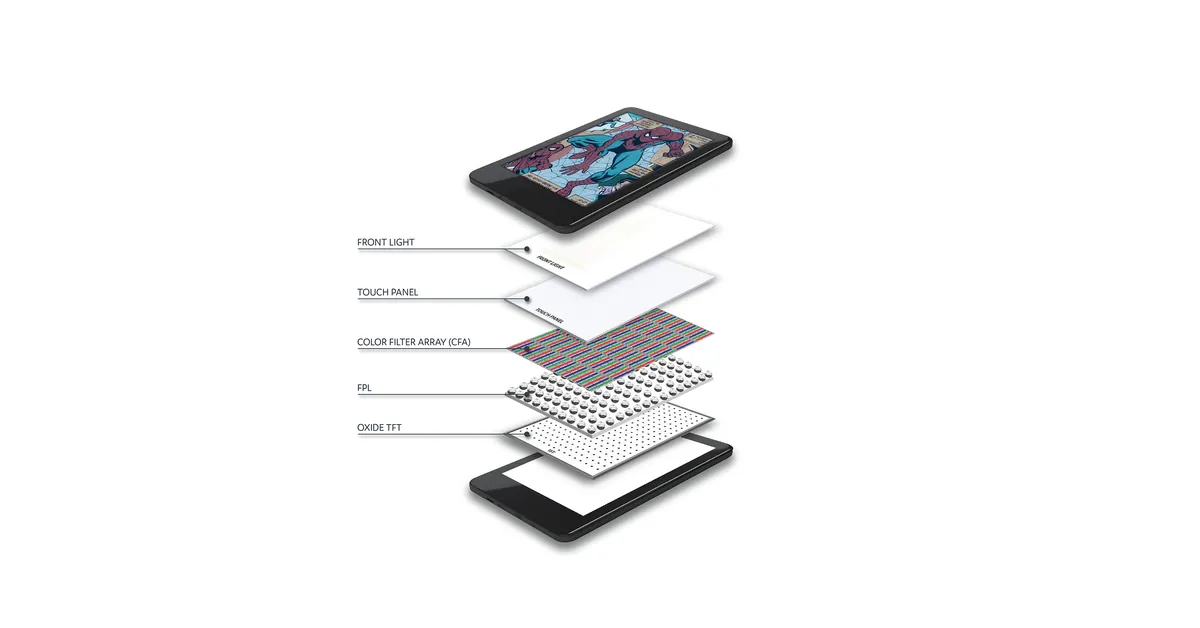
While specific resolution targets remain under wraps, the focus on contrast improvement signals optimization across the entire display stack, from pigment structure to driver efficiency. This holistic enhancement aims to provide visuals that are sharp and distinct, even under high ambient light conditions where traditional e-ink can struggle with washout.
Market Dynamics and Industry Implications
This technical breakthrough positions E Ink as a more potent contender in the burgeoning "smart display" category, challenging established players who rely on continuous power draw for vibrant displays. The enhanced capabilities allow e-readers and specialized communication devices to adopt more visually demanding applications.
From an industry perspective, the adoption of Kaleido 4 signals a maturation of the e-ink segment. It suggests that manufacturers are willing to push display technology boundaries—even if it introduces slight increases in panel complexity or cost—to justify premium pricing for power efficiency benefits.
Geopolitically and commercially, this development reinforces the importance of specialized display supply chains originating from key Asian manufacturing hubs. The continuous refinement of E Ink technology underscores a global race to create sustainable, high-performance mobile interfaces that minimize energy consumption without sacrificing user experience quality.