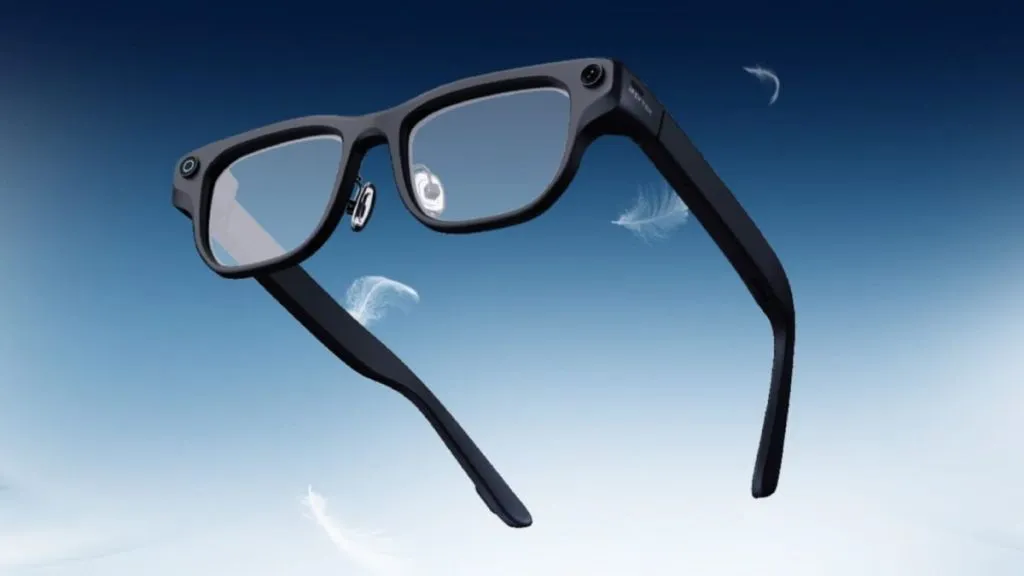
Chinese artificial intelligence company iFlytek has introduced a new pair of AI-powered smart glasses, positioning the device as a lightweight productivity tool as technology companies race to make wearable AI products useful beyond novelty demonstrations.
iFlytek unveils lightweight AI glasses in Macau
The company unveiled the glasses Thursday at BEYOND Expo 2026 in Macau, presenting them under the theme “Communication Without Boundaries, the World Before Your Eyes.” The launch marks iFlytek’s latest attempt to extend its speech recognition and language-processing technology into consumer hardware.
The glasses weigh about 40 grams and are built with an aerospace-grade magnesium-aluminum alloy frame, a resin waveguide display and a customized micro-optical module, according to the company. iFlytek said the device is about 20% lighter than comparable products, has passed a 1.7-meter drop test and can support up to eight hours of battery life.
Lin Huijie, general manager of iFlytek’s wearable devices business department, said at the event that the smart glasses category has struggled for years because many products behaved like smartphones mounted on the face or offered only narrow accessory functions. He said advances in multimodal AI models have created a new opening for glasses to become a more natural computing interface.
The company described the glasses as an AI assistant “before your eyes” and a potential “second brain” for users. The device focuses on translation, interaction, office productivity and comfort, areas iFlytek said are better suited to glasses than to handheld devices because the product can remain worn while seeing and hearing the user’s surroundings.
Translation, noise recognition and office work
The glasses support real-time translation across 122 languages, accents and dialects. iFlytek said they can be used for face-to-face conversations, phone calls, online meetings and augmented-reality visual translation. The device can also translate text from menus, road signs and presentation slides as users look at them.
A key feature is iFlytek’s self-developed lip-motion recognition multimodal noise reduction system. The company said the glasses combine a 5+1 microphone array, cameras and bone-conduction technology to identify a target speaker based on the wearer’s line of sight and the speaker’s lip movements.
The system is designed to help users hear and transcribe the person they are looking at in noisy public spaces, including exhibitions, train stations and airports. iFlytek said the approach is intended to address a persistent problem for speech recognition systems: separating one voice from several competing speakers in crowded environments.
The glasses also include an AI agent called GlassClaw, which supports meeting transcription, information organization, email sending and workflow execution. During the launch demonstration, Lin showed users issuing voice commands to generate partnership proposals, organize travel plans and send emails without using a phone or computer.
Another function is an intelligent teleprompter that scrolls according to a speaker’s pace, a feature iFlytek said could help with speeches, interviews and presentations.
iFlytek said it made ergonomic adjustments for Asian facial structures to improve comfort during extended wear. The company also held an ecosystem partner forum with Sunny Optical, Wanxin Optical and Conant Optics to discuss standards for weight, comfort and intelligence in AI glasses.
The glasses are priced at 4,299 yuan, or about $635, and are scheduled to go on presale June 15. The launch comes as AI companies and hardware makers seek new devices that can move generative AI from phones and computers into daily, always-available use.