🎙 Listen to a summary of this story
Huawei's HarmonyOS 6 and 7 have surpassed 85 million devices, cementing the operating system's growing footprint in both domestic and international markets.
The milestone reflects the sustained global adoption of Huawei's proprietary ecosystem, which operates independently of Google Mobile Services (GMS). This growth trajectory signals a significant evolution in Huawei's strategy to build a comprehensive, self-sufficient technological stack capable of competing in mature mobile operating system landscapes.
According to reports, the cumulative deployment across HarmonyOS versions 6 and 7 demonstrates the increasing hardware compatibility and user acceptance of the system. This expansion is not merely a quantitative measure; it represents a qualitative validation of HarmonyOS’s capabilities in handling diverse hardware configurations and delivering a cohesive user experience.
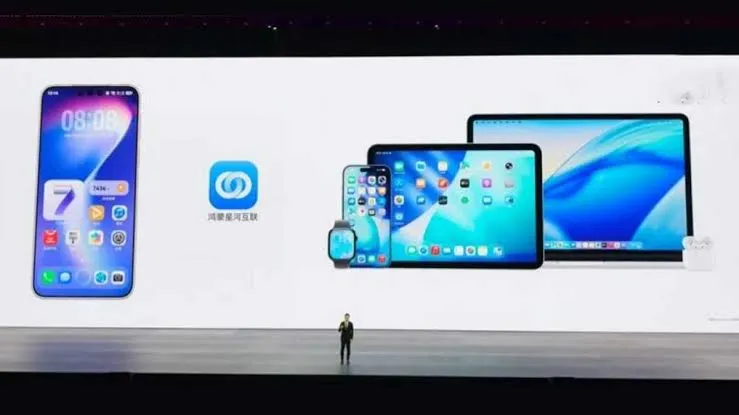
The operating system is integrated across a vast array of Huawei hardware, ranging from smartphones and tablets to smart wearables and IoT devices. This multi-device integration is central to HarmonyOS’s design philosophy, positioning it not just as a mobile OS, but as a holistic ecosystem controller.
Ecosystem Expansion and Strategic Significance
The achievement of 85 million units underscores the success of Huawei’s strategy to localize and optimize its software for specific regional and industrial needs. Unlike platforms heavily reliant on third-party application stores, HarmonyOS emphasizes the development of a rich, in-house application framework designed to function optimally within the Huawei environment.
Market analysts view this sustained uptake as a direct counter-narrative to the perceived dominance of established players. By cultivating a robust internal ecosystem, Huawei mitigates the risk associated with international sanctions and supply chain constraints, creating a resilient technological platform.
The deployment of HarmonyOS 6 and 7 has seen substantial uptake across various consumer segments. This penetration into diverse device categories—from high-end flagship phones to entry-level IoT sensors—demonstrates the platform's scalability and versatility. The operating system acts as the unifying layer across this heterogeneous hardware base.
Furthermore, the growth validates the deep collaboration between Huawei's software and hardware engineering teams. The ability to deploy a complex, feature-rich OS across such a broad spectrum of hardware indicates significant advancements in resource management and system efficiency within the HarmonyOS architecture.
Future Trajectories and Industrial Impact
Looking forward, the continued evolution of HarmonyOS is closely tied to Huawei's ambitions in the burgeoning Internet of Things (IoT) sector. The OS is positioned to manage increasingly complex interactions between smart home appliances, industrial machinery, and personal mobile devices, all communicating through the unified HarmonyOS protocol.
The technical architecture supports advanced functionalities, including distributed computing and seamless device handoff, which are crucial for next-generation smart environments. This capability differentiates HarmonyOS from simpler, single-device operating systems.
The trajectory suggests that HarmonyOS is moving beyond being merely a competitor in the smartphone space. Its emphasis on cross-device connectivity and localized software development makes it a potent challenger in the broader enterprise and smart infrastructure markets.
Huawei continues to iterate on the platform, with future updates focusing on enhancing AI integration and refining the user interface for maximum operational efficiency. The 85 million device mark serves as a foundational metric for achieving broader market penetration globally, allowing Huawei to solidify its position as a major independent technology provider.