🎙 Listen to a summary of this story
Honor Magic 9 Pro Max camera samples reveal advanced periscope and telephoto converter functionality, signaling a significant leap in mobile optical zoom capabilities.
Optical Hardware and Zoom Implementation
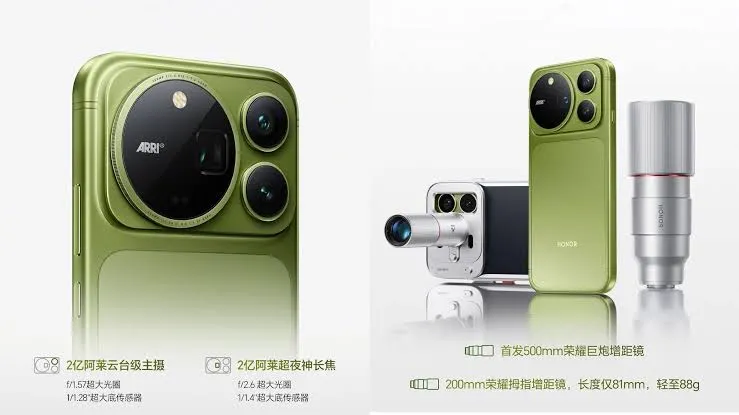
Preliminary analysis of the Honor Magic 9 Pro Max camera module indicates substantial engineering dedicated to achieving high-resolution, long-range optical magnification. The device utilizes a sophisticated periscope lens system, a feature increasingly critical in flagship mobile photography for extending focal length without excessive bulk.
Specifically, the implementation of a telephoto converter suggests a hybrid optical zoom strategy, allowing the phone to achieve effective zoom levels that surpass traditional fixed-lens configurations. This capability is vital for professional-grade mobile users who demand versatility across varying shooting distances.
The hardware configuration reviewed points toward a commitment to maintaining image fidelity even at extreme magnification. Telephoto converters, when properly integrated, manage light paths to ensure that the sensor receives sufficient illumination while capturing distant subjects with clarity.
This strategic hardware choice positions the Magic 9 Pro Max to compete directly with established industry leaders known for their zoom prowess. The integration of this advanced optical system is not merely an incremental update but represents a targeted enhancement of the device's core imaging DNA.
Reviewers observing the samples noted the potential for superior performance in low-light telephoto scenarios, a common Achilles' heel for purely digital zoom solutions. The mechanical precision required to operate a periscope system while maintaining image stability is a testament to Honor's hardware development investment.
Computational Photography and Sensor Synergy
Beyond the physical lens architecture, the success of the Magic 9 Pro Max hinges on the synergy between the specialized optics and the device's computational photography pipeline. The camera samples suggest that Honor is employing advanced software algorithms to maximize the data extracted from the sophisticated hardware.
The telephoto converter, in conjunction with the main sensor, likely benefits from advanced image stabilization techniques. These algorithms compensate for micro-movements during long-distance shots, resulting in sharper, less blurred images that are crucial for professional output.
Furthermore, the expected integration of high-resolution sensors allows the system to capture an enormous amount of raw data. This rich dataset provides the computational engine with the necessary inputs to perform complex tasks such as noise reduction, dynamic range optimization, and intelligent scene reconstruction.
Analysts anticipate that the software tuning will be as crucial as the hardware itself. A powerful optical system requires intelligent processing to translate raw light capture into a polished, usable photograph. The ability to seamlessly transition between ultra-wide, standard, and extreme telephoto perspectives, all while maintaining consistent color science, defines the maturity of the system.
The release of these samples allows industry observers to gauge the real-world potential of the Magic 9 Pro Max before its official market debut. The focus remains squarely on how effectively Honor has managed the complex engineering trade-offs inherent in packing powerful, long-reach optics into a sleek smartphone chassis.