🎙 Listen to a summary of this story
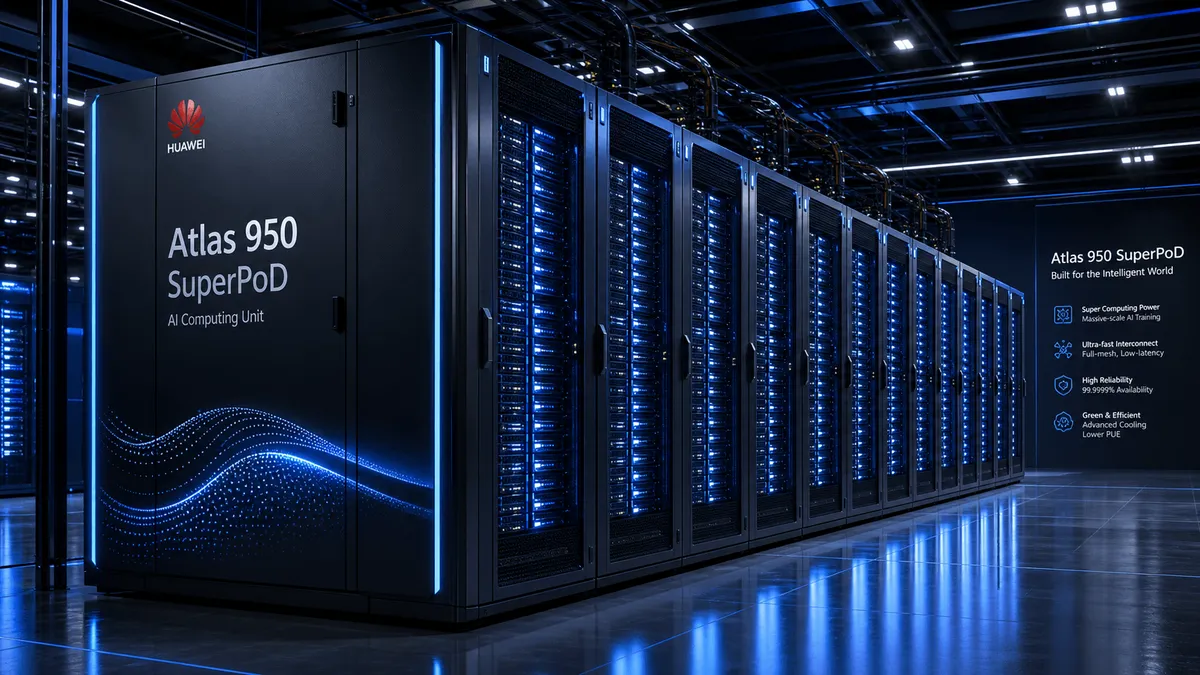
Huawei has set firm commercial launch dates for its Ascend 950 AI cluster cloud service, signaling a major push into domestic high-performance computing markets.
The announcement positions the Ascend 950 platform as a critical component in Huawei’s strategy to bolster self-sufficiency within the global artificial intelligence ecosystem, particularly against international semiconductor dominance.
This cloud service leverages the proprietary Ascend AI processors, which are designed to meet the intense computational demands of large-scale machine learning model training and inference. The deployment timeline indicates a phased rollout, targeting various enterprise and research institutions across China.
Strategic significance derives from the platform's role in decoupling Chinese tech infrastructure from external supply chain vulnerabilities. By providing a fully integrated, domestic AI cloud solution, Huawei directly addresses governmental and corporate mandates prioritizing indigenous technological capabilities.
Ascend 950 Platform Capabilities and Market Penetration
The Ascend 950 cluster is engineered for massive parallel processing, facilitating workloads that previously required access to leading foreign GPU architectures. Technical specifications emphasize high-throughput data handling and optimized interconnectivity, crucial elements for maintaining coherence across thousands of interconnected AI accelerators.
Market analysis suggests that the launch is not merely a product release but a strategic maneuver to capture the rapidly expanding domestic AI infrastructure spending. Enterprises involved in autonomous driving, advanced manufacturing, and large language model development are primary targets for early adoption.
Huawei has emphasized the operational efficiency and energy consumption profile of the Ascend 950, presenting it as a viable, sustainable alternative to incumbent cloud solutions. This focus on operational expenditure alongside performance metrics is central to securing long-term enterprise contracts.
The commercial availability is scheduled to commence across specified regional data centers, with detailed availability schedules being released to qualified partners in the coming weeks. This controlled rollout strategy allows Huawei to manage initial load while refining service delivery and optimizing integration protocols.
Implications for China’s AI Sovereignty
The successful commercialization of the Ascend 950 cloud service carries profound implications for China’s broader objective of achieving technological sovereignty in artificial intelligence. The platform represents a tangible step toward establishing a robust, self-contained domestic AI stack.
Industry observers note that the deployment of such powerful, domestically sourced AI clusters accelerates the timeline for China’s transition from being a major consumer of AI services to a major global producer of foundational AI infrastructure.
Furthermore, the service is expected to foster innovation within local software ecosystems. Developers can now build and train complex AI applications directly on optimized Huawei hardware, reducing latency and reliance on complex cross-platform compatibility layers.
For businesses seeking to maintain strict data sovereignty—a growing regulatory concern—the Ascend 950 cloud offers an architecturally compliant environment. This commercialization marks a decisive moment in the ongoing technological competition, solidifying Huawei’s position not just as a hardware vendor, but as a comprehensive provider of sovereign AI computing power.