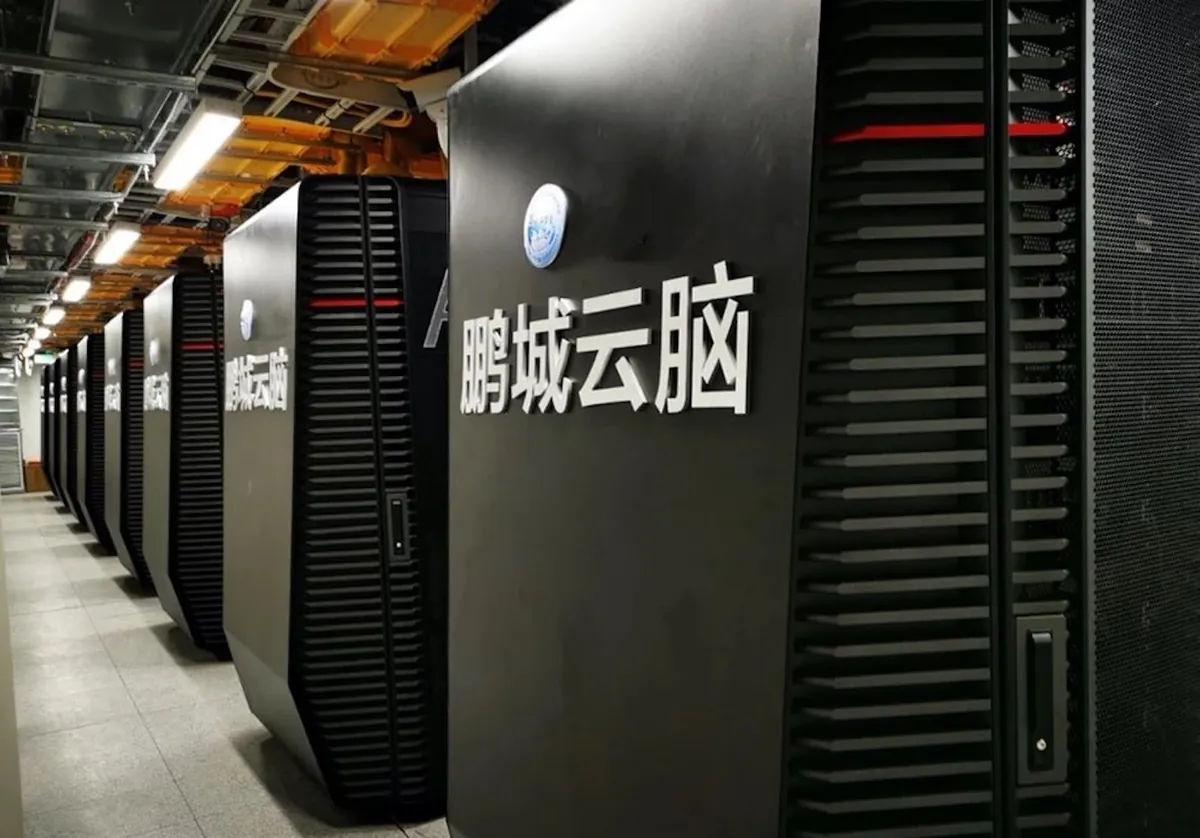

Huawei's advanced AI chips are now powering the intensive training phase of DeepSeek V4, following their prior success in handling inference workloads.
Strategic Shift to Training Capacity
The deployment of Huawei silicon for DeepSeek V4 marks a significant escalation in the integration of domestic hardware within cutting-edge large language model development. Previously, these chips demonstrated proficiency during inference, the stage where trained models execute predictions; however, their application to training necessitates substantially greater computational density and sustained throughput.
This capability directly addresses critical bottlenecks faced by many organizations relying on foreign semiconductor ecosystems for foundational AI infrastructure. Huawei's specialized chips are engineered not just for operational speed but also for the massive parallel processing required during pre-training and fine-tuning of models like DeepSeek V4.
The successful utilization of this hardware suggests a maturing domestic supply chain capable of supporting the most computationally demanding phases of AI lifecycle management. Training large language models requires billions, if not trillions, of floating-point operations, making the efficiency and architecture of the underlying silicon paramount to project timelines and cost structures.
DeepSeek V4 itself represents a significant benchmark in the current landscape of open-source or domestically developed LLMs, pushing performance boundaries across various linguistic tasks. The ability to train such a complex model using Huawei hardware validates the architectural parity—or superiority—of these chips against established international counterparts in high-demand scenarios.
Industry observers view this transition from inference capability to full training deployment as a crucial inflection point for China's broader ambition in AI self-sufficiency. It signals a move beyond merely adapting existing foreign models to actively generating state-of-the-art foundational intelligence using indigenous technological stacks.
Technical Implications and Market Positioning
The integration highlights the tight coupling between hardware innovation and algorithmic advancement within the Chinese technology sector. DeepSeek, in collaboration with Huawei, is leveraging the chip's specific instruction sets and optimized memory hierarchies to accelerate gradient calculations and weight updates during the training regimen.
While inference focuses on optimizing latency for real-time user interaction, model training demands sustained high utilization across thousands of processing cores over extended periods. The stability and power efficiency demonstrated by the Huawei chips under these prolonged stress tests are key differentiators in this strategic application.
This development has tangible implications for the competitive positioning of Chinese AI enterprises globally. By demonstrating robust end-to-end capability—from chip design to model training to deployment inference—companies can reduce reliance on external suppliers, mitigating geopolitical supply chain risks associated with high-end GPUs.
The partnership effectively creates a closed-loop ecosystem where hardware capabilities directly unlock new levels of software performance. This self-reinforcing cycle is characteristic of technological sovereignty efforts in advanced computing fields.
For researchers and enterprises tracking the trajectory of AI development, this deployment serves as concrete evidence that domestic silicon is moving from being a viable alternative to becoming the primary engine for developing frontier models.