🎙 Listen to a summary of this story
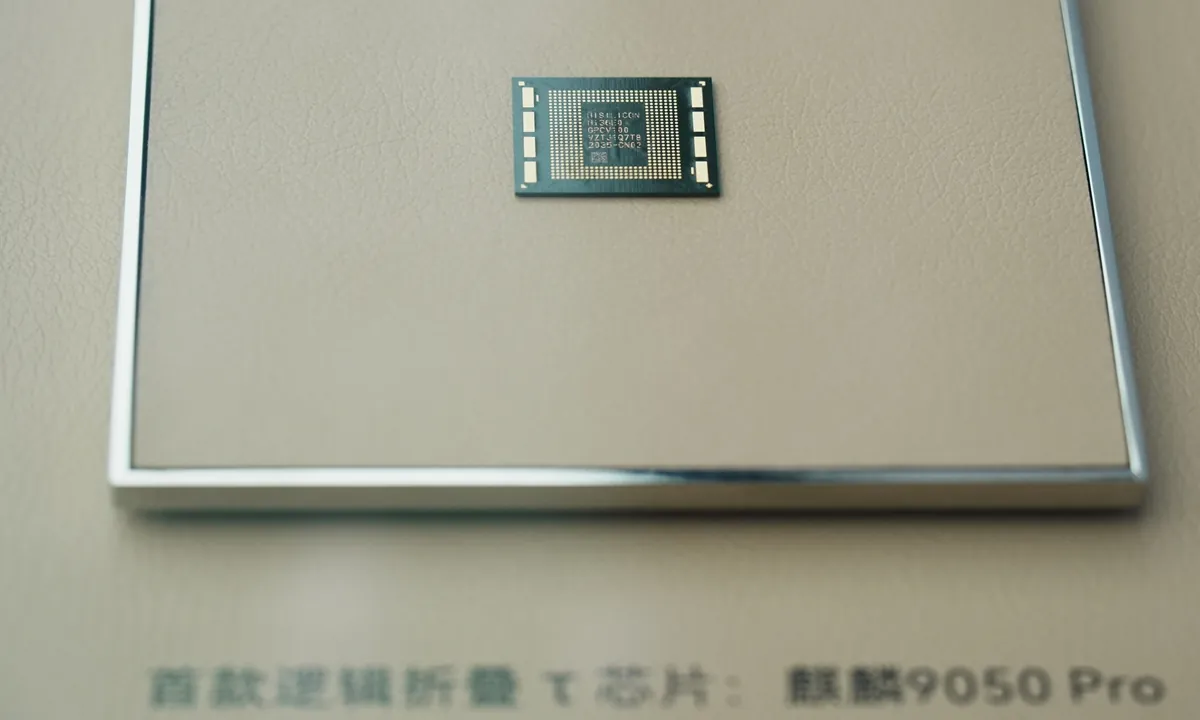
Huawei asserts the Kirin 9050 Pro represents a significant industry first, integrating advanced architecture specifically engineered to defend against evolving data security threats.
This new chipset introduces comprehensive hardware-level protections designed to address vulnerabilities increasingly exploited in modern mobile ecosystems. The development signals Huawei's sustained commitment not merely to performance benchmarks but fundamentally to the integrity and confidentiality of user data within its devices.
The focus on security architecture positions the Kirin 9050 Pro as a critical response to escalating concerns regarding digital espionage and privacy breaches in the highly competitive smartphone market, establishing a new baseline expectation for flagship mobile silicon.
Technical Architecture and Security Implementation
Technically, the Kirin 9050 Pro incorporates specialized security modules that operate at the deepest levels of the System-on-Chip (SoC) design. These components are architected to enforce stringent access controls and monitor for anomalous behavior in real time, moving beyond purely software-based countermeasures.
The chip leverages advanced cryptographic accelerators integrated directly onto the silicon die. This hardware acceleration ensures that intensive security operations—such as encryption and secure key management—can be executed with minimal latency overhead, thereby preserving overall user experience while maximizing protection.
Furthermore, the architecture details reveal enhanced isolation between different operational domains within the SoC. This segmentation prevents a compromise in one application or subsystem from cascading into a full system-wide security failure, a crucial feature for maintaining data compartmentalization.
Market Dynamics and Geopolitical Significance
The introduction of Kirin 9050 Pro carries substantial geopolitical weight given current global tensions surrounding technology supply chains and data sovereignty. By embedding robust, verifiable security into the core processing unit, Huawei addresses a primary concern for enterprises and governments utilizing its mobile platforms.
Commercially, this focus on "security by design" allows Kirin to compete more aggressively in premium segments where trust is as valuable as raw computational power. It shifts the competitive narrative from merely achieving higher clock speeds to guaranteeing operational resilience against sophisticated state-level actors or organized cybercriminals.
The success of this security integration will define a new tier of mobile processing, influencing how competitors must rapidly advance their own hardware trust anchors. For Huawei, it reinforces its position as an innovator capable of driving foundational shifts in chip design beyond mere incremental performance gains, directly impacting future market penetration outside traditional Chinese markets.