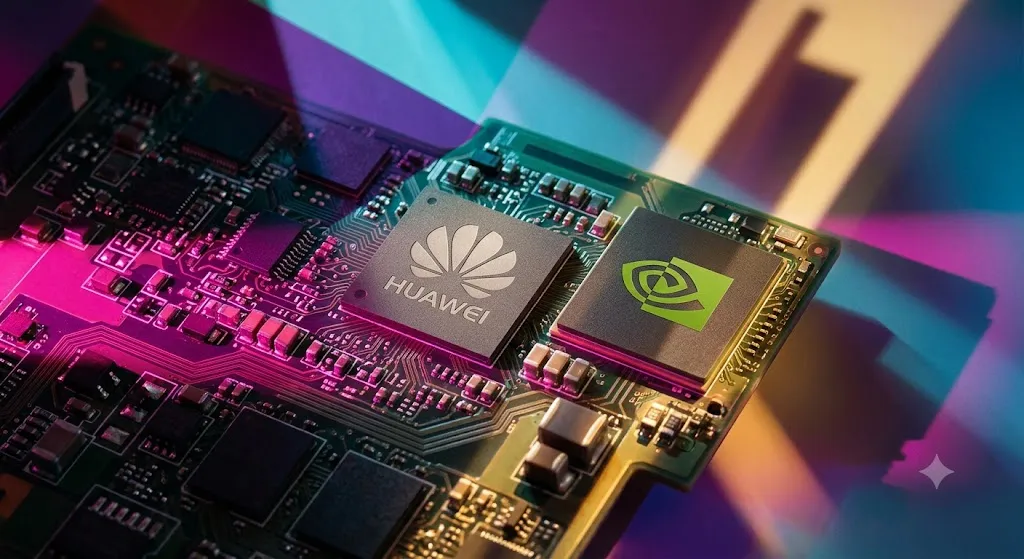
For years, Nvidia’s position in China appeared almost unassailable. The American chip designer supplied the processors on which Chinese artificial-intelligence laboratories trained their most ambitious models, while its CUDA software became the common language of the country’s AI developers. Huawei, battered by American sanctions and cut off from leading-edge manufacturing technology, looked like a telecommunications company fighting merely to preserve its existing businesses.
That picture has been reversed—not because Huawei has overtaken Nvidia at the technological frontier, but because political pressure has transformed the criteria by which success is judged. Nvidia remains the global benchmark for advanced AI computing, with faster individual processors, a mature software platform and an extraordinary ability to convert technological leadership into profit. Huawei, however, is becoming something different and, from Beijing’s perspective, potentially more important: the foundation of an AI system that China can operate without depending on American permission.
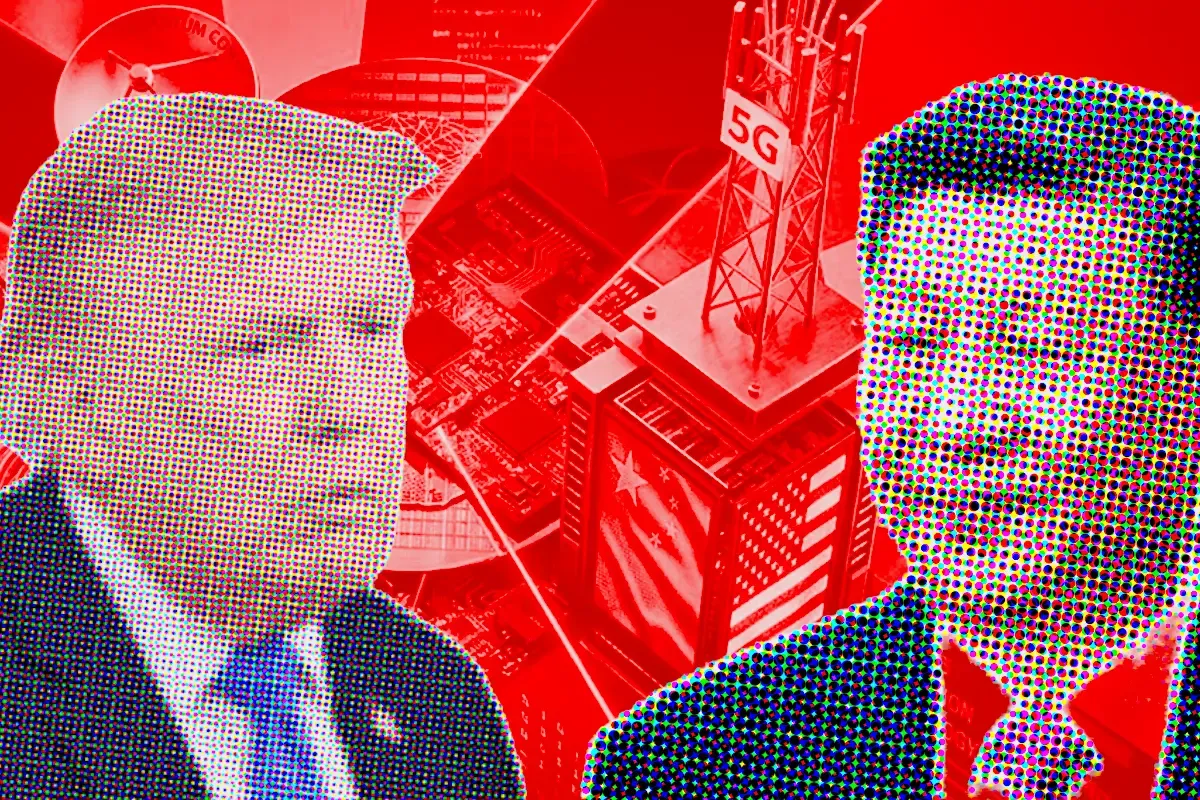
The contest is therefore no longer a conventional comparison between two semiconductor suppliers. It is a struggle between Nvidia’s globally integrated model and Huawei’s drive for national technological autonomy. Nvidia offers Chinese companies access to the world’s strongest general-purpose AI platform, but access can be withdrawn, restricted or redesigned by Washington. Huawei offers weaker chips and a less mature developer environment, but it promises continuity, domestic control and an ecosystem aligned with China’s industrial policy.
The result is one of the central paradoxes of the technology conflict between Washington and Beijing. American restrictions have slowed China’s access to the most advanced computing hardware. They have also given Huawei a protected opportunity to build a domestic alternative in a market previously dominated by Nvidia.
Nvidia’s Extraordinary Lead—and Its China Problem
Nvidia enters this competition with advantages that extend far beyond the specifications of any single processor. Its graphics processing units became the preferred hardware for AI because they could perform large numbers of calculations in parallel. The company then surrounded those chips with networking equipment, servers, libraries, development tools and specialised software, turning a component business into a computing platform.
CUDA is the centre of that strategy. Millions of developers have learned to write and optimise software for Nvidia hardware, while universities, cloud providers and AI laboratories have built workflows around it. A company moving from Nvidia to another accelerator is not simply replacing one chip with another. It may have to rewrite software, replace libraries, retrain engineers, validate model accuracy and redesign the way thousands of processors communicate.
This ecosystem helps explain Nvidia’s remarkable financial performance. The company reported revenue of $81.6 billion for the quarter ended April 26, 2026, an increase of 85% from a year earlier. Data-centre revenue reached $75.2 billion. Nvidia’s global business continued to expand even as its position in China deteriorated, demonstrating both the scale of worldwide AI investment and the company’s ability to sell nearly every advanced processor it could manufacture.

As the above chart shows, Nvidia’s global sales nearly doubled between late fiscal 2025 and fiscal 2026, propelled by booming demand for artificial-intelligence chips. China moved the other way. Revenue from China-headquartered customers fell to roughly $3 billion a quarter, shrinking its share of Nvidia’s business from 23% to less than 5%.
China nevertheless remains strategically significant. It contains some of the world’s largest internet companies, a deep pool of AI engineers and a government determined to spread artificial intelligence through manufacturing, telecommunications, transport, healthcare and public administration. Nvidia spent years cultivating that market and repeatedly designed lower-performance products intended to comply with changing American restrictions.
The strategy became harder to sustain in April 2025, when the U.S. government informed Nvidia that exports of its China-oriented H20 processor would require a licence. Nvidia recorded a $4.5 billion charge related to inventory and purchase commitments. It said it had sold $4.6 billion of H20 chips before the requirement took effect and had been unable to ship an additional $2.5 billion during the quarter.
Washington later adjusted its position. In January 2026, the Bureau of Industry and Security said applications to export Nvidia’s H200 and comparable processors to approved Chinese customers would be considered individually, subject to security, supply and compliance conditions. The shift offered Nvidia a possible route back into the market, but not a return to normal commercial access. Every major shipment remained entangled with licensing, customer screening and the wider political relationship between the two countries.
The uncertainty is visible in Nvidia’s own forecasts. In both its fiscal 2026 fourth-quarter outlook and its May 2026 earnings guidance, the company assumed no data-centre compute revenue from China. That does not mean Nvidia has no business in the country. It means management no longer regards sales of its most important AI systems there as dependable enough to include in its baseline expectations.
Huawei Builds a National Alternative
Huawei’s opportunity was born from crisis. After the U.S. placed the company on its Entity List in 2019, Huawei lost straightforward access to American technology and to advanced chips manufactured with U.S.-controlled equipment. Restrictions were subsequently tightened, damaging its smartphone business and forcing it to reconstruct supply chains for semiconductors, operating systems and software.
Rather than retreating from computing, Huawei broadened its investment. Its Ascend processors became the centrepiece of an attempt to create a Chinese AI stack spanning chips, servers, networking, cloud services, development software and industry applications. The company could draw on capabilities developed across its telecommunications-equipment business: high-speed networking, system integration, power management and the coordination of large numbers of computing devices.
Huawei’s financial resources make it a formidable national champion. The company reported revenue of 880.9 billion yuan for 2025. It spent 192.3 billion yuan on research and development, equivalent to 21.8% of revenue, and employed roughly 114,000 people in R&D. Few companies anywhere can sustain investment on that scale, particularly while absorbing the costs created by sanctions and duplicating technologies available more cheaply from foreign suppliers.

The Ascend 910 series remains less powerful and less energy-efficient at the individual-chip level than Nvidia’s leading Blackwell systems. Huawei is constrained by China’s limited access to extreme-ultraviolet lithography and other advanced semiconductor-manufacturing tools. Its manufacturing partners must use more complicated and expensive processes to produce chips that foreign foundries can fabricate more efficiently.
Huawei’s response is to compete at the level of the complete system. Its CloudMatrix 384 architecture connects 384 Ascend 910C processors with 192 Kunpeng central processors using a high-bandwidth network designed for direct communication among the devices. Huawei is effectively compensating for weaker chips by deploying more of them and linking them tightly enough to behave as a single large computing resource.The approach is costly in electricity, equipment and engineering complexity. Yet it plays to Huawei’s strengths. The company has decades of experience building communications systems in which networking, reliability and orchestration matter as much as the performance of an individual component.
CloudMatrix attracted international attention after analysts compared it with Nvidia’s GB200 NVL72. Reuters reported that the Huawei system could outperform Nvidia’s product on certain system-level measurements despite relying on substantially more processors. Huawei later said its CloudMatrix-based cloud service could deliver per-card inference performance several times that of the H20 in selected workloads. Such claims depend heavily on model configuration, precision, utilisation and power consumption, but they demonstrate the direction of Huawei’s strategy: make the cluster, rather than the chip, the principal unit of competition.
This distinction matters because much of the next phase of AI growth may come from inference—the repeated running of trained models—rather than from the enormous training exercises that have defined the frontier. Inference can reward systems optimised for particular models, workloads and operating environments. A tightly integrated Huawei platform may therefore be competitive for Chinese customers even when an Nvidia chip remains superior in a laboratory comparison.
The Real Battle Is Over Software
Hardware receives the attention, but software may decide whether Huawei becomes a durable rival. Nvidia’s advantage is not simply that CUDA is widely used. It is that the company has spent nearly two decades refining the tools required to turn processors into useful computing infrastructure.
Developers can draw on libraries for machine learning, scientific computing, data processing, simulation and robotics. Nvidia’s networking technologies allow enormous clusters to operate efficiently. Its systems are supported by the leading cloud companies, server manufacturers and AI frameworks. When a new model or technique emerges, Nvidia usually has engineers working with its creators before the technology reaches a mass audience.
Huawei is attempting to reproduce enough of this environment through its Compute Architecture for Neural Networks, known as CANN, along with MindSpore, MindIE and tools intended to support popular frameworks such as PyTorch, Triton and vLLM. In 2025, Huawei announced plans to open-source important Ascend software components and operators, provide development boards and commit computing capacity to the ecosystem.
That is an acknowledgement of the problem. China can direct state-owned companies to purchase domestic hardware and can subsidise the construction of computing centres, but it cannot create a sophisticated developer community by decree. Programmers will embrace Ascend only if the tools are reliable, documentation is strong and models can be moved from Nvidia systems without months of expensive engineering work.
Independent technical research illustrates both Huawei’s progress and its remaining weaknesses. Research describing the CloudMatrix 384 platform showed that a system designed jointly across hardware and software could serve large mixture-of-experts models at substantial scale. The architecture pools computing, memory and storage resources and separates different stages of inference, potentially improving utilisation when running models such as DeepSeek-R1.
Other research has found that migration to Ascend can still require source-level modifications, feature compromises and extensive operational safeguards. Studies of heterogeneous accelerators have reported differences in operator support and numerical behaviour between Nvidia and emerging alternatives. These are not merely inconveniences. In commercial AI services, small incompatibilities can produce incorrect outputs, unstable applications or costly interruptions.
Nvidia therefore retains an important defensive moat. Huawei may produce enough processors to meet a customer’s theoretical computing requirement, yet the effective value of those processors depends on how easily they can be programmed and how consistently they operate. A nominally cheaper or more available accelerator can become expensive when software engineers spend months adapting applications to it.
At the same time, Nvidia’s software advantage is not immutable. Every export restriction gives Chinese developers another reason to optimise for Ascend. Every government procurement programme creates more installed Huawei hardware. Every Chinese model released with native Ascend support reduces dependence on CUDA. The ecosystem gap can narrow through repetition: more users produce more bug fixes, more libraries, more trained engineers and more commercial applications.
Two Different Definitions of Winning
A direct comparison between Nvidia and Huawei can be misleading because the companies are pursuing different objectives. Nvidia is optimising for global technological leadership and shareholder returns. It wants the fastest chips, the most widely used platform and the largest possible market for accelerated computing. Its success is measured in performance, adoption, margins and revenue.
Huawei’s AI-chip programme serves commercial goals but also functions as national infrastructure. China does not require Ascend to defeat Nvidia in every benchmark. It needs Huawei and other domestic suppliers to provide enough computing capacity for strategically important industries and institutions when American chips are unavailable.
This produces different economic calculations. Nvidia’s latest systems are expensive but can offer superior performance per processor, stronger software and lower engineering risk. Huawei systems may require more chips and more electricity to complete the same task. From a purely commercial perspective, that can make them less attractive.
From Beijing’s perspective, however, the cost of relying on Nvidia includes the possibility that access will disappear after a policy decision in Washington. Security of supply therefore has a value that conventional price-performance comparisons fail to capture. A domestic system that is slower but available may be preferable to a faster product that can be blocked, licensed selectively or prohibited from receiving upgrades.
Chinese policy strengthens this logic. Government agencies and state-owned enterprises can be encouraged to use domestic processors. Local governments can fund AI computing centres built around Chinese hardware. Universities can train students on Ascend, while technology companies can receive support for adapting models and applications. These policies create demand before Huawei reaches technical parity.
Nvidia still has powerful allies inside China’s technology industry. Chinese AI laboratories want access to the best possible processors, particularly for training frontier models. The continued value of restricted Nvidia hardware on informal markets reflects the performance gap and the durability of CUDA. Large companies also have years of accumulated code and expertise that cannot be transferred quickly.
The result is likely to be a segmented market. The most demanding Chinese laboratories will seek Nvidia systems whenever regulations and supply permit, particularly for model training. Huawei will expand through government-supported infrastructure, inference, industry-specific applications and customers that place a premium on domestic supply. Other Chinese suppliers, including Cambricon and a growing collection of GPU and accelerator developers, will prevent the market from becoming a simple two-company contest.
Huawei does not need to displace every Nvidia processor to change the strategic balance. It needs to become credible enough that Washington can no longer assume restrictions will halt Chinese AI development. Nvidia, conversely, does not need unrestricted access to China to remain the world’s leading AI-chip company. It needs enough access to prevent the Chinese ecosystem from evolving entirely without it.
China Is Becoming the Test of America’s Chip Strategy
The comparison between Nvidia and Huawei reveals both the effectiveness and the limits of export controls. Restrictions have denied Chinese companies routine access to the newest American processors and have increased the cost of building advanced AI systems. They have preserved a substantial performance advantage for Nvidia and the foreign manufacturing ecosystem on which it relies.
But the controls have also accelerated investment in alternatives. Huawei’s position is stronger precisely because Nvidia’s position is less secure. Chinese customers that might once have dismissed Ascend as technically inferior must now consider it a strategic necessity. Software developers who preferred CUDA are being paid to make Chinese hardware usable. Semiconductor companies that would have struggled to attract customers now operate in a market where domestic substitution is a national priority.
The central question is not whether Huawei can produce a single chip equal to Nvidia’s best. In the near term, it probably cannot. The more important question is whether China can combine sufficient domestic processors, networking, software and electricity to create AI systems capable of supporting its economy and military despite a continuing semiconductor disadvantage.
CloudMatrix suggests that Huawei’s answer is to use system engineering to compensate for manufacturing weakness. Nvidia’s response is to move the frontier faster, combining new processors with proprietary interconnects and software so that competitors must chase an entire platform rather than an isolated chip.
For Nvidia, China is now a market whose enormous potential is matched by political risk. For Huawei, it is a protected home ground on which commercial shortcomings can be offset by strategic value. Nvidia remains far ahead as a global AI company, but Huawei is gaining influence over the direction of Chinese computing.
That is the larger consequence of the rivalry. The semiconductor world is dividing not simply into American and Chinese chips, but into competing stacks of hardware, software, standards and supply chains. Nvidia represents the continued power of a global technology platform assembled across American design, Taiwanese manufacturing and international cloud infrastructure. Huawei represents China’s attempt to build around the points of foreign control.
China may spend more money and consume more energy to obtain computing performance that Nvidia can deliver more efficiently. Beijing may nevertheless judge that price worth paying. Technological autonomy is rarely cheap, and Huawei’s rise shows that export controls can make inefficiency strategically rational.
Sources and Further Reading
1. Nvidia, “Nvidia Announces Financial Results for First Quarter Fiscal 2027” , May 2026.
2. Nvidia, “Nvidia Announces Financial Results for Fourth Quarter and Fiscal 2026” , February 2026.
3. Nvidia, “Nvidia Announces Financial Results for First Quarter Fiscal 2026” , May 2025.
4. U.S. Bureau of Industry and Security, “Department of Commerce Revises License Review Policy for Semiconductors Exported to China” , January 2026.
5. Huawei, Huawei Annual Report 2025 , March 2026.
6. Huawei, “Huawei Releases Its 2025 Annual Report” , March 2026.
7. Huawei, “Huawei Cloud Unveils CloudMatrix 384 and AI Token Service” , September 2025.
8. Huawei, “Huawei Announces Plans to Open-Source Key Ascend Software” , September 2025.
9. Huawei, Keynote address on Huawei’s supernode interconnect and artificial-intelligence infrastructure strategy , September 2025.
10. Reuters, “Huawei Shows Off AI Computing System to Rival Nvidia’s Top Product” , July 2025.
11. arXiv, “Serving Large Language Models on Huawei CloudMatrix 384” , June 2025.
12. arXiv, “xDeepServe: Model-as-a-Service on Huawei CloudMatrix 384” , August 2025.
13. arXiv, Field study of large-model inference on Huawei Ascend processors , July 2026.
14. arXiv, Research on numerical and operational inconsistencies across heterogeneous AI accelerators , November 2025.
15. Nvidia, CUDA Toolkit and Developer Platform .
16. Nvidia, GB200 NVL72 Artificial-Intelligence Computing System .
17. Nvidia, H200 Tensor Core GPU .
18. Huawei, Ascend hardware, CANN software and open-source development plans , September 2025.
19. CNBC, Reporting on Huawei’s semiconductor strategy and its competition with Nvidia in China , May 2026.
20. Light Reading, “Huawei Touts Chip Design Breakthrough as Answer to US Sanctions” , May 2026.