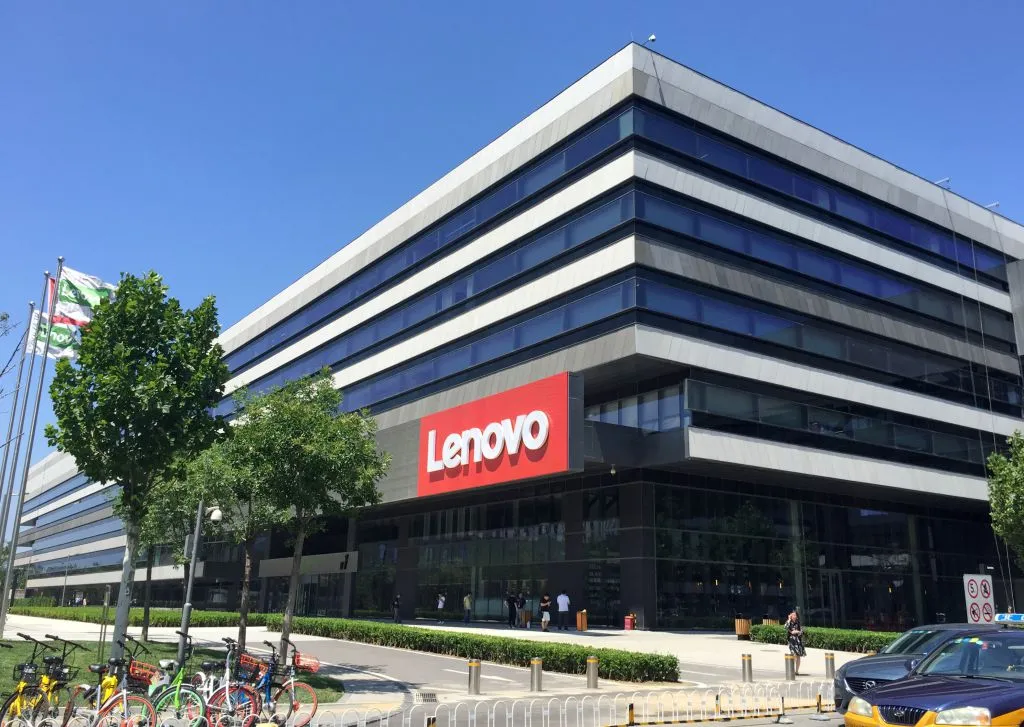
Lenovo's emergence as a top performer in the 2026 Hang Seng Index decisively validates its strategic pivot toward artificial intelligence, signaling robust investor confidence in China's tech transformation.
The company’s strong showing within the index underscores a successful execution of its high-technology roadmap, moving beyond traditional hardware manufacturing into advanced AI integration. This performance places Lenovo among the most significant beneficiaries of the ongoing digital infrastructure buildout across Greater China and international markets.
AI Integration Drives Market Performance
Lenovo's ascent is directly attributable to the strategic embedding of artificial intelligence capabilities across its product lines, a shift that resonates strongly with institutional investors. The company has successfully leveraged AI not merely as an add-on feature but as a core driver of enterprise and consumer value.
Analysts point to Lenovo’s proactive investment in developing proprietary AI solutions for both PC and server architectures as the critical differentiator. This technological depth allows the firm to capture market share in sectors increasingly reliant on computational power, such as cloud computing and data processing services.
Furthermore, the global semiconductor supply chain resilience, a key operational strength for Lenovo, provided a stable foundation during periods of geopolitical volatility. The ability to secure high-quality components while simultaneously innovating with AI capabilities allowed the company to maintain production efficiency and meet escalating demand for intelligent hardware solutions.
The market response has been clear: investors are rewarding companies that can demonstrably translate technological investment into sustainable revenue growth within a highly competitive landscape. Lenovo’s positioning suggests it is successfully navigating the transition from being a component supplier to becoming an integrated technology partner.
Implications for Chinese Tech Sector
Lenovo's success serves as a significant case study illustrating the viability of large, established Chinese enterprises aggressively pursuing high-end technological capabilities. The company’s trajectory provides a blueprint for other industrial giants seeking to mitigate risks associated with overreliance on legacy business models.
The validation within the Hang Seng Index carries broader implications for China's technology policy objectives. By demonstrating market leadership in AI-enabled hardware, Lenovo supports national goals aimed at achieving technological self-sufficiency and dominance in next-generation computing platforms.
While the ascent is noteworthy, sustained performance will hinge on expanding the commercialization of its advanced AI models beyond initial deployments. The competitive environment demands continuous innovation; merely having AI capabilities is insufficient if they do not translate into superior customer outcomes or cost efficiencies at scale.
Looking ahead, observers anticipate that Lenovo will continue to expand its footprint in hybrid cloud environments, where the integration of on-premise processing with remote AI services is paramount. The company’s ability to maintain this dual focus—on enterprise infrastructure and consumer-facing innovation—will dictate its long-term market capitalization within the evolving global tech ecosystem.