🎙 Listen to a summary of this story
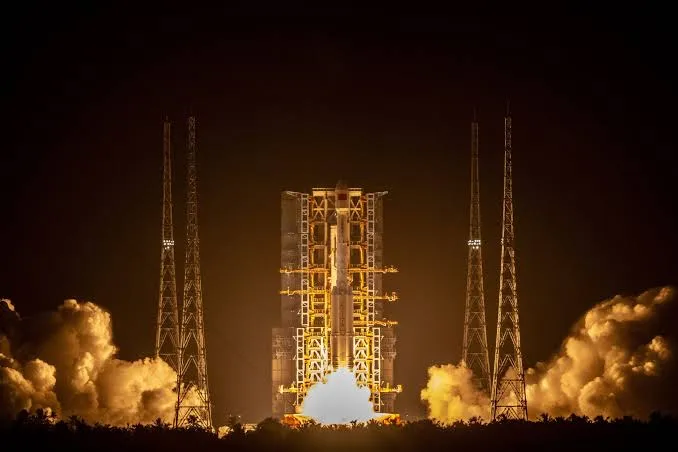
A Long March 7A rocket failure resulted in the destruction of the Zhongxing 4B satellite, marking China's fourth orbital launch setback during 2026.
The failed mission occurred on August 10, significantly disrupting the nation's advanced satellite deployment schedule and raising questions about the reliability of key launch vehicles.
The failure was attributed to an anomaly within the booster stage of the Long March 7A, which ultimately destroyed the payload carrying the Zhongxing 4B communications satellite. Industry analysts noted that while the exact technical cause remains under investigation by Chinese aerospace authorities, repeated setbacks point toward systemic challenges in maintaining operational consistency across China's rapidly expanding space infrastructure.
Operational Setbacks and Technical Analysis
The Zhongxing 4B satellite was slated to provide crucial communications services, making its loss a tangible blow to the planned expansion of China’s national broadband network. The module was designed for high throughput capacity, intended to bolster digital connectivity across remote regions.
This incident adds considerable weight to the tally of failures experienced throughout 2026. Prior launch issues had already hampered multiple missions, creating a pattern that experts are now intensely studying. The recurring nature of these setbacks has prompted calls for an immediate and comprehensive overhaul of pre-flight testing protocols and hardware integrity checks.
Experts tracking China’s space ambitions suggest that the focus must shift from simply achieving orbital insertion to ensuring sustained operational reliability across all mission phases, particularly in booster stage performance and payload separation mechanisms. The cumulative effect of these failures is forcing a strategic reassessment within key state-owned aerospace enterprises.
Implications for Future Missions
The high stakes involved underscore the critical nature of China's space program as a cornerstone of its technological self-sufficiency and geopolitical strategy. Satellite constellations like Zhongxing are vital components of national security, economic planning, and global communication control.
Following this fourth setback, state media and industry observers anticipate an increased emphasis on transparency regarding technical hurdles. Developers must now demonstrate not only capability but also fault tolerance in their launch systems to regain investor confidence both domestically and internationally.
The long-term implications suggest that while China remains committed to its deep space exploration goals, the immediate future will be characterized by a more cautious, iterative approach to launching large payloads. Future missions will likely incorporate redundant systems and undergo heightened scrutiny before receiving mission clearance.
This incident serves as a stark reminder of the immense engineering challenges inherent in developing heavy-lift launch vehicles while simultaneously pushing the boundaries of satellite payload capacity. The industry watches closely for definitive reports detailing when corrective measures will be implemented and validated, ensuring that future launches meet the stringent demands of reliability required by modern space operations.