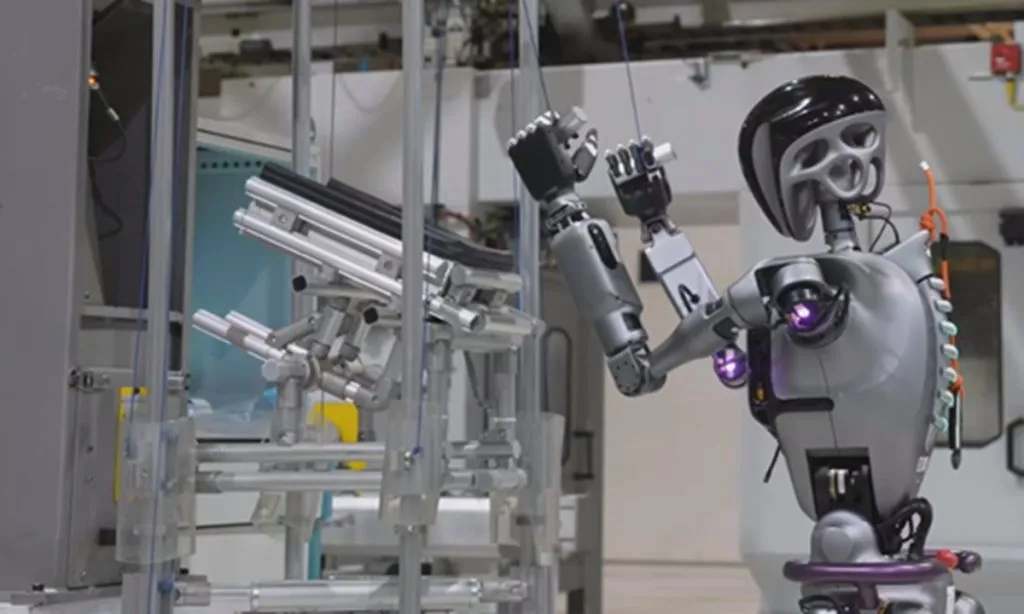
Morgan Stanley has identified key Shenzhen-based companies as critical players in the burgeoning global humanoid robotics market, signaling significant institutional focus on China's advanced manufacturing capabilities.
The firm’s analysis highlights the strategic importance of Chinese tech firms poised to capitalize on the accelerating demand for sophisticated, general-purpose robots across industrial and consumer sectors. This inclusion places Shenzhen at the epicenter of a major technological pivot toward intelligent automation.
Market Positioning and Investment Thesis
Morgan Stanley’s report scrutinizes companies demonstrating not only technological breakthroughs but also scalable production capacity within the humanoid robotics domain. The assessment underscores a shift from pure R&D to viable, market-ready products, a transition where Shenzhen enterprises hold distinct advantages due to their established supply chains.
The investment thesis centers on the convergence of artificial intelligence, advanced sensor technology, and precision mechanical engineering—areas where selected Shenzhen firms exhibit demonstrable leadership. These companies are viewed as having the necessary infrastructure to meet increasing domestic and international demand for robotic solutions capable of complex human-like tasks.
The report details specific areas of technological strength among these listed entities, emphasizing advancements in motor control, battery life optimization, and sophisticated perception systems required for navigating unstructured environments. This technical depth differentiates them from competitors relying on less integrated hardware stacks.
For investors, the inclusion suggests a growing institutional confidence in the long-term viability of Chinese robotics firms to compete globally against established players from the West and Japan. The market is signaling that humanoid robots are transitioning from laboratory curiosities to essential industrial tools.
The Competitive Landscape and Future Outlook
The significance of this listing extends beyond mere investment recommendations; it maps out a competitive landscape in which Shenzhen firms are setting benchmarks for integration efficiency. These companies are actively addressing the core challenges of robotics deployment, such as operational cost reduction and dexterity improvements.
Analysts noted that the growth trajectory for humanoid robots is intrinsically linked to labor shortages in advanced manufacturing and logistics sectors worldwide. Therefore, successful Chinese providers become critical infrastructure suppliers for global industry modernization efforts.
The report provides insight into how these firms are navigating regulatory environments while simultaneously scaling up production volumes. Their ability to move quickly from prototype to mass production remains a key determinant of their competitive edge within the framework outlined by Morgan Stanley.
Further examination of the full report reveals detailed company profiles and specific market penetration estimates for the coming fiscal years. This institutional validation reinforces the narrative that Shenzhen is not just a manufacturing hub, but an innovation nexus driving the next wave of industrial automation.
The sustained focus on these companies indicates that major financial institutions perceive humanoid robotics as a transformative rather than merely cyclical sector, warranting deep capital allocation and strategic monitoring.