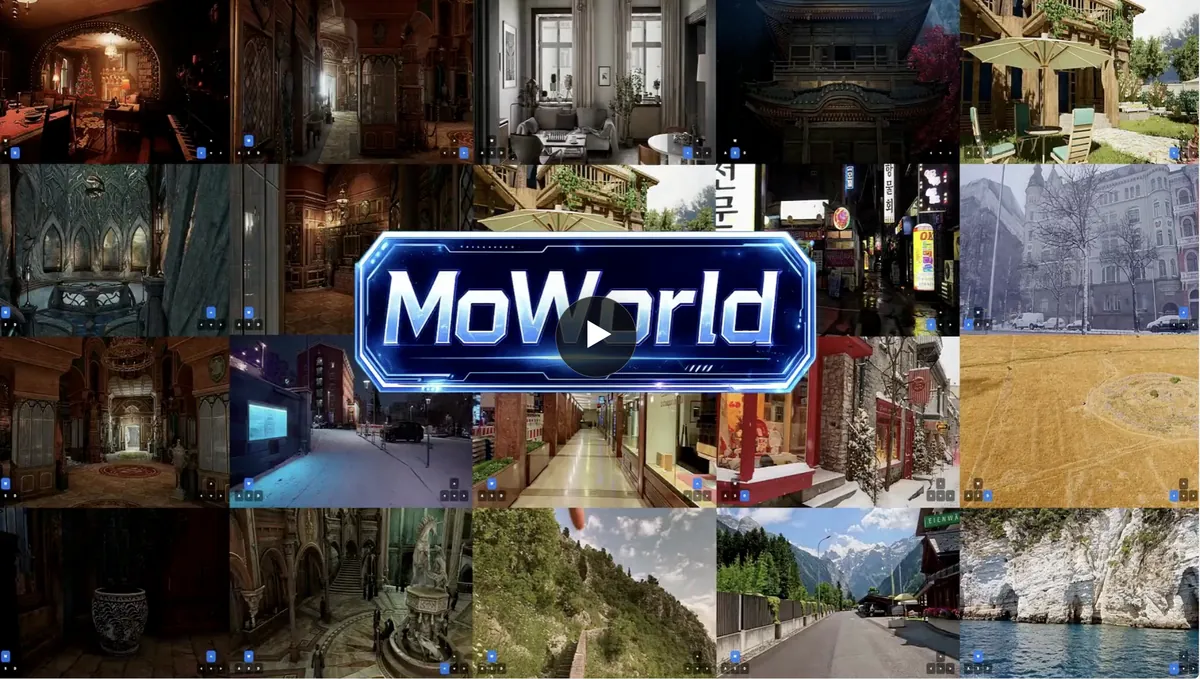
Moxin Technology has launched MoWorld 2.0, an Ascend-Native 4D world model capable of simulating complex physical interactions, marking a significant leap in real-time digital environment fidelity.
This new platform moves beyond static 3D rendering by integrating dynamic, physics-aware environments, fundamentally changing how digital twins and immersive simulations are constructed and deployed. The introduction of this comprehensive 4D capability positions Moxin directly in the race for high-fidelity, compute-intensive simulation infrastructure.
MoWorld 2.0 is designed to handle environments where object interaction, material stress, and environmental changes must be calculated in real-time, a capability crucial for advanced industrial applications ranging from automotive design to complex urban planning simulations.
Technical Architecture and Simulation Fidelity
The core technical differentiator of MoWorld 2.0 is its native optimization for Ascend hardware, leveraging specialized AI accelerators designed by Huawei. This tight coupling ensures that the computationally massive task of maintaining a dynamic 4D world model can be executed with low latency and high throughput, overcoming previous bottlenecks associated with running complex physics engines on general-purpose GPUs.
Technologically, the system utilizes Gaussian assets, a modern rendering technique that allows for extremely efficient representation of complex visual data while maintaining high geometric and textural detail. This efficiency, combined with the integrated physics solver, enables the simulation of millions of interacting elements within the digital environment without sacrificing frame rate stability.
Commercially, the platform targets enterprise-level clients requiring rigorous validation environments. By offering a unified framework where visual representation (Gaussian assets) and physical behavior (simulation engine) are intrinsically linked, Moxin provides a single source of truth for digital prototyping, drastically reducing the integration effort typically required when combining separate rendering and physics stacks.
Market Implications and Strategic Positioning
The deployment of MoWorld 2.0 reflects a broader strategic pivot within China's technology sector towards deeply integrated, domain-specific AI hardware and software solutions. By emphasizing Ascend-native functionality, Moxin is reinforcing the domestic ecosystem's capability to handle frontier AI workloads, reducing dependency on established Western silicon vendors for high-performance computing.
From a market perspective, this technology accelerates the viability of the digital twin paradigm. Traditional digital twins often serve as static records; MoWorld 2.0 enables them to function as dynamic, predictive models capable of stress-testing scenarios before they occur in the physical world, offering quantifiable risk mitigation for large corporations.
Ultimately, the success of MoWorld 2.0 signals a maturing trend: the shift from merely visualizing data to actively simulating reality within a computational framework. This development underscores the critical importance of specialized, hardware-aware software layers in driving the next wave of industrial digitization globally, providing a potent competitive edge for Moxin in the high-end simulation market.