🎙 Listen to a summary of this story
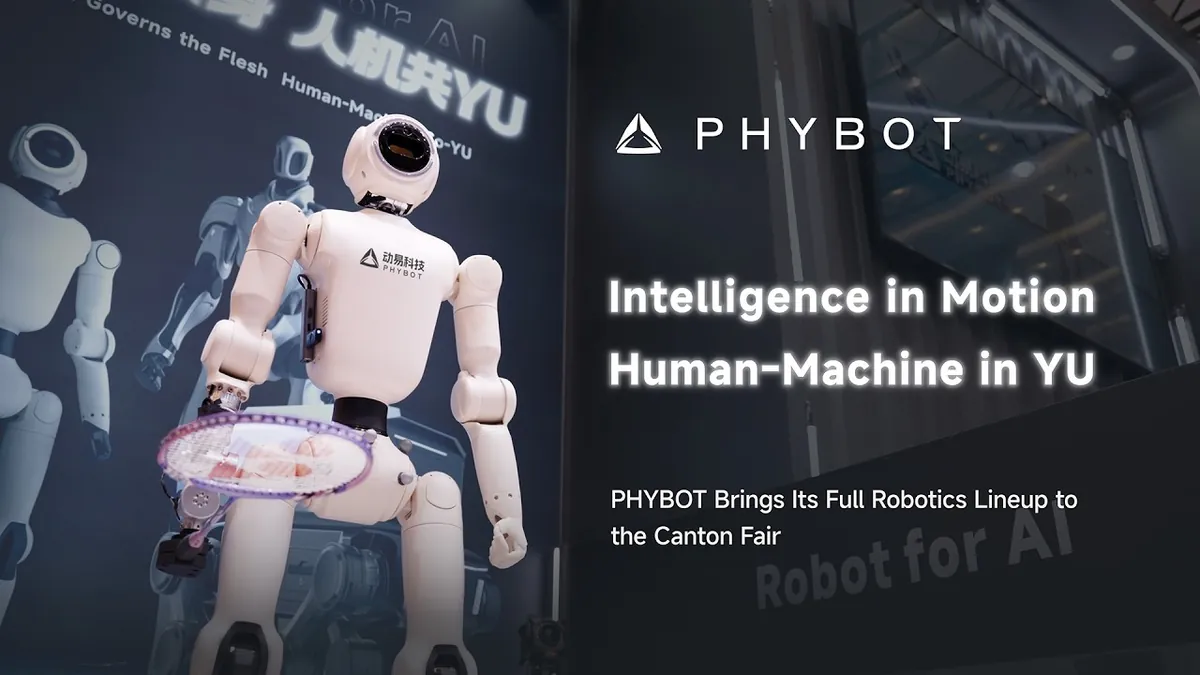
PHYBOT unveiled PhyHand, a sophisticated 23-Degrees-of-Freedom (DoF) direct-drive dexterous hand at the Canton Fair, marking a significant advancement in robotic manipulation capabilities.
This debut positions PHYBOT squarely within the escalating global race for highly capable humanoid and collaborative robotics. The PhyHand represents a critical step toward enabling robots to perform intricate, human-like tasks requiring fine motor control in complex industrial or service environments.
The introduction signals a market readiness from Chinese robotics firms to deploy high-fidelity manipulators beyond simple pick-and-place operations, challenging established players in the advanced automation sector.
Technical Architecture and Design Specifications
The core innovation of PhyHand lies in its direct-drive actuation system combined with its extensive kinematic freedom. Boasting 23 DoF, the hand offers an unprecedented level of dexterity, allowing for nuanced grasping and manipulation that mimics biological hands.
By employing a direct-drive mechanism, PHYBOT eliminates many traditional gear train losses inherent in geared robotic arms. This design choice translates directly into superior precision, faster response times, and greater operational smoothness—qualities essential for handling delicate objects or performing assembly tasks requiring tactile feedback simulation.
While the source material emphasizes the physical hardware, the system's integration with PHYBOT’s broader platform suggests sophisticated software control is integral. Achieving 23 DoF effectively requires advanced inverse kinematics solvers and low-latency control loops to manage the complexity of coordinated movement across all joints simultaneously.
Market Implications and Industry Trajectory
The launch of PhyHand underscores a strategic pivot in Chinese robotics development, moving from basic automation toward truly intelligent, versatile robotic appendages. This focus on high DoF dexterity aligns with global trends demanding robots that can handle unstructured environments rather than strictly controlled factory lines.
Geopolitically, this advancement intensifies competition for dominance in the next generation of industrial automation. As humanoid platforms become more complex and costly, the ability to equip them with highly dexterous hands like PhyHand becomes a key differentiator for commercial viability.
The successful demonstration at a major trade event like the Canton Fair indicates that PHYBOT is targeting immediate commercial adoption alongside long-term strategic positioning. For manufacturers seeking to integrate advanced human-robot collaboration (HRC), PhyHand presents a tangible, high-precision solution available from a rapidly maturing domestic supply chain.