🎙 Listen to a summary of this story
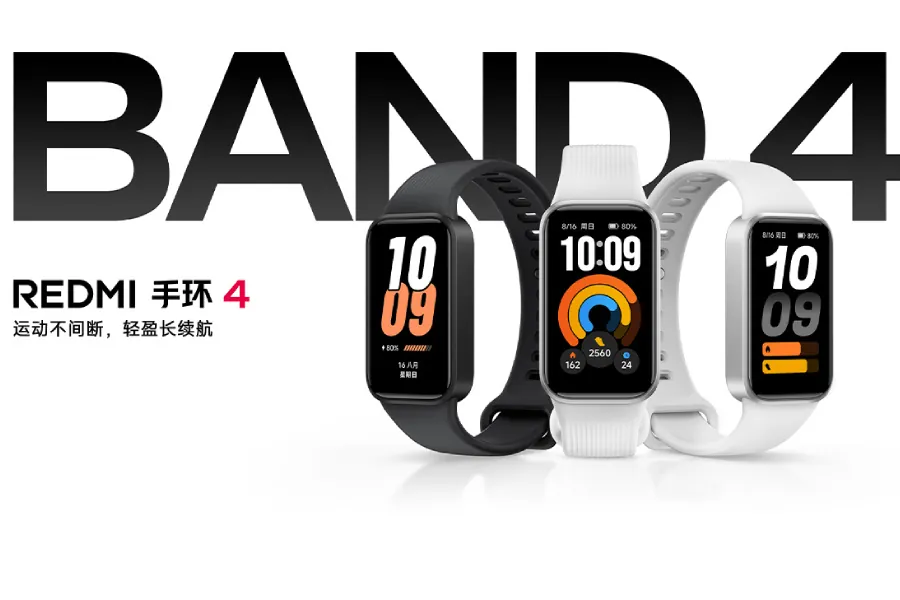
The Redmi Band 4 has debuted, setting a new benchmark for endurance in the fitness tracker segment with an advertised battery life stretching up to 21 days.
This release signals Xiaomi's continued aggressive strategy within the budget wearable market, pairing extreme longevity with modernized display technology. The integration of a 60Hz refresh rate on the screen addresses a long-standing criticism in this low-cost category, offering a perceptibly smoother user experience without significantly inflating the price point.
The device positions itself as a direct competitor to established mid-range fitness bands, aiming to capture users who prioritize multi-week usage cycles over cutting-edge processing power or premium build materials. This strategic focus on battery life is particularly resonant in markets where charging infrastructure access can be inconsistent.
Technical Specifications and Feature Set
Technically, the Redmi Band 4 incorporates several refinements to its core functionality. While specific chipset details remain proprietary, the operational efficiency required to sustain a three-week charge cycle suggests significant optimization in power management protocols.
The adoption of a 60Hz display is not merely cosmetic; it improves responsiveness during activity tracking and menu navigation. Furthermore, the device maintains core health monitoring capabilities expected from Xiaomi’s ecosystem, including heart rate monitoring and sleep tracking, ensuring functional parity with previous iterations while improving visual fluidity.
From a hardware perspective, the band likely retains a lightweight design philosophy central to the Redmi line, balancing durability against user comfort during extended wear. The software experience is engineered to be intuitive, leveraging established Xiaomi fitness app integration for data synchronization and personalized metric display.
Market Positioning and Industry Trajectory
This launch underscores a critical trend in the global wearable technology sector: the bifurcation between high-end feature saturation and extreme utilitarian efficiency. While premium brands push toward advanced cellular connectivity and sophisticated biometric analysis, Redmi is dominating the value proposition by maximizing uptime.
Geopolitically, this relentless pace of iteration from Chinese tech giants like Xiaomi continues to exert downward pressure on component costs worldwide. The ability to deliver 60Hz displays and multi-week battery life at mass-market pricing forces competitors to rapidly reassess their own R&D investment priorities in the accessible device tier.
The success of the Redmi Band 4 suggests that for a substantial segment of global consumers, battery anxiety remains a more significant barrier to sustained adoption than minor deficits in processing speed or display resolution. Xiaomi is effectively capitalizing on this fundamental consumer need by delivering endurance as its primary selling point. For deeper analysis of the device's market penetration potential, review the official details at GizmoChina's coverage.