🎙 Listen to a summary of this story
Samsung Electronics and SK Hynix are upgrading semiconductor factories in China to produce more advanced memory chips, testing the boundary between maintaining existing plants and improving their technology under strict U.S. export controls.
The South Korean manufacturers confirmed to Reuters that they were installing equipment at factories in Xi’an and Dalian in consultation with the U.S. government. Neither company, however, publicly confirmed the detailed production targets reported by people familiar with the projects.
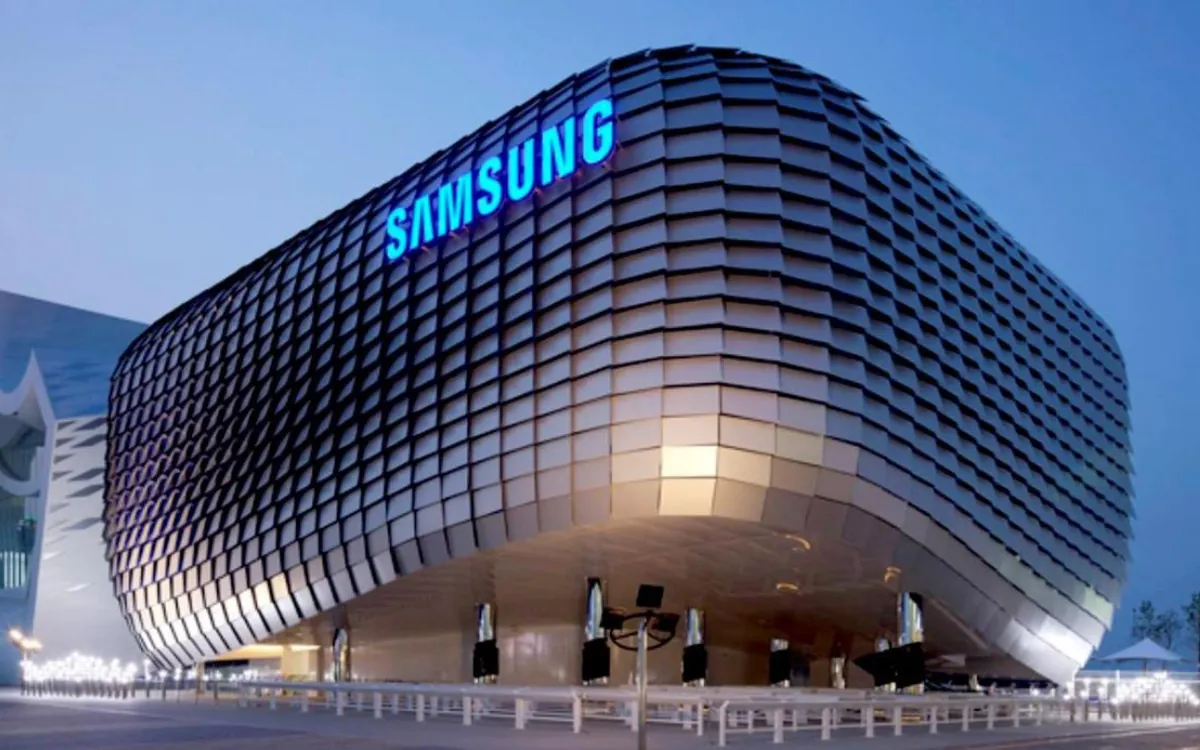
Samsung is reportedly converting its Xi’an factory to manufacture 286-layer V9 NAND flash memory. The internal project, known as “Monami,” is expected to produce about 5,000 wafers a month by December 2026 before rising to 40,000 a month by the end of 2027.
SK Hynix, meanwhile, is reportedly preparing to manufacture NAND products with at least 240 layers at its Dalian operations, which currently produce chips with about 192 layers. The company acquired the factory as part of its purchase of Intel’s NAND business.
NAND memory retains data when power is removed and is widely used in smartphones, computers and solid-state drives. Increasing the number of layers allows manufacturers to fit more storage into a chip, generally improving production economics and reducing the cost per unit of data.
US controls leave room for disputed upgrades
The investments present a challenge for Washington’s semiconductor policy. The United States has restricted exports of advanced chipmaking equipment to China since 2022, arguing that access to sophisticated technology could support Chinese military and artificial-intelligence development.
Samsung and SK Hynix previously benefited from the Validated End User programme, which allowed approved companies to ship certain American equipment to their Chinese factories without applying for individual licences. The U.S. Commerce Department later removed the Chinese operations of Samsung and SK Hynix from that programme.
Commerce officials said they intended to approve licences necessary to operate existing foreign-owned factories in China, while rejecting applications intended to expand capacity or upgrade technology. That distinction is becoming increasingly difficult to apply as ageing production lines require new tools to remain economically viable.
Samsung said its Xi’an project complies with U.S. regulations and is intended to meet demand from global customers, including companies in the United States. It said the work would neither add production capacity nor involve construction of another manufacturing facility.
SK Hynix said equipment was being installed at Dalian in consultation with Washington. Reuters reported that the company may seek permission to conduct research there on NAND exceeding 300 layers, although the extent of existing U.S. approvals remains unclear.
The Commerce Department’s published policy does not explain publicly where routine modernisation ends and a prohibited technology upgrade begins. Detailed export licences are generally not released, making independent assessment difficult.
Chinese competition raises pressure
Standing still carries commercial risks for both South Korean companies. China’s Yangtze Memory Technologies Co., or YMTC, has expanded rapidly despite U.S. restrictions and its presence on Washington’s Entity List.
YMTC held a reported 38.5% of China’s NAND market during the second quarter of 2026, up from 28% in 2025. Samsung’s share fell to 33.5%, while SK Hynix declined to 17%, according to data from research firm Omdia cited by Reuters.
The Chinese company mainly supplies 160- and 232-layer products but has reportedly begun limited production of 294-layer chips. Its progress increases pressure on overseas manufacturers whose Chinese factories are prevented from keeping pace with newer production technology.
Outside China, both South Korean companies already manufacture more advanced products. SK Hynix announced in 2024 that it had begun mass production of 321-layer NAND, designed in part for high-performance AI storage. Samsung produces NAND with as many as 286 layers outside its Xi’an plant and has demonstrated technology exceeding 400 layers.
The gap illustrates the long-term effect U.S. controls could have on foreign-owned Chinese factories. If those plants cannot adopt newer processes, they may gradually become less competitive even while remaining major parts of global supply.
Samsung’s Xi’an operation accounts for about 40% of its worldwide NAND output, making a rapid withdrawal commercially disruptive. SK Hynix’s Dalian plant is similarly important to Solidigm, its NAND and storage subsidiary.
The reported upgrades therefore represent more than routine factory investment. They show how export controls are forcing Washington, allied chipmakers and Chinese authorities to negotiate which technological advances are necessary to preserve existing production — and which could help China close the semiconductor gap the restrictions were designed to maintain.