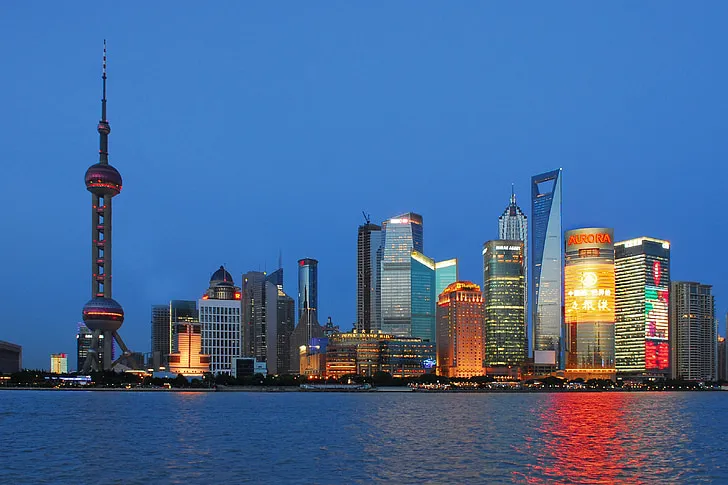
Shanghai is accelerating its shift from commercial powerhouse to global research and development hub, using public policy, industrial depth and international corporate investment to strengthen its position in advanced technology, life sciences and artificial intelligence.
The city’s latest push reflects a broader effort by Chinese policymakers to move Shanghai beyond its long-standing role as a finance, trade and manufacturing center. Its ambition is now to become a place where global companies not only sell products or manage regional operations, but also conduct core research, develop intellectual property and commercialize new technologies for China and international markets.
A City Built Around Research
Shanghai’s innovation strategy rests on a dense network of universities, laboratories, industrial parks and multinational companies. Local authorities have promoted the city as an international science and technology innovation center, while directing resources toward integrated circuits, biomedicine, artificial intelligence, advanced manufacturing and computing infrastructure.
That strategy is increasingly visible in the numbers. Shanghai’s official international portal says the city allocated about 4.5 percent of GDP to research and development in 2025, with roughly 12 percent of that spending directed toward basic research, a category seen as essential for original scientific breakthroughs rather than incremental industrial upgrading.
The city has also moved to strengthen its role as a computing hub. China Daily reported that Shanghai’s development has been supported by long-term industrial cluster planning and policies tied to the city’s established integrated circuit base. The listing of Shanghai Xizhi Technology, an optoelectronic hybrid computing infrastructure company, on the Hong Kong Stock Exchange in April offered one example of how local firms are trying to turn specialist research into commercial scale.
Shanghai’s appeal is not limited to domestic firms. The city continues to draw multinational companies seeking access to Chinese engineers, suppliers, consumers and research partners. For global businesses, Shanghai offers a combination that is difficult to replicate: proximity to advanced manufacturing, a deep pool of technical workers, an active venture and corporate investment ecosystem, and government agencies willing to tailor support for high-priority sectors.
Foreign Companies Deepen Their R&D Presence
Shanghai has made foreign-invested research centers a central part of its innovation strategy. In January, the city released 26 measures designed to support multinational companies’ R&D centers, including policies aimed at intellectual property commercialization, service outsourcing, talent mobility, customs clearance and data flows. The measures also encourage foreign R&D centers to participate more deeply in government-led research projects.
Those measures arrive as global companies continue to expand in the city. Reckitt opened a new Global Science & Innovation Centre in Shanghai in July, describing it as the company’s largest R&D investment in Asia and part of a broader effort to use China not only as a consumer market but also as a source of global innovation. The center, located in Caohejing Hi-Tech Park, is intended to support product development for China while also scaling selected innovations internationally.
Pharmaceutical and health technology companies have also treated Shanghai as a strategic base. AstraZeneca has used Shanghai as one of its key China hubs, while the broader life sciences sector has benefited from the city’s clinical resources, research hospitals and biotech talent. Reports this year said AstraZeneca planned to build a commercial cell therapy manufacturing base and innovation center in Shanghai, underscoring the city’s importance in advanced medicine and biotechnology.
The pattern suggests a shift in how foreign companies view China. In earlier decades, many international firms located manufacturing, sourcing or sales functions in Chinese cities. Shanghai’s current pitch is different. It wants companies to place more of their research cycle inside the city, from early-stage testing and product adaptation to applied development and commercialization.
That ambition is helped by Shanghai’s industrial geography. Research centers are close to suppliers, production facilities, logistics networks and consumer markets. In sectors such as healthcare, consumer goods, semiconductors and robotics, the ability to move quickly from laboratory concept to prototype, pilot production and market feedback can shorten development cycles.
Policy, Talent and Competition Shape the Next Phase
Shanghai’s rise as an R&D hub is also tied to China’s national emphasis on technological self-reliance. Restrictions on advanced chips and other sensitive technologies have pushed Chinese cities to strengthen domestic capability in semiconductors, AI infrastructure, computing and industrial software. For Shanghai, that creates both opportunity and pressure: it must attract global participation while also helping China reduce dependence on foreign-controlled technologies.
The city’s 2026-30 development planning places innovation alongside finance, trade and industry as a pillar of Shanghai’s next stage of growth. Official planning documents emphasize high-level opening-up, stronger financial support for the real economy and continued development of strategic industries.
Talent remains one of Shanghai’s strongest assets. The city draws graduates from leading universities, researchers from national laboratories and engineers from across the Yangtze River Delta, one of China’s most advanced manufacturing regions. Shanghai also ranked first among Chinese cities in the 2025 sci-tech innovation index issued by China’s Ministry of Science and Technology.
Still, Shanghai faces significant challenges. Global companies must navigate tighter data rules, geopolitical tension, export controls and questions about intellectual property protection. Domestic firms face intense competition for capital and talent, while local governments across China are also trying to build their own high-tech clusters.
Yet Shanghai’s advantage lies in the breadth of its ecosystem. It is not betting on a single industry. Instead, it is linking finance, computing, life sciences, consumer innovation, advanced manufacturing and international business services into a single urban research platform. That breadth allows discoveries in one field to support another: AI can improve drug discovery, advanced chips can support robotics, and digital infrastructure can accelerate industrial design.
Shanghai’s transformation is therefore less a sudden emergence than the result of sustained investment and careful positioning. The city is trying to prove that it can be more than China’s most international commercial metropolis. It wants to be a place where the next generation of technologies is imagined, tested, financed and brought to market.