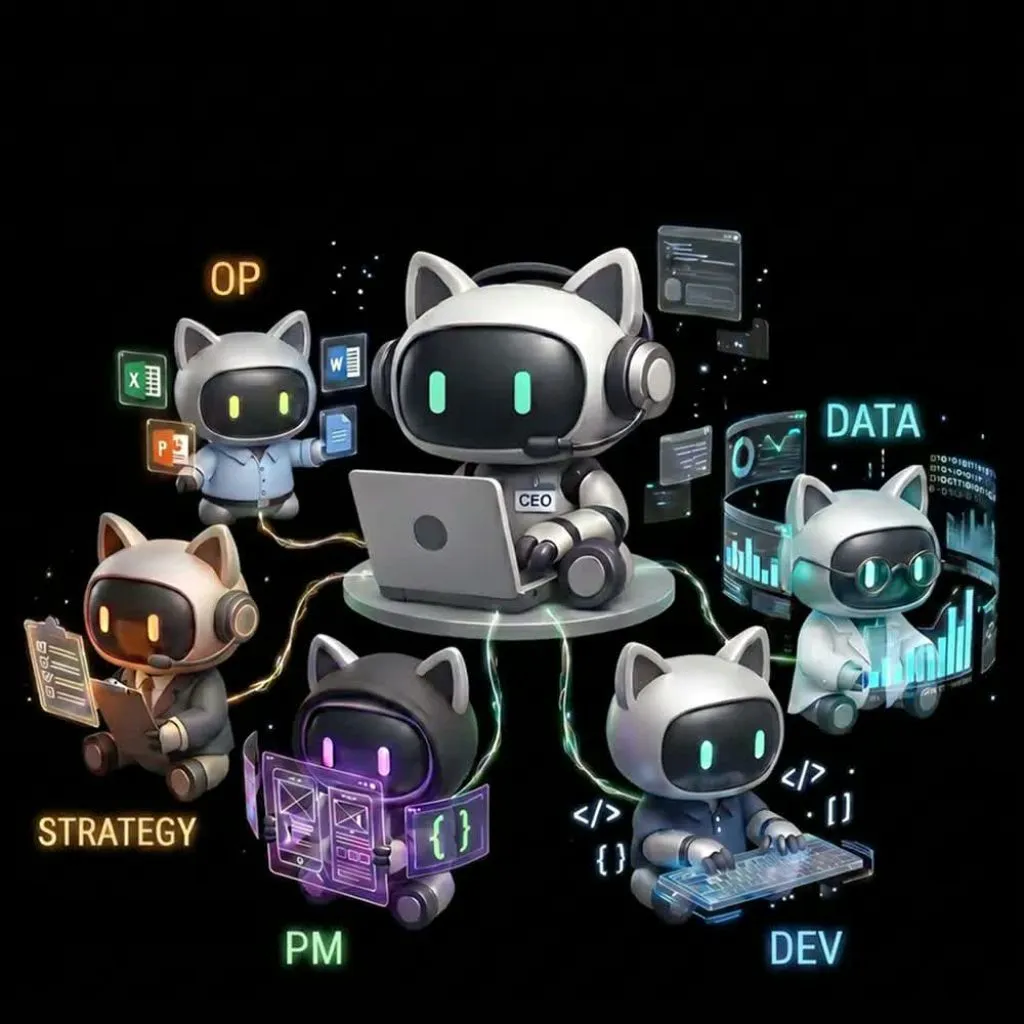
Tencent launched WorkBuddy, a new productivity AI agent, targeting global enterprise users to streamline complex workflows and automate routine business tasks.
The deployment signals Tencent's aggressive pivot into sophisticated B2B SaaS solutions outside of its established social media dominance. WorkBuddy is designed to function as an integrated digital assistant across various corporate software ecosystems, offering deep operational assistance rather than simple conversational queries.
WorkBuddy’s Core Functionality and Global Rollout
The AI agent utilizes advanced large language models fine-tuned specifically on enterprise data structures, allowing it to move beyond basic summarization. According to the launch details, WorkBuddy can manage cross-platform communication scheduling, generate detailed meeting minutes with action item extraction, and even draft complex internal documentation based on preliminary inputs.
A key differentiator highlighted in the release is its ability to interface seamlessly with existing enterprise resource planning (ERP) systems. This integration capability addresses a major friction point for AI adoption in large corporations: data siloization. WorkBuddy acts as an intermediary, accessing necessary information across disparate databases without requiring massive, immediate overhauls of legacy IT infrastructure.
Tencent emphasized that the initial rollout phase focuses on key markets in North America and Western Europe, indicating a strategic approach to gathering enterprise-level feedback before a full global saturation. This measured expansion minimizes risk while allowing the platform to adapt to varying regional compliance standards, such as GDPR requirements prevalent in European operations.
The technology underpinning WorkBuddy incorporates proprietary machine learning algorithms developed by Tencent's research division, leveraging its massive internal data processing capabilities honed through years of managing user interactions across WeChat and other services. This institutional knowledge provides the agent with a robust understanding of workflow patterns that generic AI models often lack.
Implications for Enterprise AI Adoption
The introduction of WorkBuddy places Tencent in direct competition with established players offering enterprise AI solutions, notably Microsoft Copilot and Google Workspace's integrated AI features. However, WorkBuddy differentiates itself by positioning itself less as a productivity enhancer and more as an autonomous workflow executor.
Industry analysts suggest that this move reflects a broader trend where corporate buyers are moving past proof-of-concept AI pilots toward fully embedded operational tools. Companies require agents that don't just answer questions but actively execute multi-step processes—a capability WorkBuddy purports to deliver through its deep system integrations.
From a competitive standpoint, this launch challenges the narrative that Chinese tech giants are solely focused on the consumer market. By aggressively pursuing high-value B2B contracts globally, Tencent is diversifying its revenue streams and solidifying its technological relevance in mature Western markets. The success of WorkBuddy will heavily depend on its reliability under sustained, mission-critical corporate loads.