🎙 Listen to a summary of this story
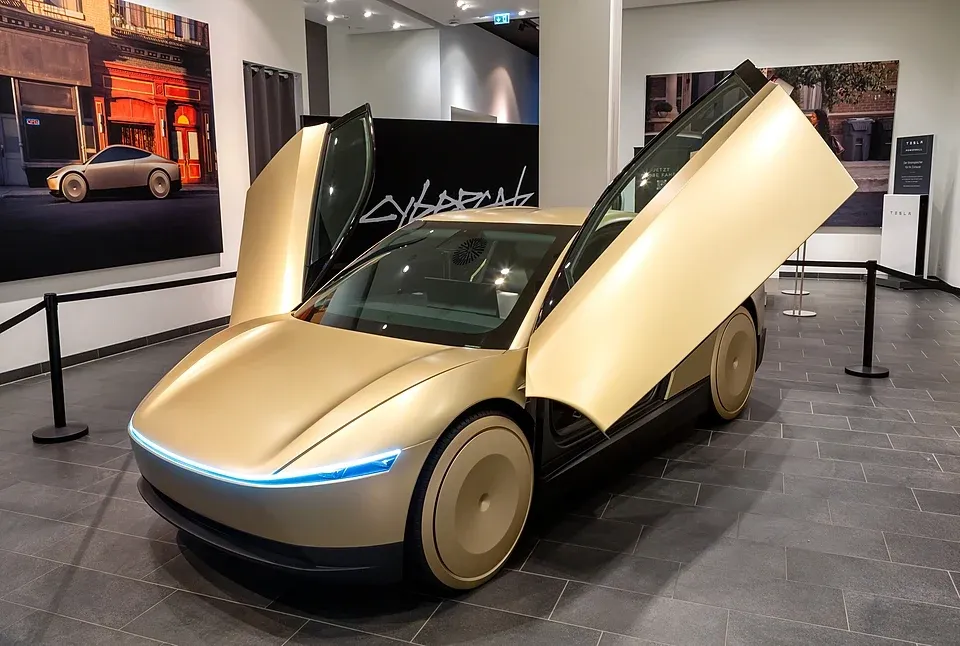
Tesla is deploying its advanced Cybercab robotaxi in China, signaling a major strategic gambit to generate market excitement amid slowing traditional vehicle sales.
The unveiling of the autonomous vehicle showcases Tesla's aggressive pivot toward fully driverless technology, targeting China—the world's largest and most critical electric vehicle market—to redefine the company’s future growth trajectory.
This exhibition appears calculated to generate significant media buzz, potentially counterbalancing recent reports of decelerating delivery figures in the competitive Chinese landscape. The Cybercab represents a definitive leap toward Tesla's long-term vision of an autonomous mobility ecosystem, moving beyond conventional vehicle sales.
The display highlights the technological sophistication of the robotaxi, emphasizing its operational capabilities in dense urban environments. Tesla's move suggests that while current vehicle sales may face headwinds from intense local competition and economic pressures, the promise of Level 4 autonomy remains a powerful differentiator.
The introduction of such a high-profile, futuristic product serves not merely as a sales tool, but as a statement of technological dominance in a market where perception and innovation carry immense weight. Success in China requires not just selling cars, but establishing a perceived leadership in the next generation of mobility.
The Strategic Importance of the Chinese Market
China remains indispensable to Tesla's global operations, serving as both a massive consumer base and a crucial manufacturing hub. The decision to debut the Cybercab there underscores the company's commitment to mastering the complexities of the Chinese regulatory and consumer environment.
Local competition, particularly from state-backed Chinese EV manufacturers, has intensified dramatically, forcing Tesla to elevate its marketing narrative beyond mere performance metrics. The robotaxi allows the company to shift the conversation from kilowatt-hours and range to the paradigm shift of autonomous operation.
Analysts note that the market is becoming increasingly sophisticated, with consumers and policymakers demanding solutions that address urban congestion and labor shortages through advanced automation. The Cybercab directly addresses these macro-level needs.
The exhibit itself functions as a sophisticated form of product demonstration, allowing potential investors and industry observers to witness the technology in a controlled, yet highly public, setting. This public display is a calculated investment in brand equity.
Furthermore, the deployment tests the waters for future regulatory approvals concerning autonomous driving in China. Navigating the stringent safety and testing protocols in this market is a prerequisite for any large-scale commercial rollout of the robotaxi fleet.
If the Cybercab can successfully capture public imagination and secure necessary governmental endorsements, it could provide the necessary momentum to stabilize sales figures and reinvigorate investor confidence in the company’s long-term autonomous strategy. Conversely, if the buzz fails to translate into tangible interest, the high-profile exhibit risks becoming another expensive, yet ultimately symbolic, demonstration.
The overall strategy hinges on transforming the narrative from "Tesla is selling EVs" to "Tesla is building the autonomous future," a transition that requires the visual impact of a vehicle like the Cybercab in a market as discerning as China.