
🎙 Listen to a summary of this story
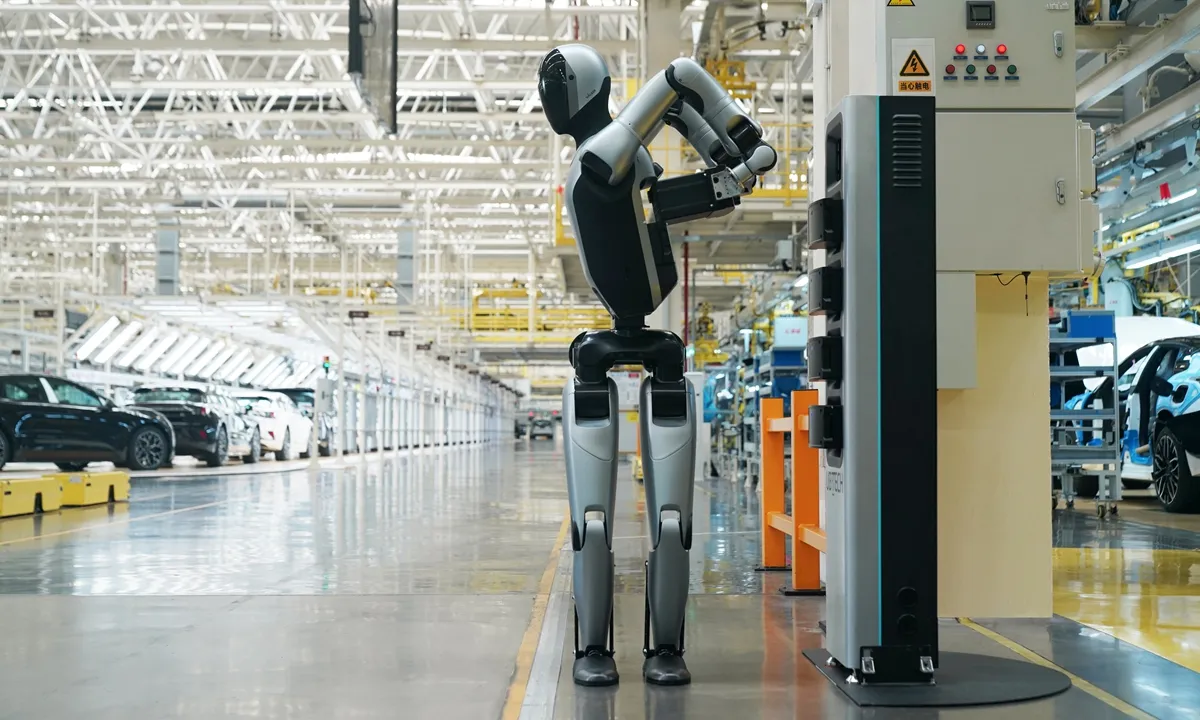
UBTECH and FAW-Volkswagen have strategically deployed humanoid robots beyond static quality inspection, integrating them into complex factory logistics operations in Qingdao. This shift signals a major maturation point for advanced robotics in Chinese manufacturing, moving from specialized monitoring roles to dynamic, heavy-duty operational support within automotive assembly lines.
The collaboration demonstrates a clear industrial pivot: leveraging humanoid dexterity not just for precision tasks like visual inspection of vehicle components, but also for the physical movement and handling required in high-throughput logistical environments. This expansion directly addresses the labor intensity challenges facing modern automotive production floors.
This deployment represents a significant leap in enterprise robotics adoption within China's heavy industry sector, validating the commercial viability of general-purpose humanoid platforms capable of interacting robustly with existing industrial infrastructure and workflows.
Technical Integration and Operational Dynamics
The robots utilized in this partnership are engineered to handle tasks that previously required human intervention for material transport or component staging. Their operational success hinges on sophisticated perception systems allowing them to navigate dynamic factory floors, avoiding collision while adhering strictly to production schedules.
Technically, the integration involves deep coordination between UBTECH's hardware capabilities and FAW-Volkswagen’s proprietary manufacturing execution systems (MES). The robots are programmed not merely for predefined paths but for adaptive task completion, responding to real-time changes in component availability or line flow.
While initial deployments focused on inspection accuracy—a hallmark of early industrial robotics—the logistics integration demands superior balance, payload capacity, and path planning algorithms. This necessitates robust mechanical design capable of sustaining continuous, physically demanding cycles typical of automotive logistics.
Broader Market Implications and Future Trajectory
This move by a major OEM like FAW-Volkswagen carries substantial weight for the global robotics industry. It signals that humanoid robots are transitioning from experimental proof-of-concept units to essential components of smart factory architecture, capable of handling 'unstructured' industrial environments.
Geopolitically and commercially, this accelerates China’s ambition in advanced automation. By proving the utility of general-purpose humanoids in logistics—a field traditionally dominated by AGVs or fixed robotic arms—Chinese firms like UBTECH are staking a claim in next-generation industrial automation hardware.
The success here validates the long-term investment thesis in embodied AI for industry. Future iterations of this technology will likely see these robots managing end-to-end supply chain micro-logistics within the plant, potentially reducing reliance on manual forklift operations and improving overall OEE (Overall Equipment Effectiveness).