🎙 Listen to a summary of this story
Unitree's IPO success masks persistent, significant limitations hindering the immediate viability of general-purpose humanoid robots in real-world industrial deployments.
The Market Hype Versus Operational Reality
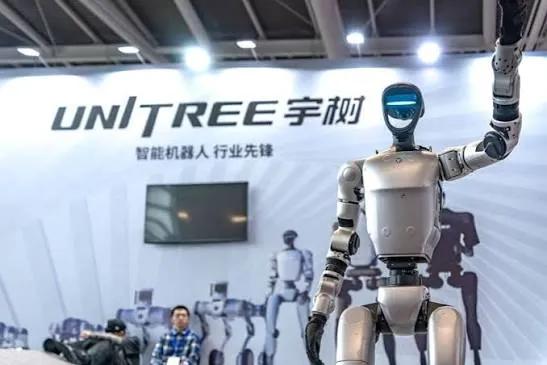
The recent market enthusiasm surrounding Unitree, evidenced by its public offering, suggests a robust investor appetite for advanced robotics. However, analysis indicates that current humanoid capabilities often fail to transition from controlled laboratory environments into complex, dynamic operational settings without substantial human intervention.
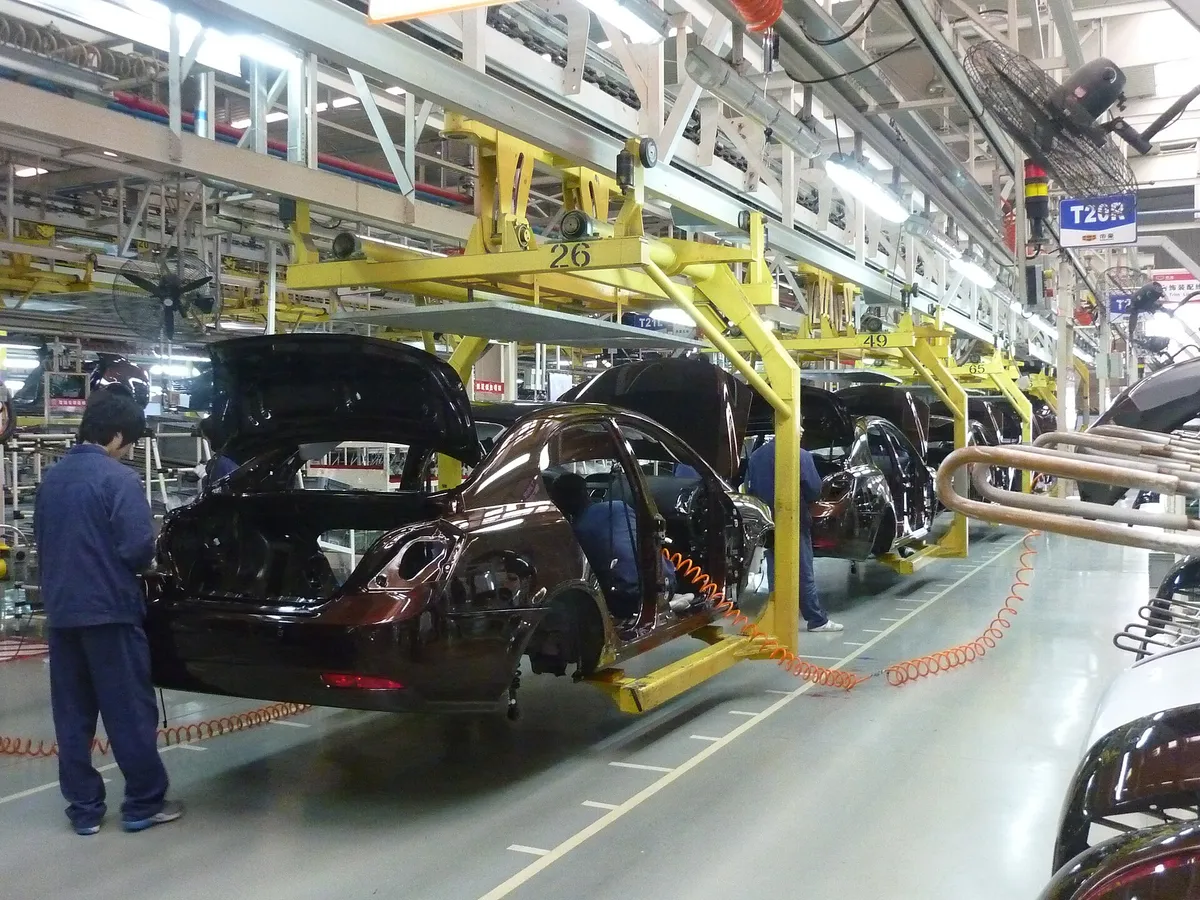
While these machines exhibit impressive kinematics and locomotion—demonstrating proficiency on structured surfaces—their performance degrades notably when confronted with the unstructured variability inherent in manufacturing floors or logistics hubs. This gap between demonstration capability and industrial robustness remains a critical barrier to mass adoption.
Industry experts suggest that current AI models governing these platforms excel at predefined tasks but struggle profoundly with true generalization. A robot programmed for one assembly sequence may require extensive, time-consuming retraining when the spatial layout or object placement deviates even slightly from its initial training parameters.
Furthermore, the energy efficiency and payload capacity of many commercial humanoid prototypes are still insufficient for sustained, heavy-duty industrial shifts. Battery life constraints frequently necessitate frequent downtime for recharging, thereby undermining the economic calculus required for capital expenditure justification on factory floors.
The Technical Hurdles Beyond Mobility
The challenge extends beyond mere walking; manipulation dexterity presents another major bottleneck. While arms are increasingly articulated, grasping objects of diverse shapes, textures, and weights remains a probabilistic rather than deterministic process. Current vision systems struggle with real-time occlusion and subtle material variations that seasoned human workers navigate intuitively.
Unitree’s success capitalizes on mastering locomotion—a relatively defined engineering problem involving balance and dynamic stability. The next evolutionary leap requires mastery over perception, fine motor control, and sophisticated decision-making under uncertainty, areas where the technology is still nascent.
Investors are currently prioritizing hardware advancements and impressive demonstration videos, which understandably drive valuations. Yet, for enterprise clients seeking immediate operational ROI, the current state of the art demands a more comprehensive solution than merely bipedal movement.
The integration challenge with legacy industrial infrastructure also presents friction. Humanoid robots must interface seamlessly with existing Programmable Logic Controllers (PLCs) and Supervisory Control and Data Acquisition (SCADA) systems, a level of standardized interoperability that the sector has yet to fully achieve across competing platforms.
Ultimately, while Unitree represents a significant stride in bipedal robotics, treating its IPO as definitive proof of immediate industrial readiness overlooks these foundational engineering deficits. The transition from impressive demonstration unit to reliable, tireless factory worker requires solving problems far deeper than merely perfecting the gait cycle.