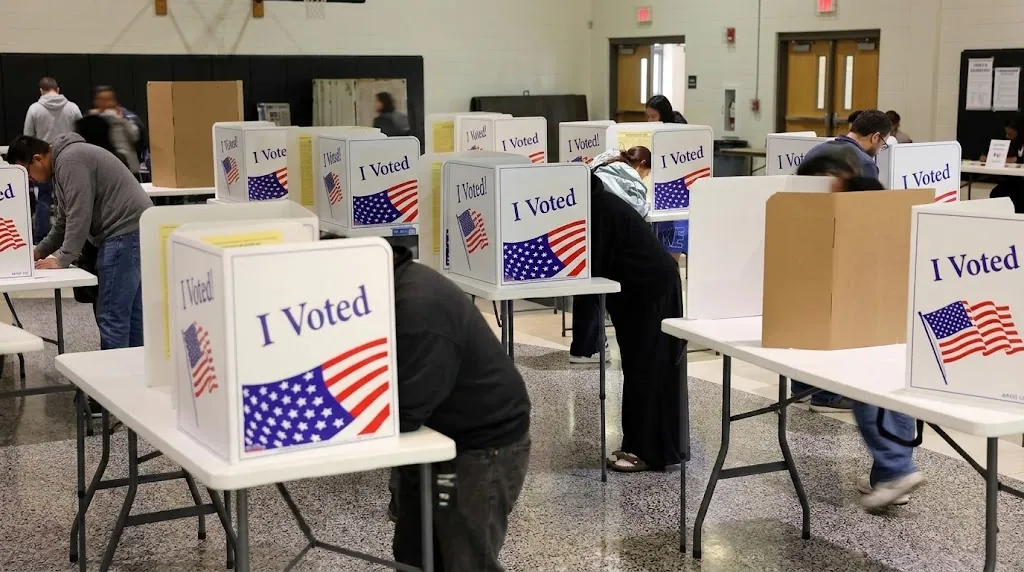
The Democratic sweep of both chambers of Congress in the US could significantly decelerate the pace of American AI growth, creating a strategic opening for China's technological ambitions.
The potential for increased regulatory scrutiny and fragmentation within the US tech sector represents a fundamental risk to the rapid, venture-capital-fueled expansion that has characterized the AI industry over the last decade. If political headwinds materialize—such as stringent antitrust enforcement or mandated data localization—it could disrupt the integrated, fast-moving development cycles currently dominating Silicon Valley.
This domestic friction, observers suggest, directly benefits Beijing. China’s AI progress, while facing its own governance challenges, operates within a more centralized, state-backed ecosystem, allowing it to pursue large-scale, directed technological advancement without the same degree of regulatory uncertainty plaguing its Western counterparts.
Regulatory Friction and Commercial Dynamics
The current US AI boom is heavily predicated on the ability of major tech firms to amass massive datasets and deploy expansive computing power, often at a scale that strains existing market structures. A shift towards greater governmental oversight would directly impact the commercial calculus driving these investments.
Specific areas of concern include the concentration of foundational models and the control over critical hardware supply chains, particularly advanced semiconductors. Increased federal intervention could mandate technology sharing or cap the market dominance of hyperscalers, thereby altering the competitive landscape where firms like OpenAI and Google currently operate with near-unfettered scaling capacity.
Furthermore, the debate over AI’s application in sensitive areas—such as surveillance, healthcare diagnostics, and autonomous systems—is becoming increasingly politicized. This uncertainty creates a chilling effect, potentially slowing down the willingness of private entities to undertake high-risk, high-reward foundational research projects.
Geopolitical and Market Realignments
The implications extend far beyond quarterly earnings reports; they touch the core of technological sovereignty between the US and China. If US AI development slows due to policy shifts, the perceived gap between American innovation and Chinese execution narrows, shifting global investment patterns.
For China, this environment offers a crucial period to solidify its leadership in specific AI verticals, leveraging its massive domestic user base and state support to refine and deploy advanced systems across society. The nation’s strategy relies on achieving technological self-sufficiency, and slower US progress provides a valuable window for this consolidation.
Ultimately, the political stability of US technology policy is now an inextricable variable in the global AI race. A regulatory pivot in Washington risks turning a competitive technological sprint into a complex, fragmented strategic negotiation, altering the trajectory of the world's most transformative technology.