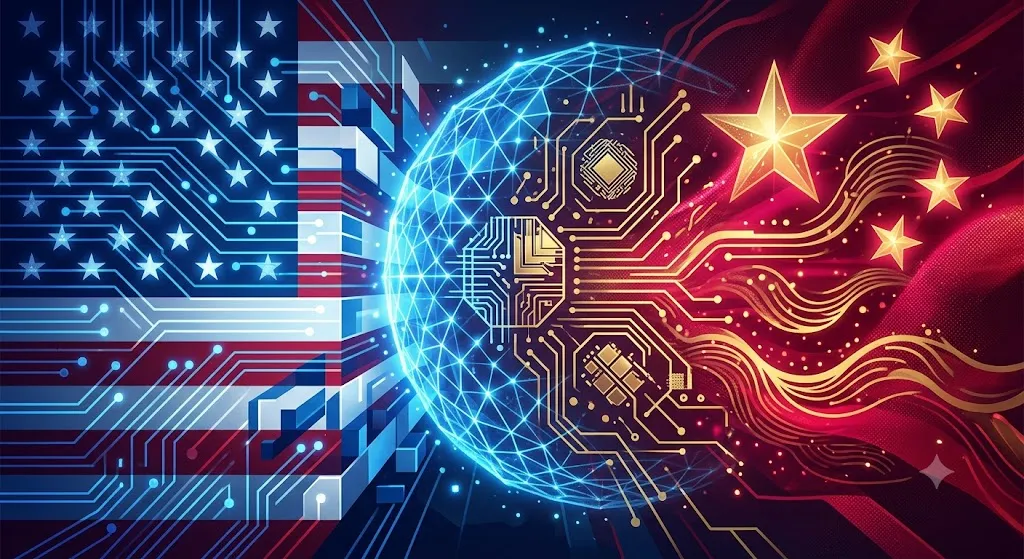
The United States has issued warnings regarding potential AI-related sanctions against Chinese entities, signaling escalating technological competition and regulatory pressure.
This warning comes amid intensifying geopolitical friction over the control of advanced artificial intelligence technologies. Officials indicated that Washington is closely monitoring China's progress in critical AI sectors, suggesting punitive actions could be deployed if certain benchmarks or compliance standards are unmet.
Escalating Regulatory Scrutiny on AI Development
The core concern revolves around the export controls and dual-use nature of cutting-edge AI hardware and software. US regulators appear increasingly focused not just on the final application of these technologies, but on the foundational components that drive them.
Sources cited in reports suggest that the potential sanctions could target specific Chinese companies involved in developing high-performance computing chips or large language models (LLMs). These measures align with a broader US strategy aimed at maintaining technological superiority and limiting what Beijing can achieve autonomously in strategic domains.
The implications for China’s domestic tech ecosystem are significant. If sanctions materialize, they could disrupt supply chains that rely on Western technology inputs, forcing Chinese firms to accelerate indigenous innovation or seek alternative international partnerships.
Industry analysts view this as a clear escalation from previous trade disputes into a direct technological containment strategy. The US government's stance underscores a growing recognition that AI is not merely an economic sector but a critical national security asset.
The Implications of Sanctions
The threat of sanctions serves as both a deterrent and a strategic signal to the Chinese state apparatus. It forces Beijing to reassess its technological roadmap and investment priorities within artificial intelligence research and development.
Specifically, the warning targets areas where US dominance remains pronounced, such as advanced semiconductor fabrication processes necessary for training massive AI models. Access to these specific capabilities is viewed by Washington as a leverage point capable of slowing China's trajectory toward self-sufficiency in frontier AI.
The Chinese government has consistently maintained that its technological advancements are driven by national development goals and not solely by external market dynamics. However, the threat from the US suggests a hardening stance on decoupling in key strategic technologies.
Diplomatically, this situation places pressure on third-party nations to navigate between maintaining trade relations with China and adhering to evolving US export control regimes. The fluidity of these regulations creates an environment of uncertainty for multinational corporations operating across both jurisdictions.