🎙 Listen to a summary of this story
A state dinner hosted by the US President for top Chinese technology leaders underscored a complex pivot toward structured economic cooperation despite ongoing geopolitical tensions between Washington and Beijing.
The Diplomatic Context of Tech Cooperation
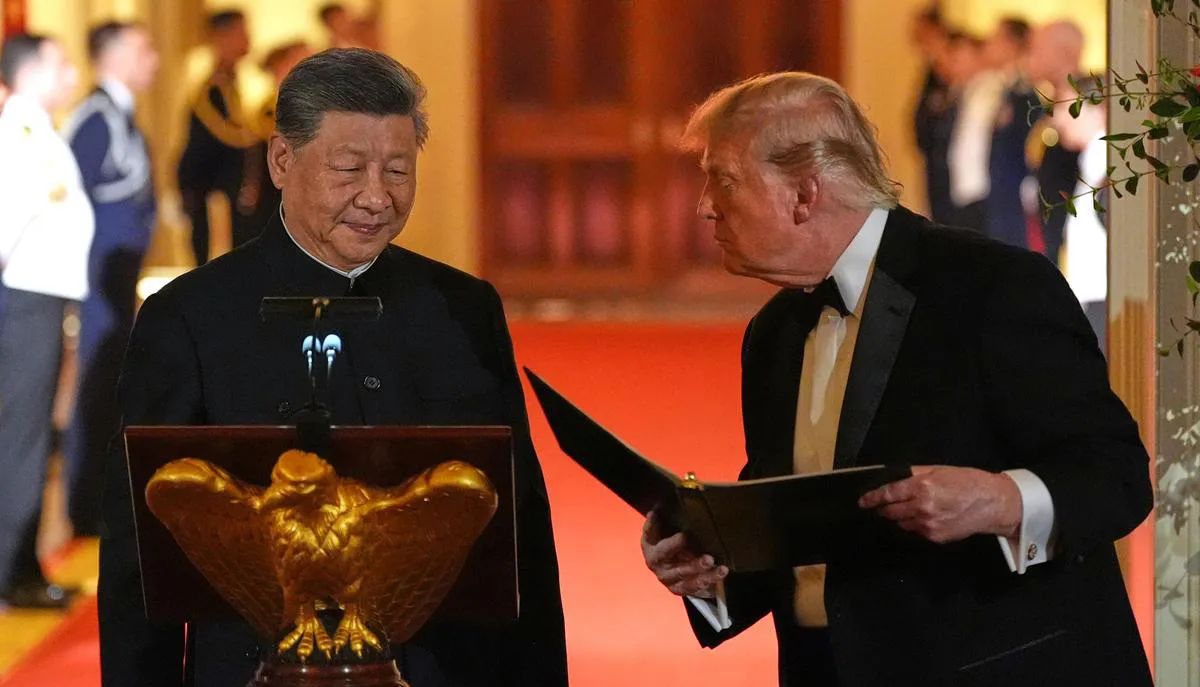
The gathering, which brought together key figures from major private technology conglomerates at an event hosted by Donald Trump for Xi Jinping, signaled a deliberate effort to carve out channels for bilateral economic exchange outside the scope of broader diplomatic disputes. While specific details regarding high-level agreements remain undisclosed, analysts viewed the event as an attempt by global powers to manage the inherent risks associated with technological decoupling.
Guests included the CEOs of OpenAI, Sam Altman, and Nvidia, Jensen Huang, two of the leading US tech titans today. These meetings are framed not merely as social engagements but as critical forums for discussing supply chain resilience and market access. The focus on technology—particularly semiconductors, artificial intelligence, and 5G infrastructure—revealed that economic interdependence remains a primary driver of engagement between the world’s two largest economies.
Sources indicate that discussions centered heavily on maintaining stability in global tech value chains, areas that have become flashpoints for regulatory scrutiny and export controls. The presence of top Chinese technology executives alongside US political leaders underscores the continued strategic importance assigned to China's role as a manufacturing powerhouse and technological market. This dynamic creates a delicate balance between national security concerns and mutual commercial necessity.
Analyzing Geoeconomic Trajectories
The summit highlights the persistent tension in modern diplomacy: how to foster deep economic ties while simultaneously mitigating perceived threats to intellectual property and national security. For global market observers, the event reinforces the notion that technology is no longer solely an economic commodity but a core component of geopolitical leverage.
Analysts suggest this diplomatic staging may signal a phased approach rather than an abrupt shift in policy. Instead of total decoupling, the emphasis appears to be on "de-risking," wherein companies and nations seek to diversify supply chains away from singular dependencies while maintaining crucial connections with major partners like China. This strategy is designed to cushion against future political shocks.
Furthermore, the dialogue was implicitly concerned with setting rules for emerging digital economies, particularly concerning data governance and cross-border data flows. As both nations accelerate development in fields such as quantum computing and advanced AI applications, establishing standardized international norms becomes a critical prerequisite for sustained cooperation. The state dinner thus served as a highly visible mechanism to discuss these complex regulatory frameworks.
Ultimately, the summit’s structure underscores that high-level diplomacy today is inseparable from the private sector's technological ambitions. Future engagements are expected to continue prioritizing mechanisms designed to facilitate trade in critical technologies, thereby attempting to navigate the fraught path between geopolitical rivalry and indispensable global economic collaboration.