Nexperia China Complicates Ownership Dispute
Wingtech Technology’s recent emphasis on Nexperia China’s independent production plans has added a new layer to a dispute that has already drawn in Dutch courts, the Chinese government, global automakers and European policymakers.
The company has pointed to Nexperia China’s ability to continue local operations, seek new suppliers and pursue legal remedies after a breakdown in relations with Nexperia’s Dutch headquarters. The announcement highlights how a semiconductor business once presented as a successful cross-border acquisition has become a test case for how governments respond when commercial ownership, national security and supply-chain resilience overlap.
Nexperia is not best known for the most advanced chips used in artificial intelligence or high-performance computing. Its business is built around more common but widely used components, including diodes, transistors, power devices and logic chips. These parts are essential in cars, smartphones, consumer appliances and industrial equipment. That broad customer base has made the dispute significant beyond the companies directly involved.
The immediate issue is control. Wingtech, a Chinese electronics and semiconductor company, says it has been unlawfully deprived of authority over Nexperia, which it acquired in 2018. Nexperia’s Dutch management says intervention was necessary because of serious governance concerns. China has accused the Netherlands of overreach, while Dutch officials have said their actions were aimed at protecting technology, production capacity and supply security.
How the Acquisition Became a Political Issue
The roots of the dispute lie in the 2018 acquisition of Nexperia by Wingtech. Nexperia had previously been part of NXP, itself descended from the semiconductor operations of Philips, one of the Netherlands’ most important technology companies. At the time, the acquisition attracted less public scrutiny than later Chinese investments in European semiconductor assets, partly because Nexperia’s products were regarded as mature technology rather than leading-edge chips.
That assessment changed as governments reassessed the strategic importance of semiconductor supply chains. The pandemic, shortages in the automotive sector, Russia’s invasion of Ukraine and expanding U.S. restrictions on Chinese access to advanced technology all contributed to a more cautious policy environment. In Europe, governments strengthened investment screening and began to view some lower-end technologies as strategically important because of their role in essential industries.
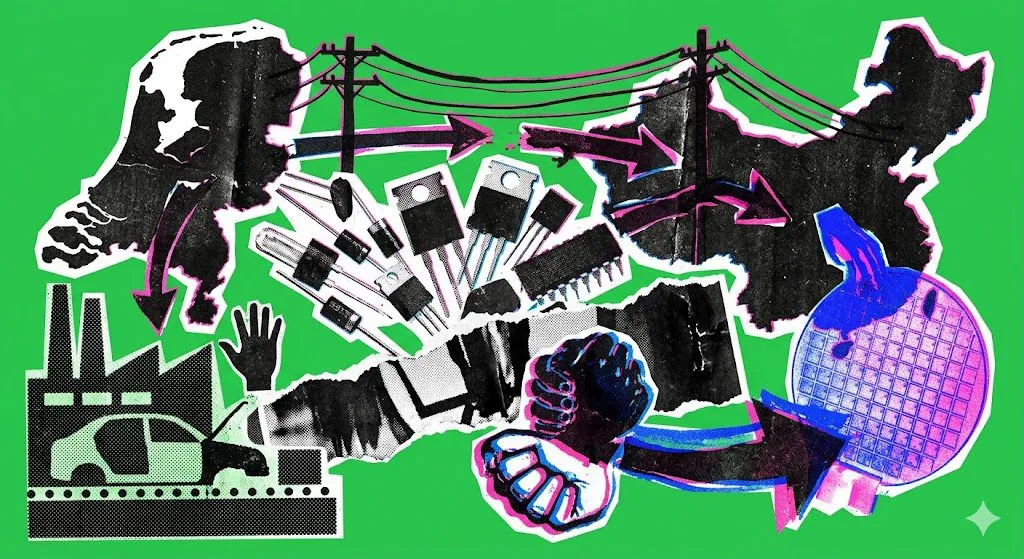
Nexperia’s operating model made those concerns more immediate. Much of its wafer production was based in Europe, while packaging and testing took place in China before products were shipped to customers around the world. The arrangement reflected the efficiencies of global manufacturing, but it also left the company exposed to disruption if political or corporate relations deteriorated.
The Netherlands acted in late September 2025, invoking the Goods Availability Act, a rarely used law intended to protect the availability of vital goods. Dutch officials cited serious governance shortcomings and the risk that important technological knowledge and production capability could be moved out of Europe. The order gave the government the ability to block or reverse certain company decisions.
A separate corporate governance process followed in the Dutch courts. The Enterprise Chamber in Amsterdam suspended Wingtech founder Zhang Xuezheng as Nexperia’s chief executive and placed Wingtech’s voting rights under independent administration. Wingtech viewed the measures as a loss of control over a major asset. Dutch officials and Nexperia’s European management described them as safeguards against governance risks and conflicts of interest.
Supply Chains, Legal Claims and an Uncertain Future
The effects were soon felt outside the Netherlands and China. Beijing responded by restricting exports of Nexperia products from China, where much of the company’s output was finished. Automakers warned that shortages could affect production, and Honda temporarily halted operations at a plant in Mexico, showing how a dispute over corporate control could affect manufacturing far beyond the semiconductor sector.
The Dutch government later suspended its ministerial order after talks with China, presenting the step as a gesture to help restore supply. But the suspension did not resolve the wider dispute. The court measures remained in place, Zhang remained suspended and Wingtech’s voting rights remained constrained. China welcomed the Dutch move but said further action was needed. Wingtech demanded restoration of control, while Nexperia said full supply-chain recovery required cooperation from its Chinese entities.
Since then, Nexperia has increasingly appeared to operate through separate Dutch and Chinese centers of control. Nexperia’s Dutch side has said its Chinese operations stopped following lawful global management instructions, refused payments for wafers and took steps that weakened oversight. It has said it halted direct wafer shipments to the Chinese facility because of payment disputes and concerns over transparency, quality control and intellectual property.
The Chinese side has moved to reduce reliance on Europe. Nexperia China has said it achieved small-batch production using 12-inch wafers, a notable claim because the Dutch parent does not produce wafers at that size. It has also sought local suppliers, including Chinese foundries that could replace European wafer flows. Those moves suggest the dispute may lead to a more lasting operational split unless the companies and governments reach a broader settlement.
Wingtech has also faced financial pressure from the dispute. Its auditors were unable to verify a large share of its assets tied to Nexperia, contributing to a major 2025 loss and scrutiny from the Shanghai stock exchange. The company has pursued legal remedies in China and has threatened international arbitration seeking compensation from the Netherlands.
The case underscores how semiconductor policy has expanded beyond advanced chips. Nexperia’s products are relatively mature, but their importance to cars and industrial systems has made them strategically relevant. For the Netherlands, the dispute is a test of how to manage foreign ownership in a sector closely linked to national economic interests. For China, it raises concerns that overseas acquisitions can face new restrictions years after completion.
Nexperia China’s recent production announcement therefore matters not only as a technical or commercial development. It shows that both sides are preparing for the possibility of a prolonged dispute. Whether Nexperia can return to an integrated global structure, or instead becomes a more divided company shaped by competing regulatory systems, remains unresolved.