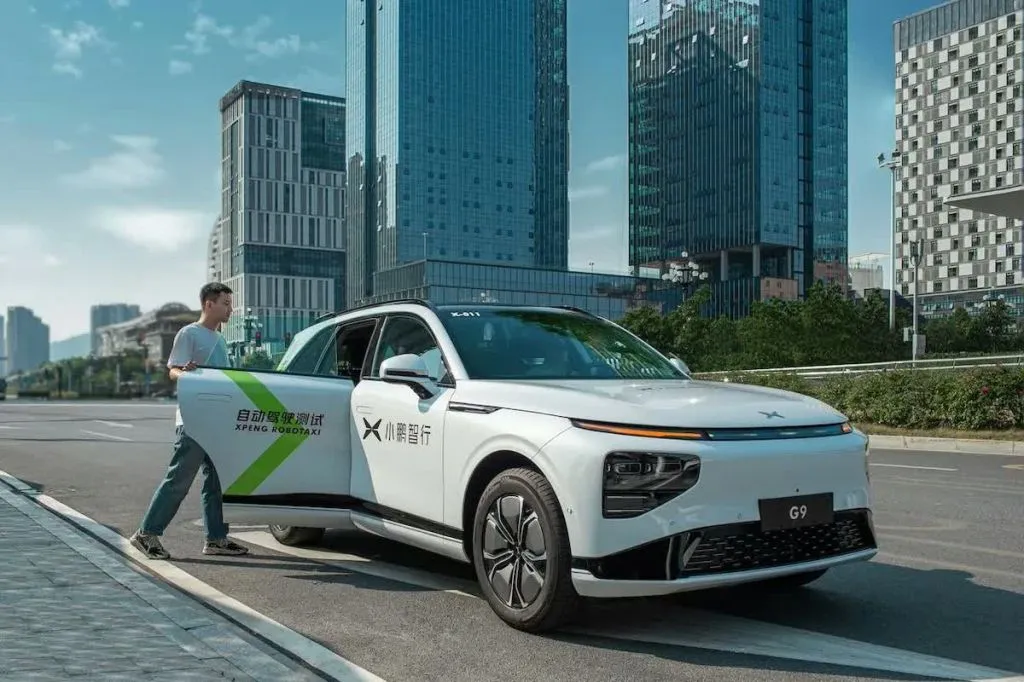
Chinese automaker Xpeng is aggressively challenging Tesla's Full Self-Driving (FSD) software dominance by deploying its own advanced driverless cab technology, signaling a major escalation in the global AI race within the automotive sector.
The deployment of these autonomous vehicles positions Xpeng not merely as an EV manufacturer but as a serious contender in the high-stakes realm of artificial intelligence applied to mobility. The company's move directly confronts the established technological lead held by Tesla, suggesting that Chinese firms possess viable, rapidly maturing alternatives to Western software ecosystems.
Xpeng has been integrating its proprietary autonomous driving systems into new vehicle models, moving beyond Level 2 driver assistance toward more comprehensive autonomy. This progression indicates a strategic pivot toward capturing the highest-value segment of the automotive market: fully automated transportation.
Technological Benchmarking and Competitive Landscape
The core of Xpeng's challenge lies in the sophistication of its sensor fusion and decision-making algorithms, which are designed to operate effectively within complex urban environments characteristic of Chinese cities. These systems must navigate dense traffic, unpredictable pedestrian behavior, and varied infrastructure—scenarios that have historically been proving grounds for autonomous driving developers worldwide.
While Tesla has garnered significant global attention for its end-to-end vision-based approach to autonomy, Xpeng appears to be leveraging a comprehensive suite of sensors, including LiDAR, cameras, and radar, to build robust perception stacks. The ability to demonstrate reliable performance in real-world Chinese operational design domains (ODDs) is critical for establishing credibility against Tesla’s claims.
Industry analysts suggest that the competitive pressure from Xpeng compels other regional players—both domestic Chinese rivals and international entrants—to accelerate their own AI development timelines. The race is no longer solely about incremental feature improvements but about achieving functional safety and reliable autonomy at scale.
The market implications are substantial; if Xpeng can prove its driverless cabs offer superior reliability or a more cost-effective path to Level 4/5 autonomy than FSD, it could fundamentally alter the competitive dynamics of the global EV landscape. This shift would empower Chinese technology firms as key exporters of mobility solutions.
Implications for Global Auto Tech
This technological push by Xpeng underscores a broader trend: the maturation of sophisticated deep learning models outside of Silicon Valley's immediate orbit. The integration of advanced computing hardware with localized, high-volume testing environments in China provides an unparalleled advantage for rapid iteration and refinement.
For investors and industry observers, this signals that the technological battleground has shifted from mere battery range to software intelligence. Superior AI capability is now recognized as the primary differentiator between market leaders and followers in the premium EV space.
The successful commercialization of Xpeng’s driverless technology would validate China's industrial policy focus on high-tech self-sufficiency, mitigating reliance on imported core technologies for advanced mobility. The stakes are higher than just sales figures; they involve establishing technological sovereignty in a defining 21st-century industry.