
🎙 Listen to a summary of this story
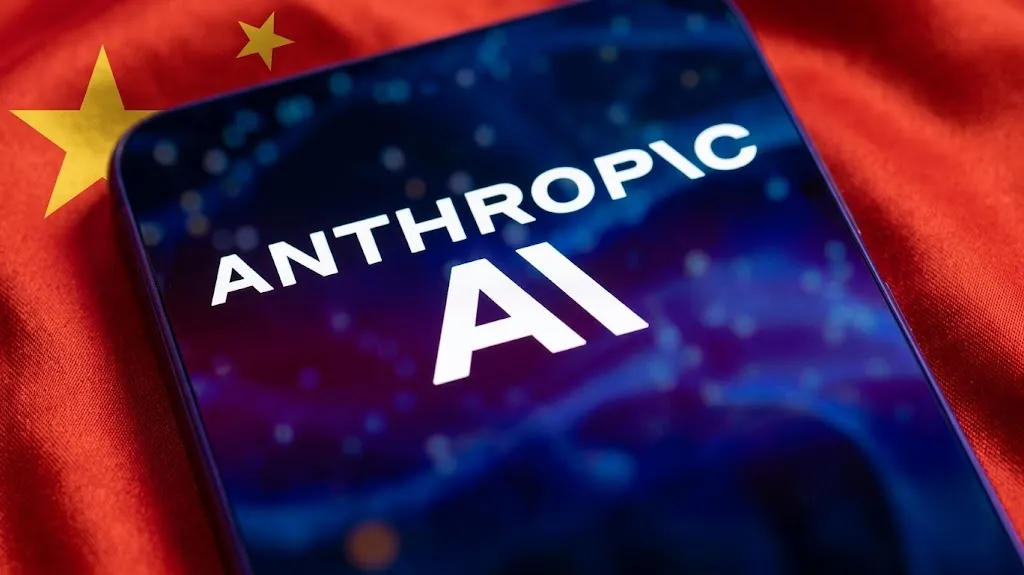
Anthropic is helping reshape China’s artificial intelligence industry — if not in the way it necessarily intends. The California company has instead emerged as an influential rival whose technology, safety arguments and support for tighter export controls are provoking Chinese researchers to accelerate development of cheaper, more open alternatives.
That distinction matters. There is no public evidence that Anthropic is sharing proprietary training methods, providing research infrastructure or co-developing models with Chinese companies. Anthropic has generally moved in the opposite direction, restricting access and warning that Chinese laboratories have attempted to extract capabilities from its Claude models.
Yet Anthropic’s influence inside China may still be considerable. Its technical research is closely read, its models provide a benchmark for Chinese developers and the geopolitical views of Chief Executive Dario Amodei have become a rallying point for researchers who believe American companies and policymakers intend to contain China’s progress.
Anthropic becomes a symbol of the AI divide
The tension was illustrated by an essay from Liu Shengyu, a researcher at the Chinese AI laboratory DeepSeek. Liu argued that advanced intelligence should be made widely and cheaply available, while presenting Anthropic as the embodiment of a future in which a small number of Western companies control the most powerful systems.
Liu’s comments, examined in a detailed ChinaTalk analysis, were striking partly because they came from a researcher working on the practical foundations of frontier models. He acknowledged that AI could soon surpass him at the specialised task of optimising computing kernels, but said competitive pressure gave researchers little choice except to continue advancing the technology.
The argument reflects a widening ideological divide. Anthropic presents safety research, model evaluations and limits on access as necessary protections against catastrophic misuse. Many Chinese technologists increasingly interpret the same measures as instruments for preserving American dominance.
Amodei has repeatedly advocated restricting China’s access to advanced semiconductors, arguing that powerful AI could strengthen authoritarian states and alter the global balance of power. Beijing, meanwhile, says American export controls disrupt supply chains and use national security as a justification for technological containment.
Anthropic has also alleged that China-based AI developers used large numbers of fraudulent accounts to conduct “distillation” campaigns against Claude. Distillation allows one model to learn from the outputs of another, potentially transferring useful capabilities without reproducing the full cost of the original training process. Such activity, if independently verified, would amount to unauthorised technical extraction rather than collaboration.
Competing definitions of safety
Anthropic’s influence also extends to the language of AI safety. Its Constitutional AI method trains models to evaluate responses against a written set of principles, reducing reliance on constant human feedback. Research into interpretability, adversarial testing and model alignment has contributed to a global debate that includes Chinese companies, universities and regulators.
China, however, has constructed its own regulatory framework rather than importing Anthropic’s approach. The country’s Interim Measures for Generative Artificial Intelligence Services require public-facing systems to protect national security, prevent discrimination, respect intellectual property and conform to what the government calls core socialist values. Providers must also address unlawful content and protect personal information.
That model combines familiar concerns about unreliable output and data protection with strict political controls. It differs from Anthropic’s emphasis on preventing extreme technological risks, including autonomous cyberattacks, biological misuse and the possibility that highly capable systems could evade human oversight.
There is still some common ground. China’s Global AI Governance Initiative calls for greater transparency, explainability and predictability, as well as mechanisms to keep AI under human control. Those objectives overlap with Western safety research even as the two sides disagree sharply over export controls, political values and who should set international rules.
The danger is that safety itself becomes another battlefield. If Chinese researchers view American warnings primarily as a pretext for slowing them down, they may discount legitimate evidence about emerging risks. American restrictions can also reinforce Beijing’s push for self-sufficiency, encouraging Chinese laboratories to build domestic chips, training systems and open-weight models that are harder for Washington to influence.
A competition that may accelerate development
Chinese developers have already demonstrated that limited access to top-tier American hardware does not necessarily halt progress. DeepSeek and other laboratories have concentrated on efficiency, model compression and open releases, seeking to narrow the performance gap while using fewer computing resources.
That strategy gives China a different competitive proposition. American frontier companies generally protect model weights and charge for access through subscription products or application programming interfaces. Chinese developers have frequently released models on terms that allow businesses and researchers to download, modify or deploy them at lower cost.
The result is not a simple contest between one country that values safety and another that values speed. Both are attempting to combine rapid development, commercial advantage and political control, but they assign different weight to each goal. Nor is the relationship symbiotic in the conventional business sense. Anthropic and Chinese AI laboratories are connected through competition, observation and attempted imitation, not an acknowledged institutional partnership.
That adversarial relationship could prove just as consequential as formal cooperation. Anthropic’s technical achievements give Chinese laboratories a target. Its safety warnings shape Chinese policy discussions, even when rejected. Its support for export controls strengthens the determination of Chinese researchers to reduce their dependence on the United States.
Anthropic has therefore become an important force in China’s AI story, but largely as an antagonist. The greater long-term question is whether competition can coexist with meaningful talks on shared risks. If every safety proposal is interpreted as geopolitical sabotage, and every Chinese advance as a national security threat, the world’s two most powerful AI ecosystems may race forward while losing the ability to agree on where the brakes should be.