🎙 Listen to a summary of this story
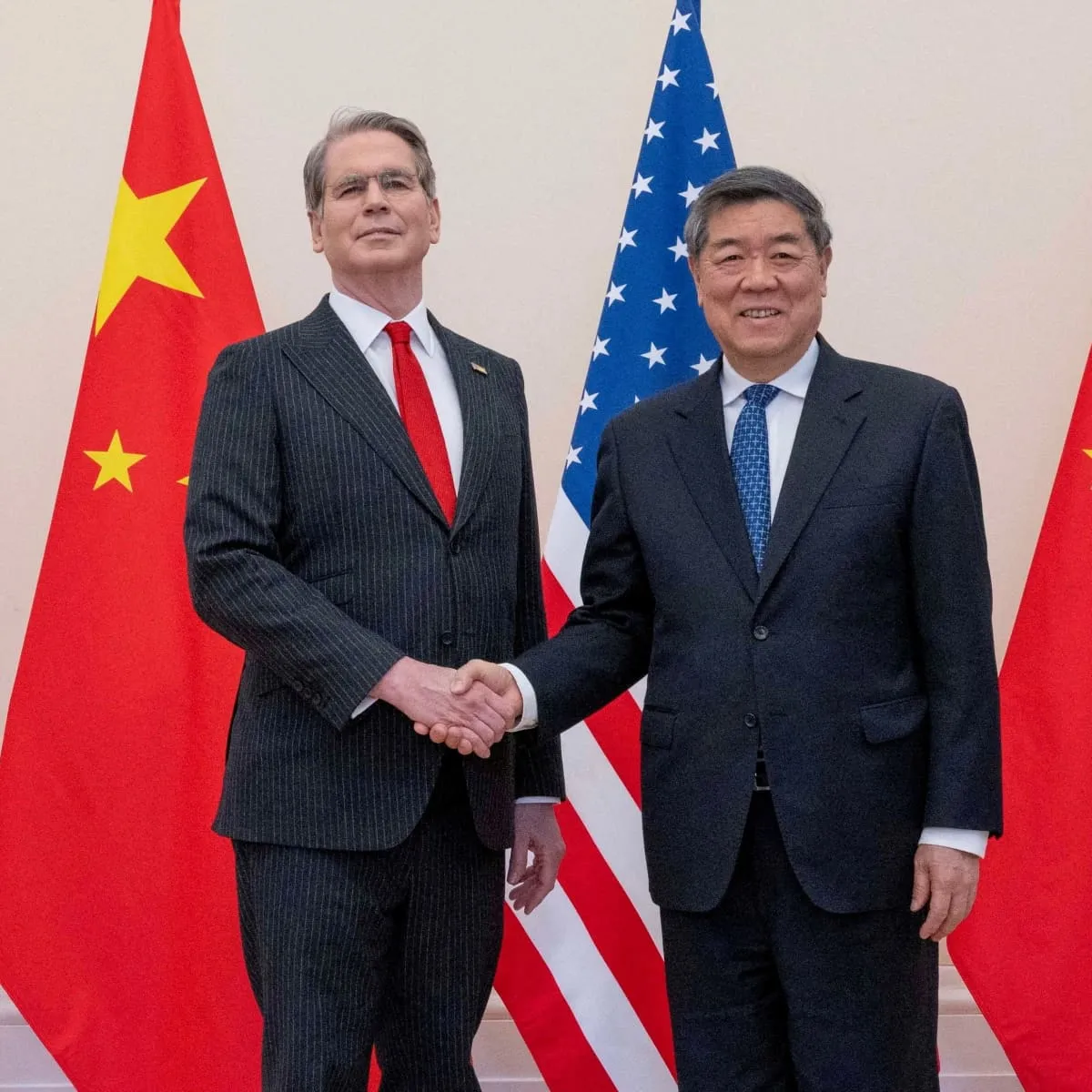
U.S. Treasury Secretary Scott Bessent and Chinese Vice Premier He Lifeng met to discuss strategic cooperation across artificial intelligence, bilateral trade, and the critical minerals supply chain.
The discussions highlighted efforts to stabilize economic relationships between the USA and China amidst geopolitical tensions concerning technology and resource dependency. The meeting served as a high-level engagement to navigate complex trade dynamics while forging pathways for technological collaboration.
Bessent, representing American interests, focused on the necessity of securing resilient supply chains, particularly in the realm of rare earths and other minerals vital for advanced manufacturing and green energy transitions. The conversation touched upon how these foundational resources underpin both American export strength and China's industrial ambition.
A significant focus area involved Artificial Intelligence, where both parties explored opportunities for shared research and market access. This engagement reflects a broader trend toward de-risking supply chains while simultaneously leveraging technological advancement to deepen strategic ties.
The dialogue addressed the balance between the USA’s push for diversified trade partners and the enduring economic significance of the Chinese market. Specific attention was paid to how technological standards and data governance could be harmonized to facilitate smoother cross-border commerce.
The meeting provided a platform to move discussions beyond mere diplomatic niceties into tangible economic and technological frameworks. Officials assessed current trade friction points and sought common ground for future regulatory alignment.
Navigating Resource Security and Trade Friction
Critical minerals remain a central pillar of the conversation, given the China’s position as a major global supplier. The talks examined the volatility in mineral pricing and the strategic importance of stable extraction and processing capabilities. The imperative to diversify processing capacity away from single points of failure was a recurring theme.
Bessent reportedly emphasized the need for China to recognize the strategic value of the country’s mineral wealth not just as raw commodities, but as essential inputs for its own high-tech manufacturing base. This framing shifts the discussion from transactional trade to strategic partnership.
Trade discussions covered the ongoing adjustments necessitated by global economic shifts and targeted tariffs or non-tariff barriers. The objective was to identify areas where mutual market access could be improved, mitigating the risk of sudden policy reversals impacting American manufacturing.
The engagement also touched upon the implications of global semiconductor shortages and the drive toward localized, secure technology ecosystems. Cooperation in this domain is viewed as crucial for maintaining industrial momentum in both nations.
Technological Collaboration and Future Outlook
The AI component of the talks signals a commitment to future-proofing the bilateral relationship beyond immediate commodity exchanges. Collaboration in AI encompasses everything from foundational research in large language models to the practical application of AI in resource management and logistics.
Officials explored potential joint ventures in AI deployment within American operations, utilizing Chinese technological expertise, while simultaneously offering access to US data and resource insights. This bidirectional exchange is key to the proposed partnership model.
The outcome of the talks suggests a pragmatic approach: maintaining high-level economic interaction even as geopolitical currents push for greater decoupling. The focus remains on leveraging shared needs—secure energy, advanced manufacturing, and reliable mineral inputs.
The commitment to sustained dialogue indicates that both Beijing and Washington recognize the interconnected nature of their economies. Future engagements are expected to delve deeper into specific investment vehicles and joint R&D projects in the identified strategic sectors.