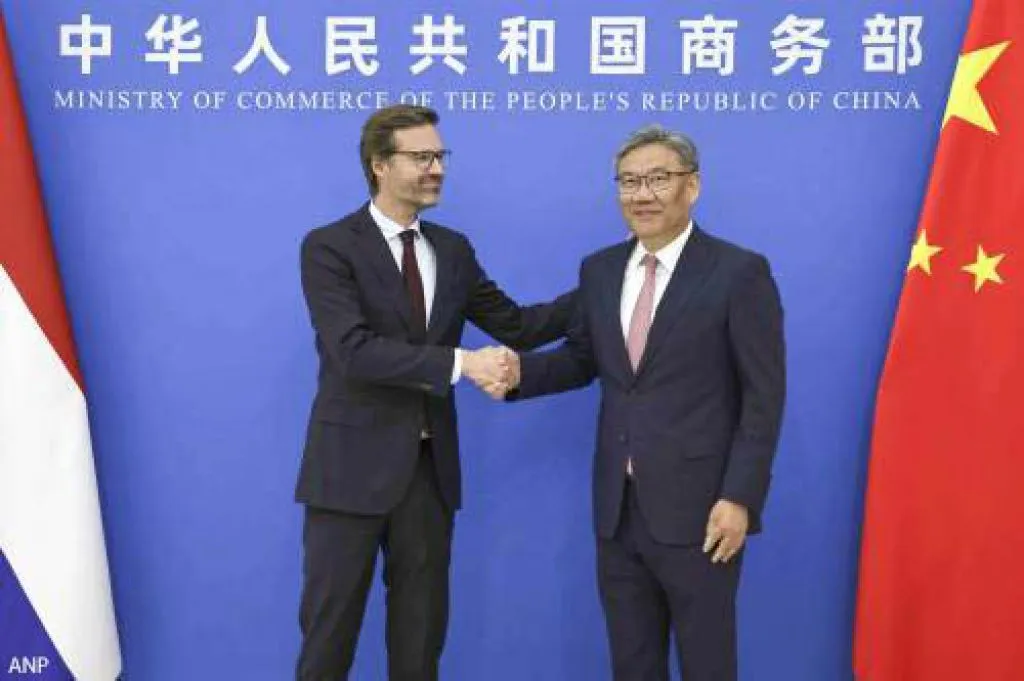
Beijing is pressing for chip supply stability and equitable market access during the visit of the Dutch trade minister, signaling China's heightened strategic focus on global semiconductor dependencies.
The high-level discussions between Chinese officials and the Dutch delegation centered heavily on mitigating geopolitical risks associated with critical technology flows, particularly in the advanced semiconductor sector. The Netherlands plays a pivotal role in the global chip ecosystem, hosting significant manufacturing capabilities and serving as a key node in international supply chains.
Chinese representatives emphasized the necessity of transparent trade practices, arguing that sudden restrictions or export controls create unpredictable volatility detrimental to both Chinese industrial planning and global economic equilibrium. They sought assurances regarding sustained access to essential Western technology components necessary for China's ongoing technological self-sufficiency drive.
Semiconductor Sovereignty and Market Access Demands
The core of the diplomatic engagement revolved around securing long-term commitments from European partners concerning chip availability. Beijing views semiconductor security not merely as an industrial concern but as a matter of national strategic sovereignty, especially given increasing international pressures regarding technology decoupling.
Discussions touched upon the challenges posed by evolving export controls imposed by nations like the United States and its allies. Chinese officials stressed that while they respect intellectual property rights and international regulations, these measures must not inadvertently create insurmountable barriers to legitimate commercial trade flows vital for their high-tech manufacturing base.
The Dutch minister engaged in dialogue addressing China's substantial demand for advanced components. The conversation aimed to balance the European desire to de-risk its supply chains from overreliance on any single market while accommodating China's massive industrial appetite. Stability, both in production and in trade terms, was presented as the primary shared objective.
Furthermore, the delegation examined investment opportunities and collaborative research pathways. Beijing signaled a willingness to deepen partnerships that enhance regional technological resilience, provided those partnerships are built on principles of mutual benefit rather than unilateral regulatory advantage.
Geopolitical Context and Future Trade Trajectories
The meeting occurs against a backdrop of intensified great power competition, where technology has become the principal arena for geopolitical contestation. The Dutch presence in these talks underscores Europe's nuanced position: desiring robust trade with China while simultaneously adhering to allied efforts to manage technological risks.
Sources within the diplomatic corps indicated that Beijing is actively seeking reassurance that its market access will not be arbitrarily curtailed based on evolving political tensions. The pursuit of "fair market access" implies a desire to move beyond transactional relationships toward predictable, rules-based engagement in high-value sectors like advanced logic and memory chips.
The strategic importance of this dialogue cannot be overstated; it represents an attempt by China to solidify its position as a necessary, stable partner within the global technology matrix, even amidst heightened scrutiny. The outcome directly impacts Chinese manufacturers attempting to scale production while navigating complex international compliance regimes. As we covered in our story on Xiaomi 18 Pro Max 2nm Chipset leaks, this trend continues to shape the strategic landscape.