
🎙 Listen to a summary of this story
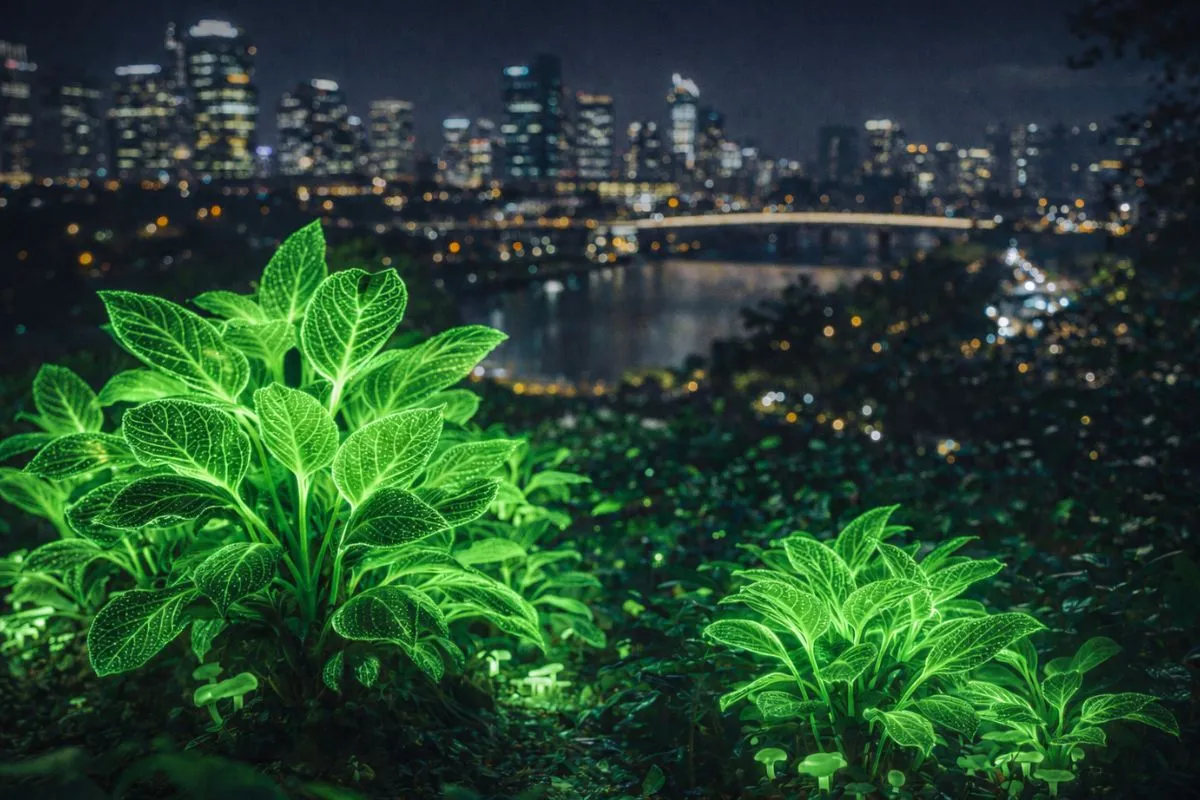
Bioluminescent plants are poised to revolutionize nighttime aesthetics and sustainable lighting, promising a natural illumination source that bypasses conventional energy demands.
The Science Behind Living Light
Researchers are accelerating the cultivation of glowing flora, harnessing biological processes to create self-sustaining light displays. This development represents a significant pivot toward bio-integrated urban design, moving beyond mere decorative horticulture into functional, low-energy infrastructure.
The technology leverages genetically enhanced plants capable of producing stable bioluminescence. While natural examples exist, controlled cultivation allows for predictable intensity and spectral output necessary for large-scale application in public spaces. This scientific control is what differentiates these novel specimens from sporadic biological occurrences.
Experts point to the potential for these glowing organisms to drastically reduce urban light pollution while simultaneously providing ambient lighting in areas currently underserved by efficient streetlamps. The integration process involves careful environmental engineering to ensure plant viability under varied conditions, a key hurdle researchers are overcoming.
The initial research focus centers on optimizing the photosynthetic pathways that trigger and sustain the luminescent reaction within the plant cells. Successful optimization translates directly into increased longevity of the glow and reduced maintenance requirements for the cultivated displays. These living light sources offer an inherent sustainability advantage over traditional LEDs or gas lamps.
Commercialization and Urban Integration
The commercial viability of these glowing plants is rapidly approaching, signaling a shift from laboratory curiosity to deployable urban asset. Early pilot projects are exploring their use in parks, along pedestrian walkways, and within architectural features designed to mimic natural ecosystems.
Industry analysts project that if production scales successfully, bioluminescent flora could become a premium feature in eco-conscious developments globally. The market appeal lies not only in its ecological footprint but also in the unique aesthetic experience it provides—a living form of light art.
Furthermore, the integration offers educational potential; these glowing plants serve as tangible examples of biotechnology applied to environmental solutions. Municipalities are increasingly seeking innovative ways to meet ambitious carbon reduction targets, and bio-lighting fits squarely within that mandate.
The transition from controlled greenhouse environments to open-air installations requires robust horticultural engineering, ensuring the light production remains consistent despite fluctuations in temperature, humidity, and ambient light exposure. The ongoing refinement of these environmental controls dictates the practical deployment timeline for widespread public adoption.