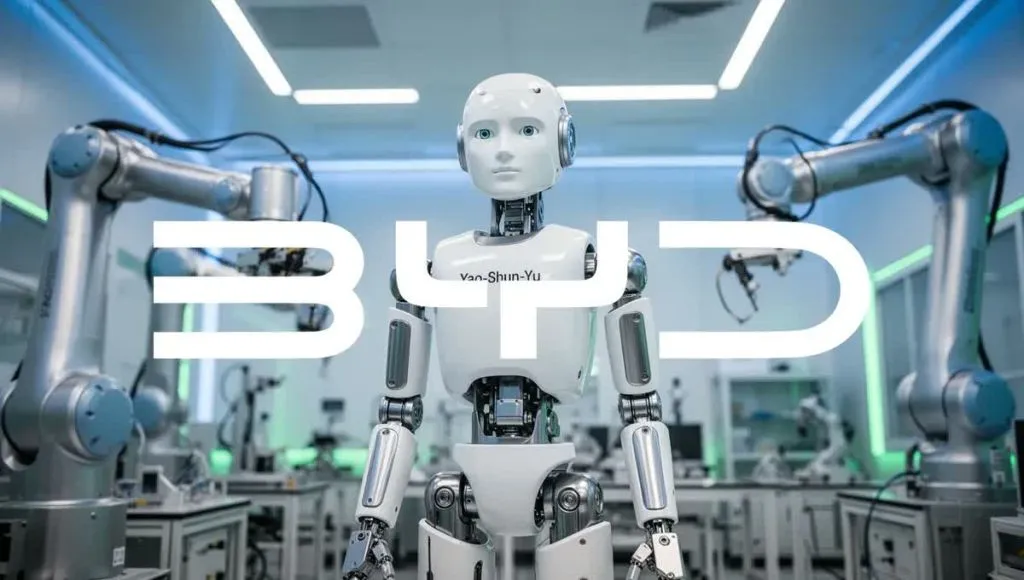
BYD is secretly advancing into humanoid robotics with a project codenamed 'Yao-Shun-Yu,' signaling an aggressive strategic pivot as automotive giants race toward embodied artificial intelligence.
The Chinese electric vehicle behemoth, known globally for its battery technology and EV production dominance, appears to be deploying significant R&D resources beyond traditional mobility solutions. Reports indicate that this humanoid robot initiative is part of a broader corporate strategy to capture value in the rapidly expanding AI hardware and service sectors.
The development of 'Yao-Shun-Yu' represents a calculated diversification away from pure automotive manufacturing, positioning BYD as a comprehensive technology conglomerate capable of integrating advanced robotics into future industrial applications. While specific deployment timelines remain proprietary to the company, the secrecy surrounding its development suggests high strategic importance.
Industry analysts suggest that major automotive manufacturers are increasingly recognizing that the next frontier of software integration involves physical embodiment. Robots capable of complex human interaction and task execution are becoming critical infrastructure components for logistics, manufacturing, and service industries globally.
The Implications of Embodied AI
This foray into humanoid robotics places BYD in direct competition with established tech players and other industrial heavyweights that are heavily investing in general-purpose robots. The capability to design and produce both the underlying hardware (leveraging their existing manufacturing prowess) and integrate sophisticated AI software presents a unique competitive advantage.
The focus on humanoid form factors is not arbitrary; these robots are designed to interface seamlessly with human-centric environments, maximizing utility in factories and public spaces where current specialized industrial bots struggle with versatility. BYD’s integration of its deep understanding of power management—a core competency from the EV sector—is expected to provide a significant advantage in battery life and operational endurance for 'Yao-Shun-Yu.'
The market trend toward embodied AI suggests that software alone is insufficient; physical interaction with the real world requires robust, scalable hardware. BYD’s move indicates an intent to control this entire stack—from the silicon powering the brain to the actuators forming the limbs.
Furthermore, the competitive landscape in China is intensely focused on achieving technological self-sufficiency across advanced industries. By developing proprietary humanoid platforms, BYD reduces reliance on external suppliers for critical robotic components, aligning with national strategic goals for high-tech dominance.
Beyond Automotive: A Platform Play
While the origins of this initiative are rooted in an automotive giant’s ambition, the application scope for 'Yao-Shun-Yu' extends far beyond servicing vehicle assembly lines. The platform possesses potential applications in elder care, advanced manufacturing assistance, and complex warehouse automation.
The strategic significance lies not merely in building a robot, but in creating a flexible technological platform that can be adapted to various high-value use cases. This mirrors the modular approach successfully employed by BYD within its diverse EV lineup.
Observers anticipate that as BYD refines 'Yao-Shun-Yu,' it will seek partnerships or direct integration into supply chains of other heavy industry players, effectively establishing a new revenue stream independent of vehicle sales. The success of this endeavor could redefine the role of traditional automakers in the AI era.