ByteDance looks beyond Nvidia
ByteDance is widening its search for Chinese-made artificial intelligence chips, a shift that could help domestic semiconductor firms claim business once dominated by Nvidia as U.S. export controls and Beijing’s self-reliance campaign reshape China’s AI market.
The TikTok parent is expanding AI infrastructure and planning to use more Chinese chipsets in cloud AI workloads, according to HuaweiCentral, which cited suppliers including Iluvatar CoreX, Virun Technology, MetaX, Moore Threads Technology and EnFlame Technology. The report said ByteDance has purchased tens of thousands of processors from Iluvatar, a smaller AI chip company seen as moving quickly among China’s second-tier suppliers.
The push is not limited to one vendor. Reuters reported that ByteDance is in talks with Shanghai-based Iluvatar CoreX for AI chips used in inference, the process of running AI models after they are trained, and is considering Baidu’s Kunlunxin chips. If completed, Iluvatar would become ByteDance’s third major domestic GPU supplier after Huawei and Cambricon, according to the report.
The talks show how Nvidia’s long grip on China’s AI computing market is loosening. Washington has repeatedly tightened restrictions on advanced chips sold to China, forcing Nvidia to offer reduced-capability products such as the H20. Beijing, meanwhile, has encouraged major technology companies to reduce dependence on U.S. suppliers, citing security and industrial policy concerns. Reuters reported that Chinese GPU and AI chipmakers captured nearly 41% of China’s AI accelerator server market last year.
Domestic suppliers gain ground
For China’s chip startups, ByteDance’s demand is especially important. The company operates some of the world’s largest recommendation systems and AI services, including TikTok overseas and Douyin in China. Its need for inference chips gives domestic suppliers a large proving ground, even if many still lag Nvidia in software, memory bandwidth and production scale.
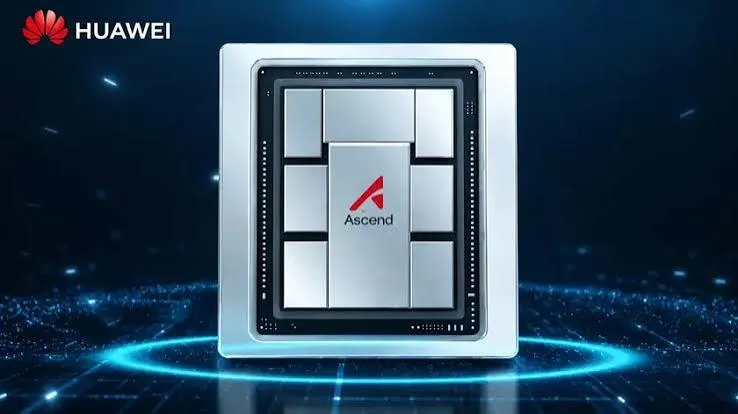
Huawei remains the strongest local contender. Its Ascend line has advanced under U.S. sanctions, and the company has promoted large chip clusters as a way to narrow the gap with Nvidia. IEEE Spectrum reported that Huawei’s chips have become the default option for companies unable to obtain Nvidia’s most powerful GPUs, though it said China’s domestic alternatives still struggle to match Nvidia’s broader software and hardware ecosystem.
Huawei has also introduced the Atlas 350 accelerator, based on Ascend 950PR silicon, aimed at AI inference. Huawei says the chip delivers 1.56 petaflops of FP4 performance, though Tom’s Hardware noted that the comparison with Nvidia’s H20 is difficult to verify because the H20 does not natively support FP4. The chip’s launch nevertheless underscored China’s effort to build a full domestic AI hardware stack.
Analysts say ByteDance’s supplier diversification could accelerate that process. Buying from Huawei, Cambricon, Iluvatar and potentially Baidu spreads risk and gives smaller firms revenue, feedback and scale. It also reflects a practical reality: no single Chinese vendor can yet fully replace Nvidia. Instead, China’s AI industry is assembling a patchwork of chips optimized for different workloads, with ByteDance emerging as one of the biggest customers testing whether that patchwork can hold.