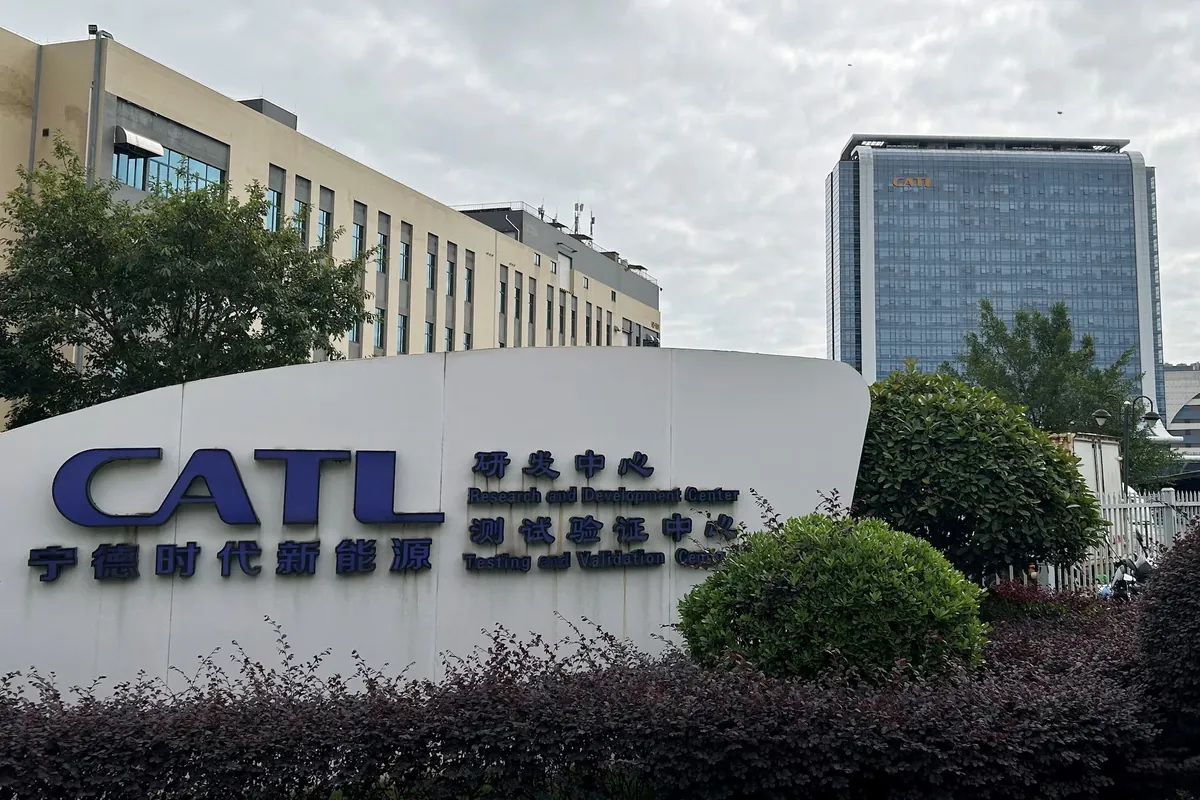
CATL, the world's dominant battery maker, is aggressively hunting for an "AI Einstein" to catalyze critical battery breakthroughs amid severe global market headwinds.
The search for elite artificial intelligence expertise signals a profound strategic pivot for the Chinese giant, moving beyond incremental production scaling toward fundamental, AI-driven material science innovation. This high-stakes recruitment drive reflects the intensifying technological arms race in energy storage, where maintaining a competitive edge requires computational leaps rather than merely optimizing existing manufacturing processes.
As EV and renewable energy markets face cyclical downturns and increased regulatory scrutiny, CATL recognizes that future profitability hinges on proprietary, next-generation battery chemistries. Securing a world-class AI researcher is viewed not as a cost center, but as the essential accelerant needed to bypass conventional R&D timelines.
The Computational Imperative for Next-Gen Chemistry
The specific mandate for this sought-after talent is to leverage deep learning models to solve intractable problems in electrochemistry and material degradation. Traditional battery research involves iterative, slow physical experimentation; the AI mandate is to simulate millions of molecular configurations virtually, drastically reducing the time and capital expenditure required for discovery.
This computational approach targets significant performance bottlenecks, including enhancing energy density while simultaneously improving cycle life and thermal stability. Breakthroughs in solid-state electrolytes or novel cathode materials, driven by AI pattern recognition, represent the immediate commercial objectives that will justify this substantial talent acquisition effort.
Furthermore, the integration of advanced AI into the manufacturing process itself—predictive quality control and optimizing cell assembly parameters—is a secondary, yet vital, objective. The goal is to create a feedback loop where AI informs material design, and manufacturing data refines the AI models in real-time.
Geopolitical Stakes and Market Endurance
This intense focus on AI integration places CATL at the nexus of geopolitical technology competition between China and the West. Dominance in battery technology is directly correlated with influence in the global automotive and grid storage sectors, making the internal technological moat infinitely more valuable than sheer production volume.
The successful deployment of AI-derived battery technology will insulate CATL against the current market volatility. While competitors struggle with supply chain inflation and slowing demand, a firm possessing proprietary, superior energy density solutions holds a structural advantage that transcends short-term economic cycles.
Ultimately, the pursuit of the "AI Einstein" underscores a broader industry maturation: the transition from manufacturing scale to intellectual property supremacy. The ability to design a battery molecule on a supercomputer, rather than synthesizing it in a lab, defines the next decade of energy storage leadership, positioning CATL to weather current headwinds and dictate future industry standards through superior science.