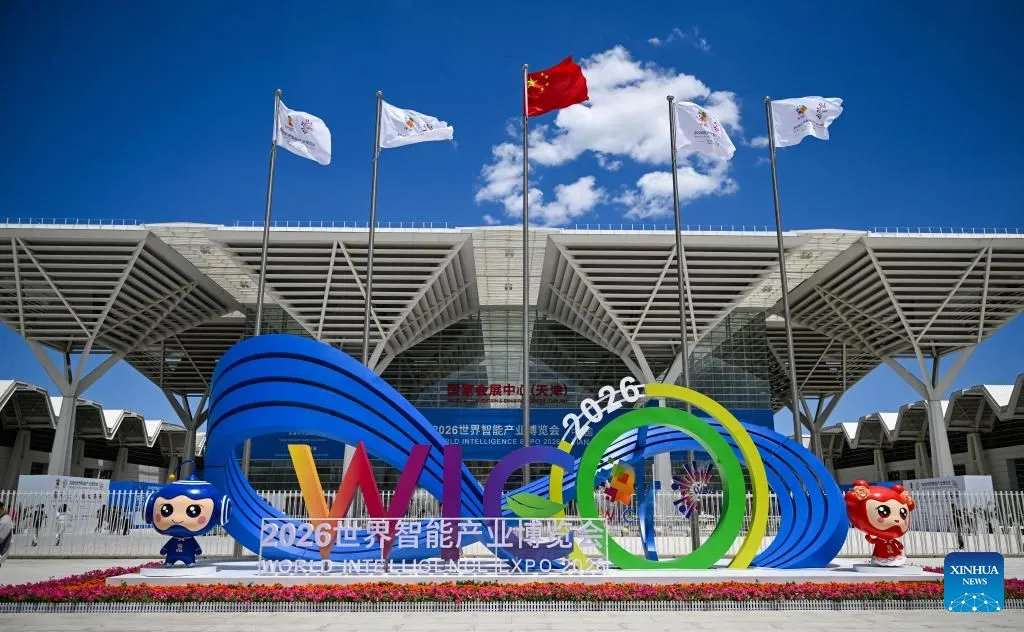
Humanoid robots and advanced flying vehicles dominated Tianjin's World Intelligence Expo, signaling a rapid acceleration in China's pursuit of autonomous artificial intelligence.
The exhibition showcased cutting-edge advancements across robotics, aerospace, and smart infrastructure, positioning the region as a critical hub for next-generation technological development within China’s broader industrial strategy.
Attendees observed sophisticated humanoid robots capable of performing complex physical tasks, moving beyond mere demonstration to suggest imminent integration into industrial and service sectors. These machines represent significant strides in artificial intelligence hardware and software convergence.
Simultaneously, the aerospace sector featured numerous unmanned aerial vehicles (UAVs) and personal flying devices that demonstrated enhanced stability and operational efficiency. The emphasis across both domains was on practical application rather than purely theoretical capability.
Autonomous Systems Shaping Tomorrow's Industry
The focus at the Expo underscored a strategic pivot toward autonomous systems capable of operating reliably in complex, real-world environments. Exhibitors detailed proprietary algorithms enabling these robots to navigate unstructured spaces and interact seamlessly with human workers.
One notable segment highlighted advancements in dexterous manipulation by humanoid platforms. These prototypes demonstrated fine motor control required for tasks ranging from precise assembly line work to delicate material handling, addressing key bottlenecks in modern manufacturing.
Furthermore, the integration of AI into these physical systems is proving transformative; the robots are not merely pre-programmed units but possess adaptive learning capabilities that allow them to optimize performance based on immediate environmental feedback. This capability moves robotics closer to generalized artificial intelligence applications.
The flying vehicle displays mirrored this drive toward intelligent autonomy. Many showcased drones and eVTOL (electric vertical takeoff and landing) concepts were equipped with advanced sensor fusion systems, allowing for real-time obstacle avoidance in dense urban airspace. This directly addresses the regulatory and safety hurdles facing future low-altitude air mobility.
Strategic Implications for China's Tech Leadership
The scale and sophistication of the technology presented at the World Intelligence Expo reflect a concerted national effort to solidify technological self-reliance. These exhibits are not isolated products but components of larger industrial ecosystems being cultivated across Tianjin and surrounding provinces.
Industry observers noted that the synergy between robotics and aerial mobility suggests future integrated systems—imagine delivery drones managed by intelligent ground robots in smart logistics networks. This vertical integration is a hallmark of advanced technological planning.
The presence of major domestic tech firms alongside international participants confirmed Tianjin’s role as an incubator for both indigenous innovation and global technological exchange. The Expo served as a critical barometer for the current state and trajectory of Chinese industrial modernization.
Ultimately, the message conveyed by the display of these advanced machines is one of decisive transition: China is moving past piloting disruptive technologies toward embedding them firmly into the operational fabric of its economy across manufacturing, logistics, and urban management.